Isolation of the West Bank amid the focus on Iran
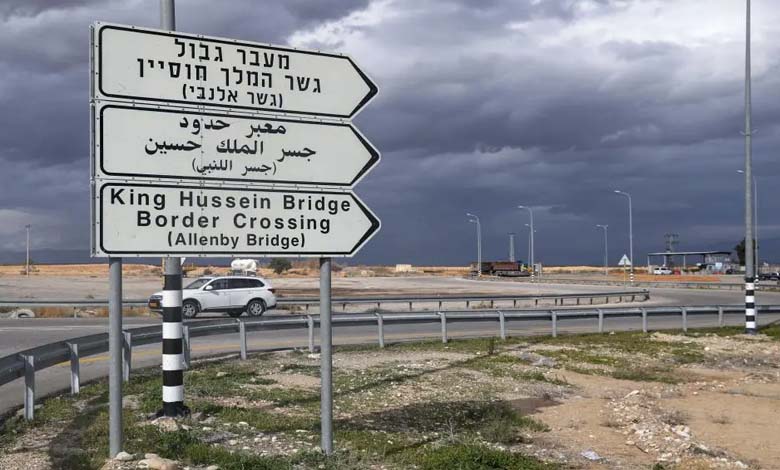
A worrying increase in settler attacks against Bedouin communities and Palestinian civilians across various areas of the West Bank.
Amid the US-Israeli war against Iran, settlers have intensified their attacks on Palestinians in the occupied West Bank in recent days, taking advantage of the regional and international focus on the conflict and its repercussions. Palestinians fear an acceleration of the displacement of Bedouin communities and the seizure of additional land.
-
The war against Iran will shape the future of the West Bank
-
Demographics in the West Bank and Gaza: UN Warning over Israeli Plans
Hassan Mleihat, Director General of the Al-Baidar Organization for the Defense of Bedouin Rights (a non-governmental organization), confirmed that settler attacks did not stop with the outbreak of the war. On the contrary, they have increased significantly, especially in areas classified as “Area C,” where Palestinian residents already face continuous pressure.
Since last Saturday, Israel and the United States have been carrying out a military offensive against Iran that has resulted in hundreds of deaths, including Iran’s Supreme Leader Ali Khamenei and several officials. Tehran has responded by launching missiles and drones at Israel and at American interests in several Arab countries.
-
An unprecedented measure: an “electronic bracelet” to curb settler violence in the West Bank
-
The West Bank groans under Israeli attacks… a teenager killed by a settler’s gunfire
Mleihat stated that settlers and Israeli authorities are exploiting the political and security circumstances related to the war, as well as the difficult economic situation, to intensify pressure on Palestinians in order to force them to leave their lands.
He explained that the escalation of attacks is evident in the increasing number of settler assaults on Bedouin communities and Palestinian residents across different parts of the West Bank, as well as in the closure of Palestinian areas and their declaration as military zones.
One example occurred in the Bedouin community of Shakara, south of Nablus, where the area was closed and declared a military zone. According to Mleihat, this step is part of a policy aimed at tightening pressure on residents and forcing them to leave their land.
-
Israel plans to build a new separation wall in the northern West Bank
-
Settlement Policy in 2025: Closing the Chapter of West Bank Annexation
Killings and destruction of property
He added that the attacks are not limited to restrictions or the closure of areas but also target the lives of civilians.
Mleihat cited the shooting incident that took place on Monday in the town of Qaryut, south of Nablus in the north, when settlers opened fire on two Palestinian brothers, killing them.
He also pointed to continued attacks in various parts of the West Bank, including Masafer Yatta south of Hebron, where Bedouin communities are subjected to repeated assaults by settlers.
-
Uprooting memories: how settlement expansion displaces Palestinians in the West Bank
-
Settler violence in the West Bank targets foreign solidarity activists
According to him, the attacks also include uprooting trees, destroying Palestinian property, and attacking residential communities. He stressed that the pace of these attacks has increased markedly since the outbreak of the war.
He added that data monitored by the organization indicate that settler attacks have increased by about 25 percent since the war began roughly a week ago compared with the usual rate. The assaults are now being recorded simultaneously in multiple locations.
Ongoing attacks
For his part, Dawoud, Director of the Documentation Unit at the Wall and Settlement Resistance Commission, said that the wave of settler attacks has continued throughout the period of the war.
-
Raids and arrests: Israeli operation in the northern West Bank
-
When are we going back?: a Palestinian cry from the West Bank camps
He explained that settlers have not stopped carrying out assaults, and that this wave included what he described as a “major” and “serious” crime in the town of Qaryut.
This crime, which occurred during the war, took the form of a violent attack that resulted in the deaths of two Palestinians from the town.
Dawoud noted that attacks continue repeatedly in several areas, particularly in southern Nablus, where villages face almost continuous assaults by settlers.
He also pointed out that Masafer Yatta, south of the city of Hebron, is among the areas most exposed to settler attacks at the present time.
-
Neutralization of Attackers: One Israeli Killed and Three Injured in Vehicle and Stabbing Attack in the West Bank
-
Israeli escalation in Jerusalem and the West Bank: raids, arrests, and injuries
According to him, the fears that Palestinian authorities had warned about before the outbreak of the war are now beginning to materialize, as settlers exploit the regional and international preoccupation with the conflict to continue their attacks against Palestinians.
He explained that the attacks particularly target Bedouin communities, which are among the groups most vulnerable to forced displacement in the West Bank. Recent months have seen a significant escalation in assaults on Bedouin communities in the northern Jordan Valley, leading to the partial or total displacement of between three and five Bedouin communities.
He also warned that other Bedouin communities remain at risk, especially in light of Israeli settlement plans currently being implemented in certain areas.
-
Cabinet meeting without a truce… escalation in Gaza and annexation plans in the West Bank
-
Israeli Operations Turn West Bank Camps into Ghost Zones
Attention is currently focused on 14 Bedouin communities located in the “E1” area east of Jerusalem, where Israel plans to build a large settlement project.
These communities are living in a state of anxiety and real danger, particularly as international attention remains focused on the ongoing war and as concrete Israeli steps related to the “E1” settlement project have begun.
Dawoud concluded by saying that there are fears settlers may soon carry out direct attacks on these communities, which could lead to the displacement of their residents and impose a new reality on the ground.
-
Mass Displacement and Annexation Threats: The West Bank Faces a Gaza Scenario
-
Mass Displacement and Annexation Threats: The West Bank Faces a Gaza-Like Scenario
During last February, settlers carried out 511 attacks in the West Bank, ranging from direct physical assaults to uprooting trees, burning fields, seizing property, and demolishing homes and agricultural facilities.
Around 770,000 Israeli settlers live in hundreds of settlements across the occupied West Bank, including about 250,000 in East Jerusalem. They carry out daily attacks against Palestinian civilians in an effort to force them to leave their land.
Palestinians warn that these actions could pave the way for Israel to officially annex the West Bank, which would mean the end of the possibility of establishing a Palestinian state as stipulated in United Nations resolutions.
Parallel to the war on the Gaza Strip since 8 October 2023, the Israeli army and settlers have intensified their attacks in the West Bank, resulting in the deaths of 1,121 Palestinians, injuring about 11,700 others, and leading to the arrest of nearly 22,000 people, according to Palestinian data.
-
Israel Plans to Annex the West Bank Amid Growing US Support
-
From Gaza to the West Bank… Israel Draws Up “The Day after” Plans
-
First Tanks in the West Bank in Decades… Israel Evacuates 40,000 Palestinians ‘Without Return’
-
The West Bank “chokes” due to Israeli checkpoints