Israel and the Last Hour Scenario: Iran Will Launch All Its Missiles
As diplomatic channels between the United States and Tehran remain open, Israel is preparing for what it describes as the “worst Iranian scenario.”
Under the headline “They Will Launch All Their Missiles,” the paper outlined Israel’s preparations for what it considers the worst-case scenario should negotiations with Iran collapse.
-
Diplomacy races against rising tensions: anticipation of Muscat talks between Washington and Tehran
-
On the eve of the Muscat talks, five milestones paved the way for Iran and Washington’s return to negotiations
These preparations include:
– Arrow and David’s Sling missile batteries.
– A large-scale air and naval deployment.
– American interception systems.
The Importance of Missiles to Iran
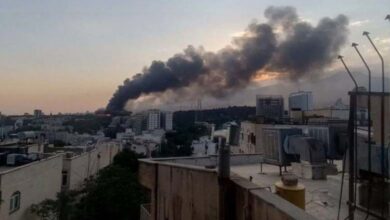
The newspaper noted that the gap between Tel Aviv’s red lines and Tehran’s positions appears wide, particularly as Iran refuses even to discuss restrictions on its missile program—the very program that caused significant destruction inside Israel during last year’s 12-day war.
-
Khamenei speaks of a coup attempt and outlines the response to any U.S. strike
-
Trump and Iran: three military paths on the decision table
For Iran, its ballistic missile program is not merely a weapons system but a critical strategic asset, possibly even more significant than its nuclear project, given its proven capacity to paralyze Israel’s home front and inflict substantial damage despite advanced defense systems.
The recent war confirmed, according to the report, that Israel remains vulnerable to a war of attrition aimed at depleting its stockpile of interceptor missiles.
-
Iran in the crosshairs of Lincoln and its sisters… Messages of fire before the decision
-
Iran protests put Trump to the test between escalation and dialogue
Worst-Case Scenario: Iran Will Use Its Entire Arsenal
Due to Iran’s firm commitment to its missile program, intelligence assessments indicate that Tehran is unlikely to abandon it, even under direct American pressure. This could push the region toward confrontation: either an agreement that leaves Israel exposed to a strategic threat or a slide into full-scale war.
In response, Israel’s five-tier defense systems are preparing to operate alongside the US military, potentially within a broader international coalition.
Tal Inbar, senior researcher at the Missile Defense Advocacy Alliance, told Yedioth Ahronoth that Iran’s launch capabilities have not changed significantly since previous attacks, but Tehran still possesses dozens of heavy missiles that have not yet been used.
-
After Trump’s threats, Iran affirms readiness for war and dialogue
-
Iran protests: a growing movement, escalating military rhetoric, and a watching world
He added, “We have not yet seen the capability for an extremely massive launch—hundreds or thousands of missiles at once.” However, in a war in which the Iranian regime feels it is facing its final hours, it would likely deploy all available weapons. In such a scenario, strikes against symbolic non-military targets could also be conceivable.
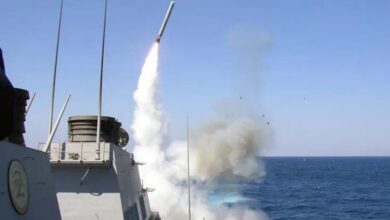
Inbar described these scenarios as “extreme,” while emphasizing that the United States is capable of conducting large-scale preemptive strikes, such as launching hundreds of cruise missiles against Iranian launch platforms—operations Israel cannot carry out alone.
-
Iran draws up a list of Israeli and U.S. targets in response to a potential attack
-
Iran Warns Trump Against Intervention and Draws the Red Line
The Expansive US Military Presence
In the most recent confrontation with Iran, Israel used its defense systems extensively, resulting in a shortage of interceptor missiles.
Reports indicate that Prime Minister Benjamin Netanyahu requested US President Donald Trump at the time to delay a strike against Iran for this reason.
Since then, substantial US forces have arrived in the region to bolster defenses, including the interception of missiles and drones from areas far beyond Israeli territory.
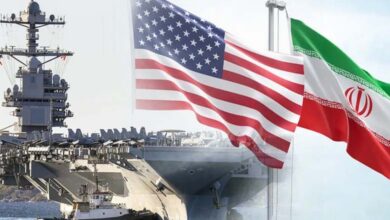
Reports point to the presence of at least ten US naval vessels in the Middle East, along with Patriot and THAAD systems deployed across multiple bases.
-
Iran faces the most dangerous total war with Israel and the United States
-
America, Iran, and the nuclear issue: Who can break the stalemate?
The United States has also deployed:
– Squadrons of F-15E fighter jets to intercept drones.
– F-35 fighter jets relocated from the Caribbean to a position closer to the Middle East.
– EA-18G electronic warfare aircraft.
Israel’s Multi-Layered Defense System
Israel’s defense architecture consists of five integrated layers:
First: Arrow 3
Following heavy use during the war, Israel’s Ministry of Defense decided to accelerate the production of Arrow interceptors.
Arrow 3 serves as the first line of defense against long-range ballistic missiles, intercepting targets at approximately 100 kilometers above the atmosphere.
US SM-3 missiles provide comparable capabilities.
-
Iranian-European Talks on Nuclear Issue and Sanctions
-
Iran Does Not Rule Out a New War and Prepares for the Worst
Second: Arrow 2
This system intercepts missiles that penetrate the first layer and operates within the atmosphere up to roughly 100 kilometers in altitude.
Third: David’s Sling
Israel’s Ministry of Defense recently completed a successful series of tests for this system, which is capable of intercepting:
– Medium-range missiles
– Heavy missiles
– Cruise missiles
– Drones
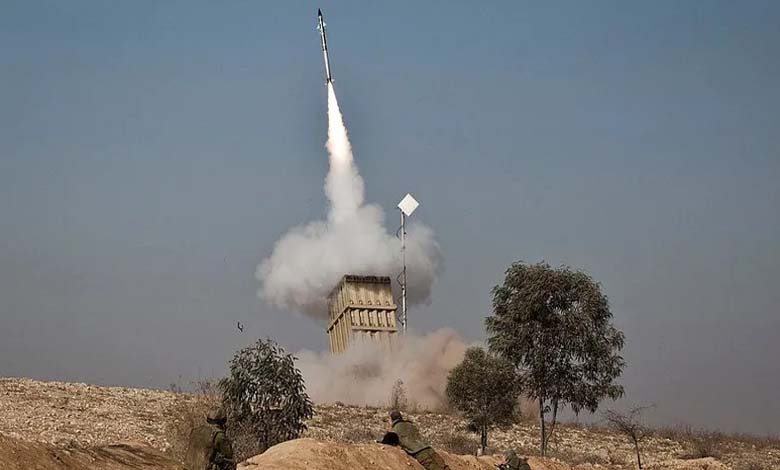
Fourth: Iron Dome
It plays a central role in countering:
– Short-range rockets
– Mortar shells
– Drones
– Shrapnel
-
Assassinations and Kidnappings: Iran Responds to Western Accusations
-
Washington Targets Tehran with Harsh Sanctions as Araghtchi Demands War Reparations
Fifth: Iron Beam
In late 2025, Israel announced the deployment of the world’s first high-energy combat laser system.
The system can intercept:
– Short-range rockets
– Mortar shells
– Drones
– Light aircraft
– Gliding objects
It is distinguished by significantly lower operational costs compared to missile-based systems.
-
Tehran Sets U.S. Renunciation of Attack Plans as Condition to Resume Talks
-
Iran Holds Official Funerals for Military Commanders and Scientists Killed in Israeli Strikes