Khamenei calls protesters agents and accuses them of trying to appease Trump
The current situation shows that the Iranian regime is not merely facing a new wave of protests, but an existential challenge threatening its political and ideological legitimacy.
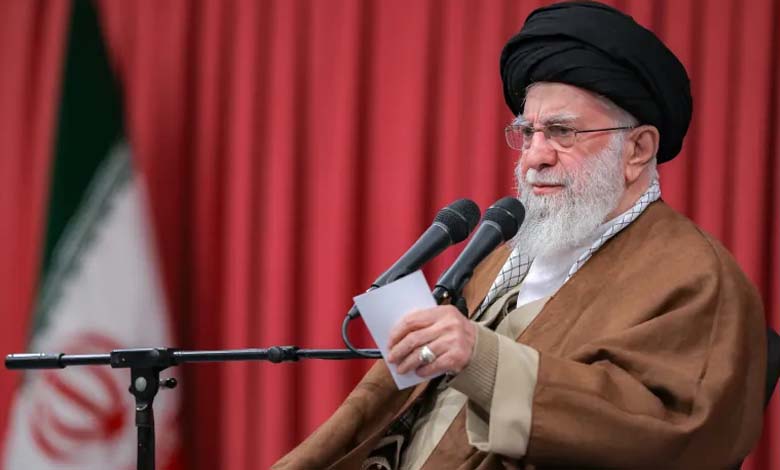
On Friday, Iran’s Supreme Leader Ali Khamenei urged Iranians to “maintain their national unity,” stressing that this is the path to “victory over the enemies,” while accusing some protesters of being agents and attempting to please the Americans. These statements come amid widespread protests and escalating violence across Iranian cities, heightening domestic tensions. Observers see the Supreme Leader’s remarks as detached from reality and dismissive of the economic and social causes behind the protests.
-
Khamenei, Iran’s Illness and the Obstacle to Any Agreement with Washington
-
Iran faces the most dangerous total war with Israel and the United States
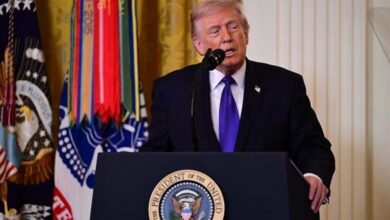
Khamenei also called on U.S. President Donald Trump to focus on domestic issues in his own country rather than interfering in Iranian affairs, after Trump hinted at the possible use of “strong force” against Tehran if Iranian authorities killed protesters, reflecting the rising tensions between Washington and Tehran.
In a speech delivered during a meeting with residents of Qom to mark the anniversary of the 1977 uprising against the Shah’s regime, Khamenei said that “some troublemakers” among the protesters seek, in his words, to “please the U.S. president by vandalizing public property.” He added that Iran “will not retreat from its principles” and that the country would not bow to what he called “agents and mercenaries working for foreign interests.”
-
Lessons from War: From Khamenei to Kim – A Strategic Gap Shifting the Nuclear Balance
-
Washington Targets Tehran with Harsh Sanctions as Araghtchi Demands War Reparations
These statements come as protests, initially driven by economic and social demands, have expanded to include calls for political change, prompting Iranian authorities to use force to suppress them, drawing broad international criticism. The positions of Khamenei and Trump highlight the ongoing tension between Iran’s internal ambitions and external pressure, amid fears of escalating violence and a deeper crisis.
Indicating the level of domestic escalation, several regional airlines decided to suspend flights to Iranian airspace, further isolating the Islamic Republic.
Dubai Airports’ website showed that at least 17 flights operated by Flydubai scheduled for Friday between Dubai and several Iranian cities, including Tehran, Shiraz, and Mashhad, were canceled. No reason was provided online, but reports indicated a disruption of internet services in Iran since Thursday, continuing on Friday as authorities sought to quell expanding protests. Flydubai stated that the flights to Iran scheduled for Friday had been canceled and that it would closely monitor the situation to adjust its schedule accordingly.
-
Iran Has Not Set a Date or Location for Potential Nuclear Talks with Washington
-
Washington Reveals Iranian Plan to Close Strait of Hormuz During War with Israel
Turkish Airlines also canceled 17 flights to three Iranian cities on Friday and Saturday, citing “regional developments in Iran.”
As protests accelerate and take on a broader and more sustained character, Iran faces one of its most serious crises since 1979. The current situation reflects not only social anger or temporary demands, but a profound legitimacy crisis striking at the heart of a regime that has ruled the country for nearly five decades, relying on a combination of religious ideology, security apparatus, and a policy of “iron and fire.”
The protests, ignited by the sharp devaluation of the local currency in Tehran’s Grand Bazaar, quickly spread to all 31 Iranian provinces, confirming that the crisis goes beyond temporary economic difficulties. Alex Vatanka, director of the Iran program at the Middle East Institute in Washington, said: “It is not just the collapse of the rial, but the collapse of trust,” capturing the essence of the current crisis: a broad sector of Iranians has lost confidence in the regime’s ability to govern or represent society’s aspirations.
-
Iran Holds Official Funerals for Military Commanders and Scientists Killed in Israeli Strikes
-
Khamenei’s First Appearance Following the Truce with Israel
Although this wave has not yet reached the level of the 2022 and 2023 protests triggered by the death of Mahsa Amini, its implications are equally concerning. The social nature of the protests has changed: the youth, representing nearly half the population, are now at the forefront, driven by cumulative frustration caused by unemployment, high cost of living, restricted freedoms, and political deadlock. In this context, the gap between rulers and citizens, particularly the young, is wider than ever.
Protest slogans such as “No Gaza… No Lebanon… My life for Iran” signal a qualitative shift in public mood, reflecting growing rejection of the regime’s regional policies, seen by many Iranians as an economic and political burden, while facing declining living standards and international isolation.
This anger is compounded by the setbacks suffered by Iran’s regional influence networks, in Gaza, Lebanon, Yemen, and Iraq, as well as the fall of Tehran’s key ally in Syria, weakening the regime’s long-touted narrative of “regional power.”
-
Washington denies transfer of Iranian enriched uranium before U.S. strike
-
Iran’s Regime Focused on Finding a Successor to Khamenei
Meanwhile, Iranian authorities adopt a dual approach to the protests: an official discourse acknowledging economic demands and promising dialogue, coupled with field repression using tear gas and mass arrests. This method, relatively effective in containing previous waves of popular anger, now appears less sufficient, as repression no longer deters a generation raised in a different, more connected world, less committed to the revolutionary slogans that shaped the regime’s identity in its early years.
According to the human rights agency Herana, at least 34 protesters have been killed and around 2,200 arrested, highlighting the scale of violence while confirming the widening scope of dissent. Images showing the Iranian flag being torn or young people leaving mosques and religious institutes to join protests symbolize the erosion of the religious institution itself, the backbone of the regime’s legitimacy.
-
Trump Announces Ceasefire Between Israel and Iran
-
Trump Pulls the Trigger Back: Why Did He Reject Israel’s Proposal to Assassinate Khamenei?
Internationally, external tensions further complicate the domestic picture, with religious leaders visibly concerned about potential U.S. or Israeli military intervention, particularly following statements by U.S. President Donald Trump, who hinted at intervention if authorities resorted to killing protesters.
Although many Iranians, including staunch regime opponents, reject foreign military intervention, the mere discussion of this scenario reflects the fragility of the situation and the depth of the crisis.
Economically, Iran is in a very precarious position: U.S. Treasury Secretary Scott Bessent stated that the Iranian economy is “on the brink of collapse,” facing high inflation, severe sanctions, and chronic mismanagement. This economic decline fuels the protests and undermines one of the regime’s last remaining legitimacy cards: its ability to provide a minimal level of stability.
-
Israel Vows Retaliation as Iran Issues Threats — Red Lines Crossed and Strikes to Continue
-
Israel Launches Massive Strike on Nuclear and Missile Facilities in Iran
Thus, the current situation demonstrates that the Iranian regime is confronting not just a new wave of protests, but an existential challenge threatening its political and ideological legitimacy. Geopolitical shifts in the region and sociological changes within Iranian society, particularly the rise of a youth who do not see themselves represented in the discourse of the Islamic Revolution, make repression or temporary compromises insufficient.
While the fall of the regime does not appear imminent, it is clear that Iran has entered a new phase in which traditional foundations of power are eroding, leaving the country’s future deeply uncertain.
-
Nuclear Talks: Iran Rejects Washington’s Proposal, Prepares Alternative Offer
-
Nuclear Talks: Iran Rejects Washington’s Proposal and Prepares an Alternative
-
Khamenei Responds to Washington Over Uranium Enrichment