Khamenei speaks of a coup attempt and outlines the response to any U.S. strike
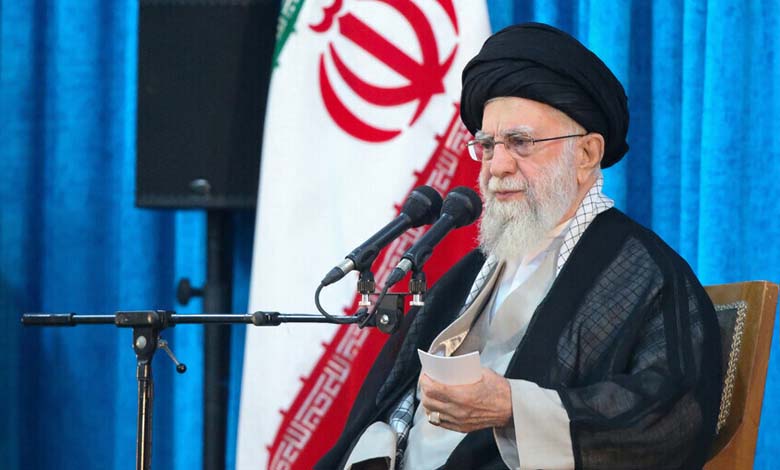
Iran’s Supreme Leader, Ali Khamenei, has warned that any war launched by the United States against Iran would turn into a wide regional conflict, stressing that Tehran would respond forcefully to any attack.
-
Trump pressures his advisers on Iran, with the zero bullet option on the table
-
Trump threatens to wipe Iran off the map if its leaders consider assassinating him
Addressing a crowd of citizens, Khamenei said that Iran “does not initiate any war and does not seek to attack any country,” adding: “Americans must know that if they ignite a war against us, it will this time be a regional war.” He emphasized that his country would deliver “a powerful blow” to anyone who assaults it.
The Supreme Leader said that U.S. threats and the military buildup in the region “are nothing new,” noting that Iran has faced similar pressures and attempts throughout its history.
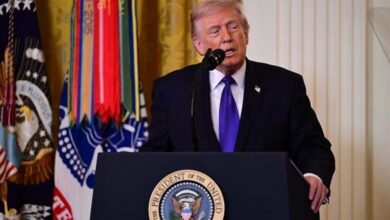
He added that Washington continues to promote the notion that “all options are on the table,” including the option of war, alongside repeated statements by U.S. President Donald Trump about deploying warships to the Middle East.
-
Trump threatens intervention in Iran if protesters are executed
-
Trump tightens the noose on Iran by threatening its trading partners
Coup attempt
On the domestic front, Khamenei described what he called the “recent sedition” as something close to a “coup attempt,” asserting that it had been foiled and suppressed.
He said its aim was to destroy sensitive and influential centers involved in the management of the country, which is why the police and institutions responsible for administering state affairs were targeted.
He stressed that attacking these centers amounted to a “clear coup attempt,” which, according to him, failed in the face of the cohesion of state institutions.
-
Iran protests put Trump to the test between escalation and dialogue
-
After Trump’s threats, Iran affirms readiness for war and dialogue
Khamenei’s speech comes days after he broke his absence with a public appearance at the mausoleum of Khomeini, his first since large-scale protests erupted in Iran several weeks ago.
It is not possible to determine with certainty when the circulated photo or video was taken, but Iran’s Mehr news agency reported that the visit was part of commemorations marking the forty-seventh anniversary of the Iranian Revolution.
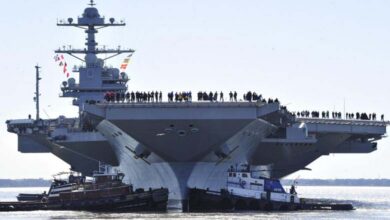
This comes amid continued U.S. escalation toward Iran, as Washington has been building up its military capabilities in the Middle East for weeks and threatening to strike Tehran.
-
Trump does not rule out the military option in support of protesters in Iran
-
Options for striking Iran on Trump’s table: the trigger awaits the green light
Initially, President Donald Trump spoke of potential strikes targeting centers that Washington says played a key role in suppressing protests linked to the deterioration of economic conditions and rising inflation.
However, recent Western reports have indicated that the United States may broaden the scope of any potential strike to include Iran’s nuclear and missile programs, with scenarios even suggesting the targeting of Khamenei himself in an effort to undermine the regime’s cohesion and contribute to its change.
At the same time, regional diplomatic efforts intensified on Friday in an attempt to prevent the region from sliding into a U.S.-Iranian military confrontation that could draw Israel into the conflict.
-
Khamenei calls protesters agents and accuses them of trying to appease Trump
-
Iran Warns Trump Against Intervention and Draws the Red Line
U.S. President Donald Trump called on Iran to “negotiate something acceptable,” amid heightened regional tensions stemming from Washington’s threat to strike Tehran.
Trump said: “Iran is talking seriously with the United States. I hope it will negotiate something acceptable.”
In recent days, the diplomatic track aimed at curbing escalation has gained prominence, alongside the reinforcement of U.S. military forces in the region in anticipation of a possible strike against Iran.
White House officials said that Trump has not yet made a final decision and remains open to exploring a diplomatic solution.
-
Trump and Iran: 4 Possible Scenarios, Including “Shock and Awe”
-
Energy Investments: Iran’s New Card to Woo Trump and End Sanctions
Iranian Foreign Minister Abbas Araghchi said at a press conference on Friday that Iran is ready to resume nuclear talks with the United States, but stressed that the U.S. administration must stop threatening to attack Iran.
At first, President Donald Trump spoke of potential strikes against security centers that Washington claims played a major role in suppressing the widespread protests sparked by worsening economic conditions and soaring inflation.
At present, however, Western reports suggest that the United States may target Iran’s nuclear and missile programs, with the possibility of striking Supreme Leader Ali Khamenei himself in order to undermine the regime’s cohesion and contribute to its transformation.
-
Trump’s Pressure Pushes Iran to Accept U.S. Demands on Nuclear File
-
Iran’s Nuclear Program Back in the Spotlight… and Trump Seeks Political Breakthrough