Khamenei’s death: where real power lies in the world
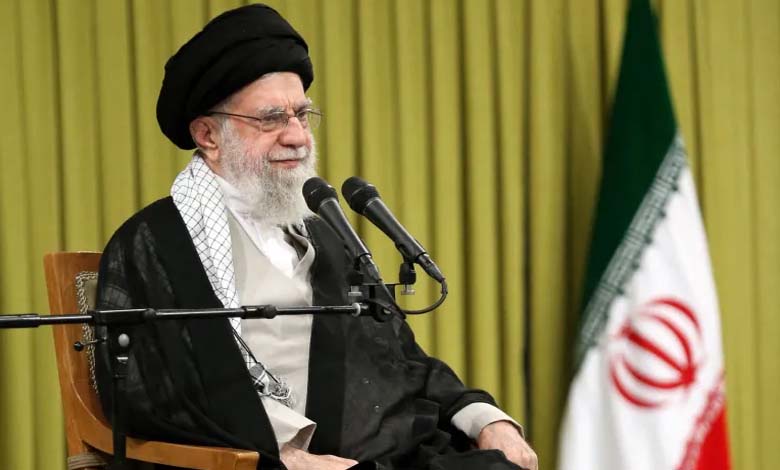
Moscow and Beijing stand sidelined and seemingly powerless as Donald Trump showcases American military strength in the Middle East.
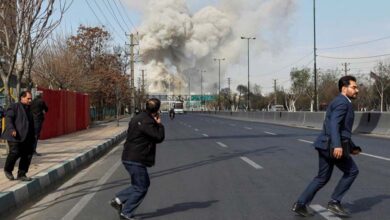
The precision-guided missiles that struck central Tehran at the outset of the “Epic Wrath” operation did more than kill Iran’s Supreme Leader Ali Khamenei and overturn half a century of Iranian history; they also underscored a fundamental reality: where real power resides in the world.
-
Mojtaba Khamenei’s Survival of Assassination Attempt Redraws Iran’s Leadership Map
-
Iran after Khamenei: American red lines
In recent years, much has been written about “multipolarity,” the notion that rising powers have reclaimed part of the dominance once exercised unilaterally by the United States after the Cold War.
Such arguments are not without merit. China’s vast industrial capacity and its dominance over critical resource supply chains pose a challenge to Washington’s economic hegemony. Likewise, the rise of middle powers has ensured that the United States no longer enjoys absolute influence in every region.
Yet when it comes to military power, the United States remains preeminent — a point that President Donald Trump has sought to emphasize since his return to the White House last year, according to the British newspaper The Telegraph.
-
Geopolitical risks unsettle global markets after Khamenei’s death
-
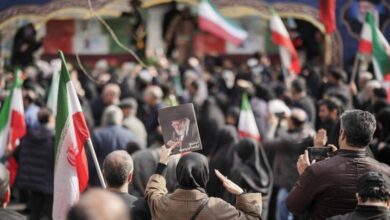
Tehran’s streets erupt in celebrations following reports of Khamenei’s death
There is little doubt that Trump ranks among the most assertive American presidents in openly wielding military force. Within just two months, he is said to have brought about the downfall of two leaders on different continents: Nicolás Maduro in Venezuela and Ali Khamenei in Iran.
For nearly two decades, China and Russia have attempted to build a global alignment to counter U.S. dominance. With Trump dismantling those ambitions, Moscow and Beijing appear reduced to spectators, while their regional allies face marginalization.
Following Khamenei’s death, Russian President Vladimir Putin offered his “sincere condolences” and condemned what he described as a “heinous killing that violated all norms of human morality and international law.”
-
Thirty bombs decided the battle: the final hours in Khamenei’s life
-
Smoke Near Iran’s Supreme Leader Headquarters… Where Is Khamenei?
According to The Telegraph, rulers who rely on Moscow’s backing may note that when missiles fall, Russia can offer little beyond expressions of sympathy.
For Trump, the moment allows him to savor what he views as victory, having surprised critics and shifted the balance of power.
Although Khamenei’s death does not mark the end of the conflict, the early stages of the war have already achieved what many considered impossible.
-
Khamenei speaks of a coup attempt and outlines the response to any U.S. strike
-
Khamenei trapped between limited options: painful concessions or regime collapse?
Experts suggest that Iranian leaders were well aware of the risks of gathering in one location, after Israel killed at least twenty senior officials and a nuclear scientist during the twelve-day war in June, or after eliminating Hezbollah leader Hassan Nasrallah and his entourage in Lebanon in 2024.
Informed sources indicate that security measures surrounding Khamenei and his inner circle relied on movement through a network of safe houses, the abandonment of traceable communications, and purges and executions aimed at sealing gaps exploited by U.S. and Israeli intelligence.
Any attempt to locate and kill Khamenei would theoretically have required a prolonged and risky campaign, similar to Libya in 2011, when it took seven months of NATO bombing to find and kill Muammar Gaddafi.
-
Khamenei calls protesters agents and accuses them of trying to appease Trump
-
British newspaper: Khamenei prepared a plan to flee Iran
Two factors, however, help explain why Washington succeeded in Tehran where Libya proved more protracted. The first lies in former President Barack Obama’s choice to “lead from behind,” allowing Britain and France to spearhead airstrikes, only to find they lacked sufficient firepower to force Gaddafi’s swift surrender.
By contrast, Trump does not typically build broad coalitions, aside from his partnership with Israel. As is often the case, he reportedly neither consulted nor informed his European allies before launching the strikes.
The second factor is intelligence. U.S. capabilities are far more advanced than they were in 2011. Beyond human intelligence, Washington now employs cyber penetration, artificial intelligence, and long-endurance high-altitude drones capable of identifying individuals by gait, voice, or electronic signature before deploying so-called “ninja” missiles, whose extendable steel blades shred their targets.
-
Lessons from War: From Khamenei to Kim – A Strategic Gap Shifting the Nuclear Balance
-
Khamenei’s First Appearance Following the Truce with Israel
History, particularly in the Middle East, nevertheless warns against hubris. After U.S. forces captured Baghdad in just twenty-one days in 2003, former President George W. Bush delivered a historic address aboard an aircraft carrier beneath a banner reading “Mission Accomplished.”
Yet hundreds of thousands of civilians died in the ensuing years as Iraq descended into chaos. Trump, therefore, cannot claim definitive victory unless it becomes clear that Iran will not follow the same path.
-
Iran’s Regime Focused on Finding a Successor to Khamenei
-
Khamenei’s advisor breaks the silence on death rumors: I’m alive
-
Trump Pulls the Trigger Back: Why Did He Reject Israel’s Proposal to Assassinate Khamenei?