Minnawi out of the equation: the implications of his exclusion for the stability of Sudanese power
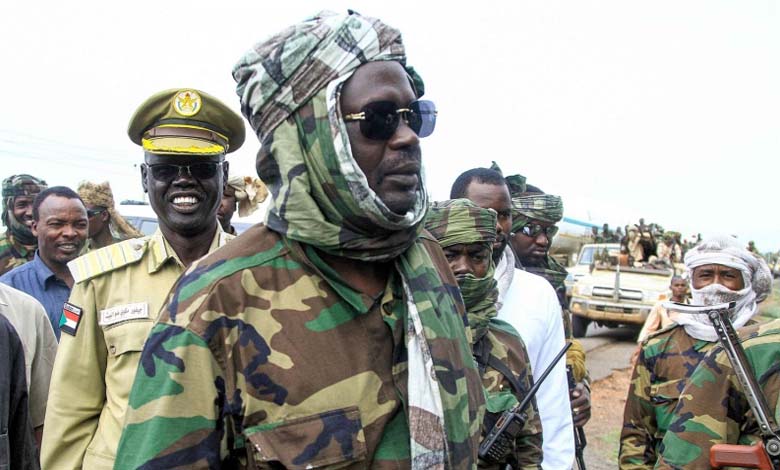
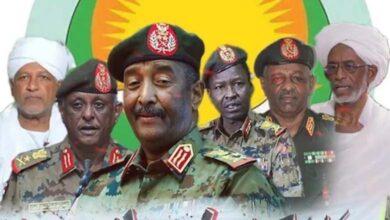
The removal of Minni Arko Minnawi from the circle of influence within the Sudanese authorities is not a passing incident that can be ignored in silence, but rather a stark reflection of the fragmentation of the ruling wings and the fragility of coordination among them. Over recent months, the governing camp appeared capable of managing its alliances according to a clear plan, yet it quickly revealed its flaws when it began dealing with influential forces on the ground. Minnawi, who for a long time represented an important political and military balancing factor, suddenly found himself marginalized, after the slowing of supply flows to him and the sidelining of his role in decision-making processes, in a scene showing that internal conflicts are no less intense than external confrontations.
-
Isolation without a formal decision: how Minni Minnawi’s removal reveals the disintegration of the decision-making center in Sudan
-
The removal of Minni Minnawi exposes the hidden conflict within Sudan’s ruling authority
What makes this event particularly significant is not merely Minnawi’s loss of influence, but the manner in which his exclusion was carried out. No official statement was issued to explain the reasons, nor was there any hint of a negotiation track or political settlement. Instead, the authorities relied on indirect mechanisms to remove him from the equation. This method reveals that managing disputes in Sudan today does not depend on transparency or institutions, but on silent control and the imposition of faits accomplis on the ground.
Cutting off supplies to Minnawi was not simply a logistical measure, but a fully fledged political tool. It indicates that any independent actor can be neutralized whenever centers of power deem his presence a potential threat. The message is clear: control over decision-making takes precedence over any national interest, and any partnership can be revoked at any moment. This dynamic places any alliance or agreement in a permanent zone of risk and increases the likelihood of repositioning and new alignments within the authorities.
-
Al-Jakoumi’s recording and the exposure of the hidden structure of divisions within the Sudanese authority
-
Al-Burhan Reshapes the Political Landscape: A Power Grab Undermines the Balance of the Juba Agreement
The latest move against Minnawi has also exposed the extreme fragility of military and political coordination within the ruling establishment. Alliances among leaders are supposed to be flexible and responsive to crises; here, however, they have turned into internal struggles managed through a logic of exclusion rather than consensus. In a country facing a multi-front war, severe economic crises and regional pressures, draining energy in internal battles only deepens the crisis and weakens the authorities’ capacity to confront real challenges.
The direct consequence of Minnawi’s exclusion is the creation of a state of uncertainty within the ruling camp itself. When an influential actor is deprived of support and coordination resources, a vacuum emerges that other parties may exploit to rearrange their spheres of influence, leading to growing internal disorder. This lack of consensus is not merely an individual problem, but a sign of structural weakness in the entire power system, opening the door to further divisions and possibly to an escalation of disputes among other leaders.
-
Power and Influence Struggles: Infighting Rocks Sudanese Army Alliances
-
The Two-Government Scenario Raises Fears of Sudan’s Partition
What further complicates this situation is the contradiction between rhetoric and practice. While the authorities publicly call for unity and cooperation among components, they conduct policies of exclusion and marginalization behind the scenes. This gap between words and deeds undermines credibility and confirms that what is unfolding is not related to national policy, but to internal struggles for power and influence.
Moreover, Minnawi’s exclusion raises questions about the future management of the war itself. In principle, all actors should be mobilized to confront major challenges, but when resources and military power are used as tools of internal pressure, the scene becomes even more fragile, and strategic plans lose any real effectiveness. This dynamic makes it extremely difficult to predict the course of the war or political stability and traps Sudan in a vicious circle of internal tension.
-
The Sudanese Army Committed Horrific Field Executions in Khartoum
-
Conflicts among Militias Recruited by the Army Threaten to Ignite Eastern Sudan
Politically, what has occurred shows that the system lacks institutional mechanisms to resolve disputes or manage complex alliances. When crucial decisions are taken outside any clear framework, room is left for conjecture and individual gambles, increasing risks and weakening any capacity for long-term planning. Minnawi’s exclusion is not merely a personal story, but a model of how the state is managed in times of crisis: dominance over centers of power prevails over preserving state institutions, and partnership becomes revocable whenever the balance of power shifts.
In conclusion, Minnawi’s removal from the decision-making circle and the cutting of his supplies constitute a striking indicator of the fragility of Sudanese power, the deepening of internal divisions, and the divergence of orientations in managing war and politics. This event does not merely reflect the weakening of a man or his position, but reveals the structural crisis the state itself is experiencing, where disputes are managed in silence and force and control over influence prevail at the expense of national unity and political stability. Unless this fragility is addressed, Sudan will remain exposed to the repetition of such exclusions, and perhaps to even more intense conflicts within the ruling wings, with direct repercussions for security and stability on the ground.
-
“Taqaddum” Prepares to Participate in Sudanese Forces Conference in Cairo
-
Sudanese Army Commits Massacre by Bombing Popular Market, Killing Dozens of Civilians