Months of tracking… how U.S. intelligence reached Khamenei
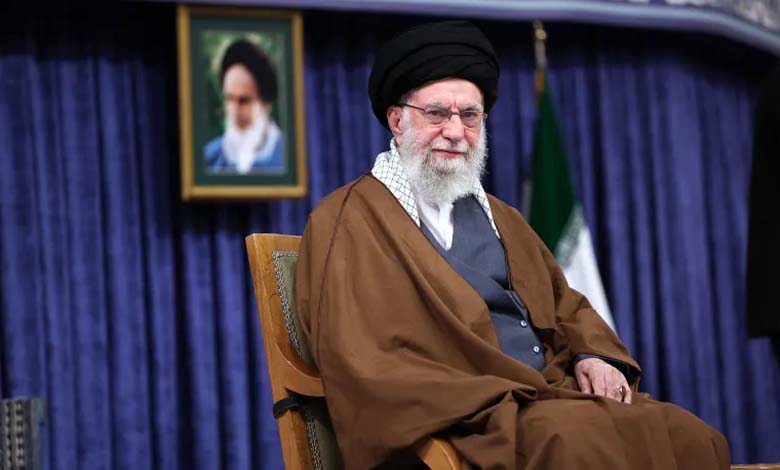
American reports have revealed that intelligence agencies monitored the movements of Iranian Supreme Leader Ali Khamenei for months before carrying out the strike that killed him on Saturday, marking an unprecedented level of intelligence penetration at the very top of Tehran’s power structure.
The New York Times, citing informed sources, reported that the Central Intelligence Agency closely tracked Khamenei’s movement patterns and meetings within his heavily fortified complex in central Tehran. Intelligence services reportedly studied his schedule and mobility patterns for months before receiving early Saturday intelligence indicating that a high-level leadership meeting involving senior regime officials was underway.
-
Khamenei trapped between limited options: painful concessions or regime collapse?
-
Khamenei calls protesters agents and accuses them of trying to appease Trump
From a covert operation to a daylight surprise strike
According to the report, that information constituted the decisive moment that prompted U.S. military leadership, in coordination with Israel, to shift the operation from a long-term covert track to a direct daylight air assault.
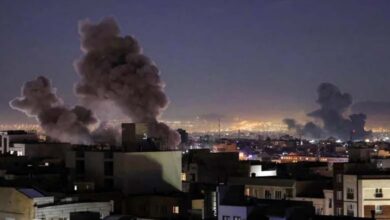
Sources said fighter jets took off Saturday morning and conducted precision strikes shortly before 10 a.m., targeting two buildings inside the government compound where Khamenei and several senior officials were present.
The raids resulted in the death of Supreme Leader Khamenei and at least forty prominent officials, in what was described as a “tactical surprise” prepared over several months.
-
British newspaper: Khamenei prepared a plan to flee Iran
-
Khamenei’s First Appearance Following the Truce with Israel
Top-tier leaders among the casualties
Iranian state television gradually announced the names of the leaders killed alongside Khamenei. Among the most prominent were Defense Minister Aziz Nasirzadeh, Chief of Staff Abdolrahim Mousavi, Ali Shamkhani, the Supreme Leader’s security adviser, and Major General Mohammad Bagher Pakpour, commander of the Islamic Revolutionary Guard Corps commanders.
Tehran also confirmed the death of the head of the intelligence service and the secretary of the Defense Council, indicating that the strike targeted the inner circle responsible for managing the country’s military and security portfolios.
Observers believe that this level of targeting reflects deep intelligence infiltration, whether through advanced technological means or internal human sources, enabling highly precise identification of the meeting’s timing and the participants’ locations.
-
Iran’s Regime Focused on Finding a Successor to Khamenei
-
Trump Pulls the Trigger Back: Why Did He Reject Israel’s Proposal to Assassinate Khamenei?
Trump confirms and escalates rhetoric
For his part, U.S. President Donald Trump confirmed Khamenei’s death, describing him in a post on his social media platform as “one of the most evil figures in history.” He added that the operation “is not only justice for the Iranian people, but for all Americans and for Khamenei’s victims around the world.”
In remarks to journalist Robert Costa of CBS News, Trump urged remaining regime officials to accept a diplomatic solution, arguing that doing so “is much easier now because they are under intense pressure.”
He also offered what he described as “immunity” to members of the Revolutionary Guard, the army, and security forces willing to cease fighting, while warning of severe consequences for those who continued resistance.
-
Khamenei, Iran’s Illness and the Obstacle to Any Agreement with Washington
-
Khamenei Urges Strengthening Military Power to Curb Trump’s Threats
A strike reshaping the balance of power
This operation is regarded as the most painful blow to the Iranian regime since 1979, as the top leadership had never before been directly targeted on such a scale.
The killing of Khamenei and his senior commanders raises profound questions about the nature of a potential transitional phase within Iran and the ability of state institutions to manage a leadership vacuum.
At the same time, reports indicate gatherings in some Iranian cities celebrating the news, reflecting sharp internal divisions, while regime supporters maintain caution amid an atmosphere of shock and anticipation.
-
Khamenei leaves his hideout, threatening Israel with more attacks
-
Khamenei’s Son, “The Man in the Shadows,” Pursues Succession After Raisi’s Death
As the repercussions of the military operations continue, the region appears to be entering a new phase of recalibrated power dynamics. Strikes are no longer confined to facilities or military capabilities but have reached the very head of the regime, following months of meticulous intelligence tracking, in an operation that may chart a different course for the conflict in the Middle East.