Morocco strengthens its position on the global aviation map
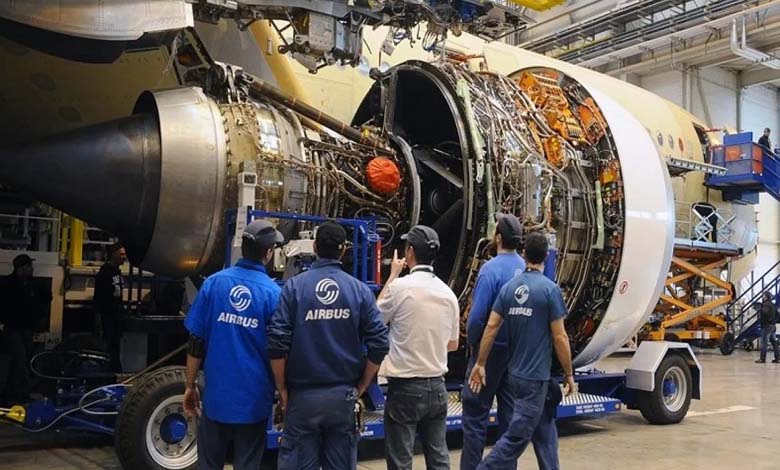
The project to build a factory for aircraft landing systems in Nouaceur concretely reflects the country’s industrial transformation, relying on the latest technological standards and modern production systems that meet the requirements of the global aerospace industry.
The King of Morocco, Mohammed VI, presided over the presentation and launch ceremony of this factory on Friday at the royal palace in Casablanca. The factory, part of the Safran group, strengthens Morocco’s position on the global aerospace industry map and consolidates its strategy to establish a high-tech industrial base capable of integrating into international value chains.
-
Emergency Response Accelerates the Return of Residents in Flood-Hit Areas of Morocco
-
Security talks deepen cooperation between Morocco and Denmark in combating crime
The new industrial facility, located in Nouaceur within the specialized aviation and aerospace industrial platform “MedPark,” will become one of the world’s largest centers for the production of landing systems under Safran Landing Systems. It will include a complete industrial chain encompassing precision manufacturing, high-tech assembly, testing, certification, and advanced maintenance services. This integration reflects Rabat’s strategy to transition from a simple assembly site to a fully integrated technology development and production hub.
During the ceremony, an institutional film showcased the progress of Moroccan industry over the past two decades, highlighting the structural transformation achieved through investments in human capital, logistics infrastructure, and the investment environment.
-
Military cooperation expands Morocco’s presence in the Horn of Africa
-
The King of Morocco responds positively to Trump’s invitation to join the Peace Council
The project concretely embodies this transformation, particularly through its use of the latest technological standards and modern production systems aligned with global aerospace requirements.
The Minister of Industry and Trade, Riyad Mezouar, stated that Morocco has successfully established itself as a reference platform for the aviation industry over the past twenty years. He noted that the partnership with Safran, ongoing for over a quarter of a century, has facilitated technology transfer, the development of local expertise, and the kingdom’s integration into this high-precision industry. The new factory will cover more than seven hectares, reflecting the scale of the industrial and investment commitment.
-
Morocco enters 2026 amid major transformations and growing confidence
-
Morocco Moves Firmly to Protect Its Digital Sovereignty
He emphasized that local manufacturing of landing systems demonstrates the national industry’s advanced mastery of precision technology and represents an additional step toward deepening industrial integration and increasing local value-added within international production chains. The Moroccan aviation sector currently employs approximately 25,000 globally recognized professionals, reflecting the growth of specialized human capital.
For his part, the Chairman of Safran, Ross McInnes, explained that this project continues the group’s previous industrial initiatives in Morocco. He noted that the upcoming factory will be among the largest global units specializing in landing systems and will help meet the increasing demand for aircraft production while enhancing the flexibility of the industrial model by shortening supply chains and bringing production closer to European assembly lines.
-
Morocco accelerates the localization of defense industries in line with a balanced royal vision
-
Morocco Consolidates the Realism of the Solution: The UN Security Council Resolution Marks a Turning Point in the Moroccan Sahara Issue
The investment in this project is expected to exceed €280 million, creating approximately 500 direct jobs at launch, in addition to indirect opportunities across supply chains and associated services. The factory will operate entirely on carbon-free energy, in line with international trends toward sustainable, low-emission manufacturing.
Observers consider the project more than a standalone industrial investment, seeing it as a strategic repositioning of Morocco’s industrial role, now viewed as a production partner rather than merely a low-cost manufacturing base. This approach enhances the kingdom’s ability to attract new global suppliers, contributing to the expansion of the national industrial ecosystem and the development of local supplier networks.
-
From Backroom Diplomacy to the Voting Floor: How Morocco Won the UN Security Council Battle Over the Moroccan Sahara
-
King Mohammed VI welcomes UN Security Council decision: The time of a unified Morocco has come
At the end of the ceremony, King Mohammed VI presided over the signing of the memorandum of understanding for the factory’s creation. The document was signed by Riyad Mezouar, Minister of Industry and Trade; Karim Zidan, Delegate Minister in charge of Investment, Convergence, and Public Policy Evaluation; and Ross McInnes, Chairman of Safran.
This signing marks the transition of the project from announcement to actual implementation. The event highlights Morocco’s continued strengthening of its position on the advanced industries map by attracting high-quality investments in strategic sectors, particularly aerospace, one of the most innovation- and technology-driven industries. The project also reflects international confidence in Morocco’s investment environment and stability, a key factor in attracting long-term, high value-added projects.
-
The UN Security Council supports Morocco’s autonomy plan for Moroccan Sahara
-
Paraguay Demonstrates Its Support for Morocco’s Sovereignty over the Sahara by Opening a Consulate in the Southern Provinces
Thus, the factory represents not merely a numerical addition to industrial investments but a qualitative step enhancing the kingdom’s positioning as a regional industrial hub capable of competing globally. It confirms that Morocco’s industrial transformation has reached a stage of maturity where investments move from traditional manufacturing to high-precision, high-technology industries.
-
King Mohammed VI’s Vision: Morocco’s Rise through Justice and Balance
-
Washington urges U.S. companies to invest in Morocco’s Sahara