Naïm Qassem, adherence to arms and Iran: acknowledging the crisis without revisiting choices
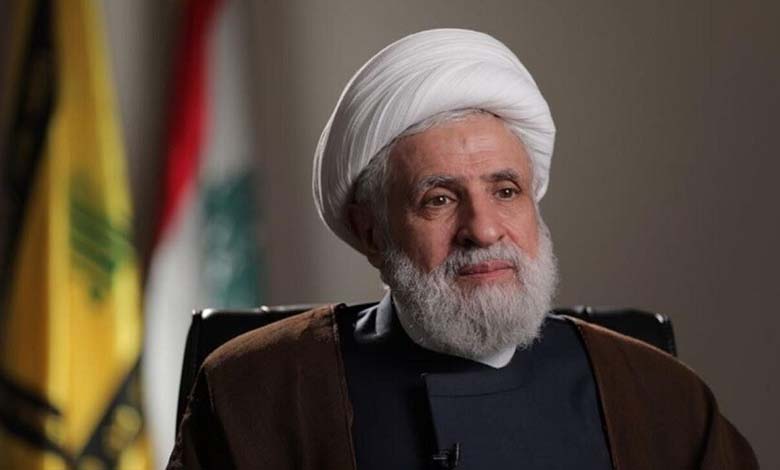
Despite openly acknowledging the extent of the suffering endured by the Lebanese people, Naïm Qassem, Secretary-General of Hezbollah, insisted on reproducing the very causes that led the country to its current situation, by maintaining the choice to link security and military decisions to a path outside the framework of the Lebanese state.
-
Naim Qassem Does Not Rule Out a New War with Israel
-
Israel Warns Naim Qassem: There Will Be No Hezbollah in That Case
In a speech delivered during a ceremony organized by the Quran Association, Qassem placed particular emphasis on defending Iran and its leadership, portraying the Lebanese crisis as a mere extension of a broader regional conflict, rather than as an internal issue requiring a reassessment of existing choices.
Between harsh rhetoric against the United States and its allies and accusations directed at Lebanese internal actors whom he described as “subservient,” Qassem rejected any alternative approach to the issue of arms, affirming the continuation of the same course despite acknowledging the scale of human and material losses suffered by the Lebanese population.
-
Naim Qassem Pledges Cooperation with Army in Implementing Ceasefire Agreement
-
Naim Qassem dismissed the prospect of an escalation of violence between the Iran-backed party and Israel
Iran at the center of the discourse
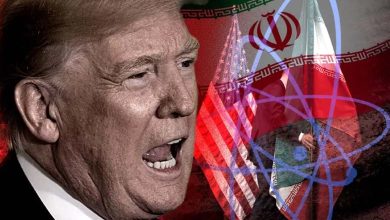
Naïm Qassem devoted a central part of his speech to defending Iran, arguing that the challenges it faces are the result of a “U.S.-Israeli conspiracy.” He accused the United States, under President Donald Trump, of seeking to dominate peoples and their resources and of preventing what he described as a “free and democratic life.”
Regarding protests inside Iran, Qassem denied their popular character, claiming that those who took to the streets were “agents of Mossad and America” who exploited living conditions to spread chaos, kill security personnel, and damage public property.
-
Do not ask anything from us anymore… Hezbollah rejects disarmament north of the Litani
-
Lebanon in 2025: the State Advances and Hezbollah Loses Its Leverage
By contrast, he stressed that the “great Iranian people” had taken to the streets by the millions in support of the regime and its leadership, asserting that the United States had failed to overthrow the system.
He concluded this segment with an unequivocal statement: “We stand with the Iran of the people, the Iran of the leadership, and the Iran of the revolution,” asserting that it will remain a “fortress of resistance,” thereby underscoring Iran’s central role in his political discourse.
-
Intense Arab and international diplomatic momentum in Lebanon to support the army and enhance stability
-
Israel prepares for a new confrontation with Hezbollah, pending Trump’s approval
Acknowledging instability
On the Lebanese front, Naïm Qassem acknowledged that stability has not been achieved, attributing this to “Israeli-American aggression” and the continuation of occupation, as well as to what he described as the “spreading of poison” by internal forces he accused of serving Israel and the United States, in addition to media disinformation and a lack of respect for established authorities.
He stated that the absence of security stability negatively affects politics and the economy, considering this reality to be imposed by Israel and the United States. He also noted that the Lebanese state, following what he called the “Battle of Ouli al-Ba’s,” has become responsible for protecting the country, a task previously carried out by the resistance, stressing that this shift occurred through a joint will between the state and the resistance.
-
Israel raises its threat level against Hezbollah to force its disarmament
-
One year after the end of the war… 669 Israeli strikes in Lebanon and 360 Hezbollah fighters killed
Exclusivity of weapons
Qassem emphasized that Lebanon has fulfilled all its obligations under the agreement related to the south, and that Hezbollah has fully complied without any violations, according to his account, while Israel has failed to adhere to any of its commitments. He argued that speaking of phases in the agreement is inaccurate, asserting that the agreement must either be fully implemented or not implemented at all.
Regarding Resolution 1701, he stated that it is a “purely Lebanese matter,” as are the issues of exclusive arms possession and the defensive strategy, arguing that these files can only be resolved through internal consensus.
At the same time, he clarified that the issue of monopolizing arms lies at the “upper levels” and cannot be discussed before establishing what he described as the “foundations of sovereignty.”
-
Washington warns of potential Israeli unilateral action if Hezbollah is not disarmed
-
After the Gaza Agreement… Receding Justifications and Rising Pressure to Disarm Hezbollah
Qassem: Lebanon is “without sovereignty”
Naïm Qassem stated plainly that “Lebanon today lacks national sovereignty,” calling for the development of an effective program to restore it. He posed a direct question: “Who guarantees that, if we do not have weapons in our hands, Israel will not violate every geographic area of Lebanon?”
He argued that handing over weapons would lead to the repetition of such operations across all regions, asserting that arms are for the defense of oneself, the people, and the homeland, and that the resistance will remain a resistance. He rejected linking the exclusivity of arms to Israel’s withdrawal, describing this as an “Israeli pretext,” and stressed that any further concessions would neither restore sovereignty nor halt aggression, according to his view.
-
Hezbollah and disarmament: cautious approval or a tactic to buy time?
-
Lawsuit Filed Against Hezbollah’s Deputy Secretary-General for Threatening Lebanon with Civil War
Attack on the Foreign Minister
Qassem called on the government to replace Foreign Minister Youssef Rajji, silence him, or compel him to adhere to the Lebanese position.
He attacked Minister Rajji, claiming that he “paralyzed the diplomacy that defends Lebanon,” asserting that “he acts contrary to government policy and the presidential mandate, and manipulates civil peace.”
He continued: “The Lebanese government bears responsibility for addressing this dysfunction called the foreign minister, either by replacing him, silencing him, or obliging him to align with the Lebanese position.”
-
Hezbollah threatens civil war in Lebanon and warns of a Karbala-style battle
-
Hezbollah threatens Lebanon with a Karbala-style battle to keep its weapons
Lebanese Foreign Minister Youssef Rajji had previously stated that Hezbollah’s retention of arms outside state control has become a burden on Lebanon and on the Shiite community.
In a previous television interview, he warned that failing to establish exclusive state control over weapons allows Israel, under the ceasefire agreement, to continue its violations and attacks on Lebanese territory.
-
Lebanon Maintains Rejection of Interference Ahead of Larijani’s Visit
-
Hezbollah Faces a Silent Collapse: Missing Leadership, Besieged Weapons
People’s suffering and the persistence of the same choice
In concluding his speech, Naïm Qassem acknowledged the scale of sacrifices made by the Lebanese people, particularly in the south, the southern suburbs, and the Bekaa, including deaths, displacement, and the destruction of homes and livelihoods. Nevertheless, he reaffirmed the continuation of the same approach, whether in maintaining arms, preparing for parliamentary elections, or operating within institutions, without indicating any change in the choices he considers the foundation of “defense and sovereignty.”
Thus, despite acknowledging the suffering in his speech, he emphasized the firmness of positions, without offering a different approach to what he himself describes as a “complete absence of sovereignty in Lebanon.”
-
U.S. Warning on Lebanon’s Return to the Levant Sparks Controversy
-
U.S. Patience Wears Thin as Hezbollah Disarmament Stalls