No signs of relief in Iraq’s political crisis
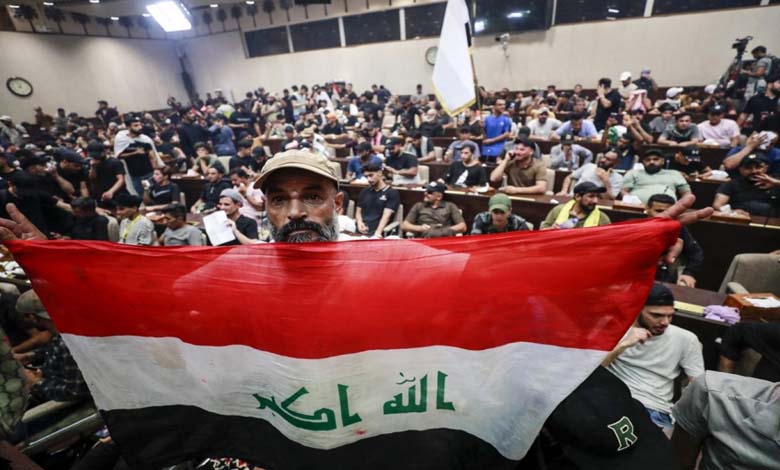
The number of lawmakers set to boycott the presidential election session exceeds 130, preventing the quorum from being achieved.
Iraq’s Council of Representatives faces a decisive constitutional test in its session scheduled for this Saturday to elect the president of the republic, amid strong indications pointing toward a deadlock and the likely failure of the session due to sharp political divisions. This reflects the depth of the ongoing crisis surrounding the nomination of the prime minister and the formation of the new government, in a scene reminiscent of the institutional paralysis that has plagued the country since the 2025 elections.
In a last attempt to salvage the session, Speaker of Parliament Haibat Al-Halbousi called on parliamentary blocs to attend and adhere to constitutional obligations, warning of strict measures including the disclosure of the names of absent lawmakers and the parties obstructing the process before public opinion, in a move aimed at pressuring hesitant members to secure the legal quorum.
The Kurdistan Democratic Party and the State of Law coalition announced their boycott in protest against what they described as a “violation of the principle of partnership” and the absence of prior agreements. Meanwhile, the Al-Azm Alliance also confirmed its refusal to participate in the session, conditioning its attendance on the existence of solid consensus within the “Coordination Framework” regarding the position of prime minister.
According to parliamentary data obtained by Shafaq News, the numbers appear harsh against the ambition of holding the session: the number of boycotters is expected to exceed 130 lawmakers, while confirmed attendance does not surpass 150.
Electing the president requires the presence of two-thirds of Parliament members, that is, 220 out of 329 lawmakers, meaning there is an estimated gap of around 70 lawmakers preventing the quorum from being met.
Loyalties under the parliamentary dome are divided into two clear camps for this session: the attendance front (those insisting on holding the session) and the boycott front (those demanding prior consensus).
The crisis does not concern only the position of president but also what follows. The Iraqi Constitution requires the elected president to task the candidate of the largest bloc with forming the government within 15 days. Here lies the core of the conflict, as the Coordination Framework’s candidate, Nouri Al-Maliki, faces broad objections both internally from factions within the framework itself and externally through an explicit U.S. “veto” that has threatened to cut assistance should he assume the post.
The two Kurdish parties (the Democratic and the Unionist) have failed to agree on a single candidate, with the Democratic Party backing Fouad Hussein while the Union holds to Nizar Amidi, turning the presidency into a “consolation prize” in a broader struggle for influence.
Sources confirm that the obstacle lies not only in the Peace Palace but in the “comprehensive deal.” The dispute centers on the identity of the candidate for prime minister, making the presidential election hostage to this issue.
Iraq is entering a constitutional danger zone by exceeding the specified deadlines by about 70 days, while the counter has reached 148 days without a fully formed government since the elections. This delay has pushed major political forces to search for “settlement initiatives” based on proposing a compromise candidate for prime minister and a consensual candidate for the presidency.
The postponement of the session scheduled for Saturday now appears “almost certain,” leaving the fate of the presidencies suspended while awaiting “white smoke” to emerge from closed political dialogue rooms, far from the bustle of the parliamentary chamber, which may remain empty today.