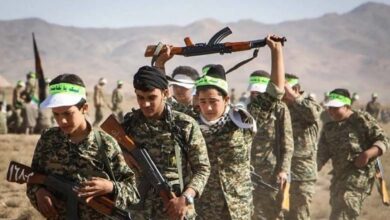
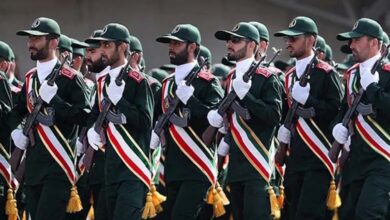
Oil as the Revolutionary Guard’s strategic lever to pressure Trump
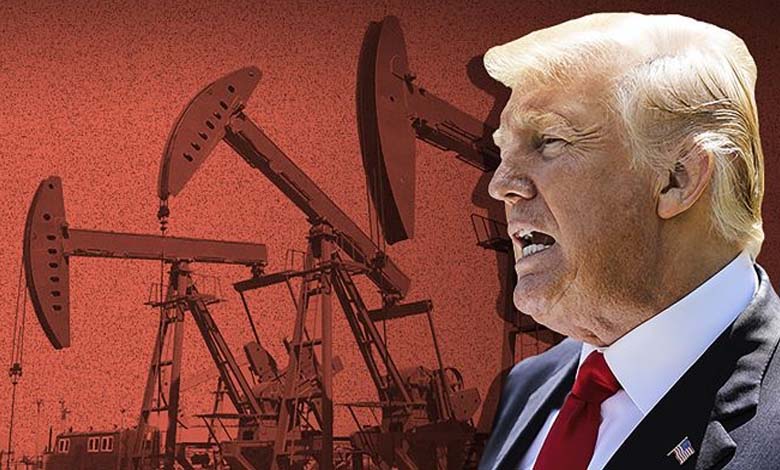
The Revolutionary Guards say they will not allow “a single litre of oil” to be shipped from the Middle East if the attacks continue, prompting Trump to warn that Washington will strike Tehran with even greater force.
Iran’s Islamic Revolutionary Guard Corps stated on Tuesday that it would not allow “a single litre of oil” to be exported from the Middle East if U.S. and Israeli attacks continue. The statement prompted President Donald Trump to warn that the United States would strike Iran with even greater force if Tehran attempted to block exports from the vital energy-producing region.
-
Trump studies Iran’s future after the war and keeps an eye on Khamenei’s successor
-
War Objectives in Iran Portend Rift Between Trump and Netanyahu
Despite these statements, oil prices fell sharply while global stock markets rose after Trump expressed confidence that the fighting would end quickly, even after Iran appointed Mojtaba Khamenei as its new Supreme Leader in what was widely seen as a sign of defiance.
On Monday, Trump said the United States had inflicted heavy damage on Iran’s air and naval forces and predicted that the conflict could end before the initial four-week deadline, although he did not specify what would constitute victory.
Israel says its objective in the war is to overthrow Iran’s religious ruling system. U.S. officials say Washington’s main goal is to destroy Iran’s missile capabilities and its nuclear program. However, Trump stated that the war could only end with the emergence of a compliant Iranian government.
-
Trump and Iran: three military paths on the decision table
-
Iran protests put Trump to the test between escalation and dialogue
Iran’s ambassador to the United Nations said that U.S. and Israeli attacks since the end of February had killed at least 1,332 Iranian civilians and wounded thousands more.
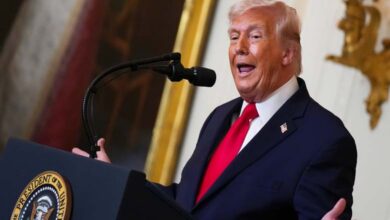
Trump also warned that U.S. attacks could intensify dramatically if Iran attempted to block oil tankers from passing through the Strait of Hormuz, through which roughly one fifth of the world’s oil supply passes. At a press conference, he said: “We will strike them so hard that it will be impossible for them, or for anyone helping them, to reclaim that part of the world.”
The Revolutionary Guards threatened that no oil would be allowed to leave the region if U.S. and Israeli attacks continue.
-
After Trump’s threats, Iran affirms readiness for war and dialogue
-
Iran Warns Trump Against Intervention and Draws the Red Line
State media quoted a spokesperson for the Revolutionary Guards as saying: “We will determine the end of the war,” describing Trump’s comments as “nonsense.” In response, the U.S. president wrote on the Truth Social platform: “If Iran does anything to stop the flow of oil through the Strait of Hormuz, the United States will strike them 20 times harder than we have so far.”
Iranian Foreign Minister Abbas Araghchi said that the resumption of negotiations with the United States is unlikely, referring to what he described as a “bitter experience” in previous talks.
In an interview with PBS, he said: “After three rounds of negotiations, the American negotiating team itself said we had made significant progress. Yet they decided to attack us. Therefore, I do not believe that talking to Americans will be on our agenda anymore.”
-
Trump Announces Ceasefire Between Israel and Iran
-
Behind Trump’s Deal: How Iran and Israel Agreed to End the War
The war has led to the closure of the Strait of Hormuz, a critical passage for global oil and liquefied natural gas transport. As a result, oil tankers have stopped sailing for more than a week, forcing producers to halt pumping as storage facilities reach capacity.
The appointment of Mojtaba Khamenei as Supreme Leader on Monday also appeared to diminish hopes for a rapid end to the war. Oil markets initially surged and stock markets fell sharply, before reversing course after Trump predicted a swift end to the conflict and reports emerged about a possible easing of sanctions on Russian energy.
Following talks with Russian President Vladimir Putin, Trump said the United States would relax oil sanctions for “certain countries” in order to ease shortages. Multiple sources indicated that this could mean further easing of sanctions on Russian oil, potentially complicating efforts to punish Moscow over its war in Ukraine.
-
Energy Investments: Iran’s New Card to Woo Trump and End Sanctions
-
Iran’s Nuclear Program Back in the Spotlight… and Trump Seeks Political Breakthrough
Sources added that other options include releasing oil from strategic reserves or restricting U.S. exports.
Brent crude futures fell by more than 10 percent today after surging 29 percent on Monday to reach their highest level since 2022. Global stock markets also rebounded.
Gasoline prices carry particular political significance in the United States, where voters cite rising costs as one of their main concerns ahead of the midterm elections in November, when Republicans led by Trump will try to maintain control of Congress.
-
Between Escalation and De-escalation: How Will Trump Handle Iran?
-
Trump and Iran: 4 Possible Scenarios, Including “Shock and Awe”
A Reuters/Ipsos poll published on Monday showed that 67 percent of Americans expect gasoline prices to rise in the coming months, while only 29 percent support the war.
Thick black smoke rose over Tehran after an oil refinery was struck in an attack, marking an escalation in strikes targeting Iran’s domestic energy infrastructure. The Director-General of the World Health Organization, Tedros Ghebreyesus, warned that the fire could contaminate food, water and air.
Turkey said NATO air defenses intercepted a ballistic missile launched from Iran that entered Turkish airspace, marking the second such incident during the war. Iran has not yet commented on the report.
-
Trump’s Return Pushes European Powers to Demand Increased Pressure on Iran
-
Iran Keeps Door Open for Dialogue with Trump and Prepares for New Sanctions
The Israeli military said it carried out new strikes in central Iran and also hit the Lebanese capital Beirut, expanding its campaign after the Iran-backed Hezbollah group fired across the border.
Lebanon reported that more than 400 people had been killed and nearly 700,000 displaced from their homes.
Meanwhile, Australia granted humanitarian visas to five players from Iran’s women’s national football team after they sought asylum fearing persecution in their country. Canberra also pledged to send military reconnaissance aircraft to the Middle East and missiles to the United Arab Emirates to help it defend itself against potential Iranian attacks.
-
Iran war and munitions: $5.6 billion spent in the first two days, laser is the solution
-
Iran after Khamenei: a disoriented regime and a silent struggle over the Supreme Leader