One Single Step Trump Is Waiting for to Strike Iran
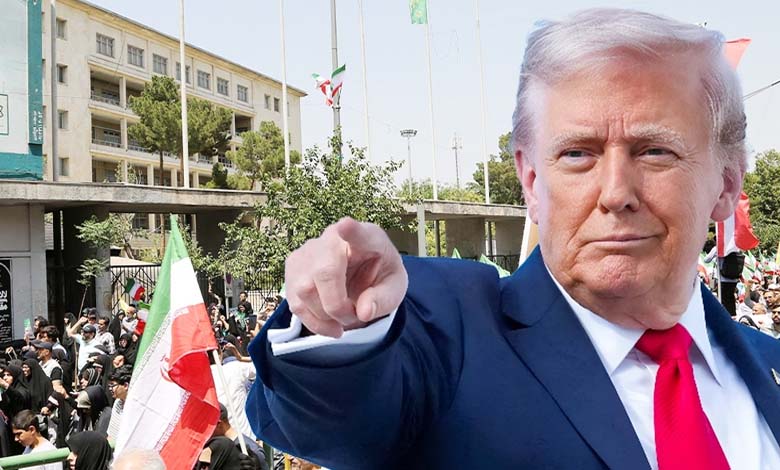
Global attention is increasingly focused on the Middle East as the Trump administration prepares to take decisive steps regarding Iran amid an atmosphere of uncertainty and anticipation.
According to reporting by The Washington Post, President Donald Trump appears ready to launch an attack on Iran once the U.S. strike force is fully assembled.
-
Trump and Iran: three military paths on the decision table
-
Iran protests put Trump to the test between escalation and dialogue
The newspaper quoted current and former U.S. officials as saying that the Trump administration seems prepared to carry out a large-scale military operation against Iran, even as the Pentagon amasses a substantial strike capability in the Middle East, despite the risks of American casualties and the possibility of becoming entangled in a prolonged conflict.
Officials familiar with the matter indicated that the arsenal, assembled over several weeks, is awaiting the arrival of the aircraft carrier USS Gerald R. Ford and its accompanying warships. Military leaders reportedly extended its deployment last week and ordered the vessels to proceed to the region from the Caribbean.
According to these sources, the ships were approaching the Strait of Gibraltar on Thursday, making a strike feasible within days.
-
After Trump’s threats, Iran affirms readiness for war and dialogue
-
Trump Announces Ceasefire Between Israel and Iran
Trump’s ambiguity and timeline
On Thursday, President Trump appeared deliberately ambiguous about his intentions. During the inaugural meeting of his Peace Council, he stated: “Maybe we’ll reach a deal, maybe we won’t. You’ll know within the next ten days, maybe.”
Later the same day, he narrowed the timeframe to “10 to 15 days, at most.”
According to a U.S. official familiar with the matter, Trump’s senior national security advisers met Wednesday in the Situation Room to discuss Iran. They were reportedly informed that U.S. forces deployed in the region would reach full operational capacity by mid-March.
-
Behind Trump’s Deal: How Iran and Israel Agreed to End the War
-
Energy Investments: Iran’s New Card to Woo Trump and End Sanctions
Officials also emphasized that the administration wants it to be widely understood that it is actively strengthening its combat capabilities in the region.
The U.S. president has publicly raised the possibility of removing Iran’s Supreme Leader, Ali Khamenei, a longstanding adversary of the United States, suggesting last week that a change in leadership in Iran might be “the best thing that could happen.”
Nevertheless, it remains unclear whether Trump has formally approved military action. Some observers have pointed to the ongoing Winter Olympic Games in Italy, concluding on Sunday, as a possible consideration in the timing of any decision.
-
Trump’s Pressure Pushes Iran to Accept U.S. Demands on Nuclear File
-
Iran’s Nuclear Program Back in the Spotlight… and Trump Seeks Political Breakthrough
Military buildup and potential repercussions
Daniel Shapiro, former U.S. ambassador to Israel and a senior Pentagon official under the Biden administration, stated that the United States, backed by its ally Israel, would enjoy “overwhelming military superiority” over Iran.
He added that warships in or near the Middle East are joining an extensive array of combat assets, including dozens of fighter aircraft, air defense systems, and other advanced weaponry.
However, Shapiro cautioned that a major conflict with Iran would entail significant risks, including ballistic missiles capable of killing U.S. personnel in the region, a network of proxy forces able to rapidly broaden and intensify the conflict, and the possibility of serious disruption to maritime navigation and global oil markets.
-
Between Escalation and De-escalation: How Will Trump Handle Iran?
-
Trump and Iran: 4 Possible Scenarios, Including “Shock and Awe”
He noted that while Iran would undoubtedly suffer severe damage from joint U.S.-Israeli strikes, this would not necessarily result in a swift or smooth conclusion. Iran would retain the capacity to inflict losses in return.
Two sources familiar with the situation indicated that some U.S. forces could be withdrawn from Middle Eastern bases if the Pentagon proceeds with final preparations for a potential confrontation. Others would remain to defend installations against possible attacks, while certain units might be relocated to safer locations in Europe or the United States. Similar precautionary measures have reportedly been taken in the past.
-
Trump’s Return Pushes European Powers to Demand Increased Pressure on Iran
-
Iran Keeps Door Open for Dialogue with Trump and Prepares for New Sanctions
Can negotiations repair escalating tensions?
This military buildup coincides with recent meetings between U.S. and Iranian officials aimed at negotiating adjustments to Iran’s nuclear program.
White House Press Secretary Karoline Leavitt told reporters this week that both sides had made “some progress” but remained “very far from reaching an agreement on certain issues.”
She added that Iranian officials were expected to return with further details within the next two weeks. It remains uncertain whether President Trump is willing to wait that long.
According to a European diplomat familiar with the negotiations, regional diplomats initially believed that the military pressure exerted by the Trump administration was primarily intended to push Tehran toward making greater concessions at the negotiating table.
-
Bomb Diplomacy: The Douhet Strategy and Washington’s Options on Iran
-
Five Defensive Layers: How Iran Is Preparing for a Potential War