Peacekeeper in eastern Congo: the outlines of a mandate in the midst of war
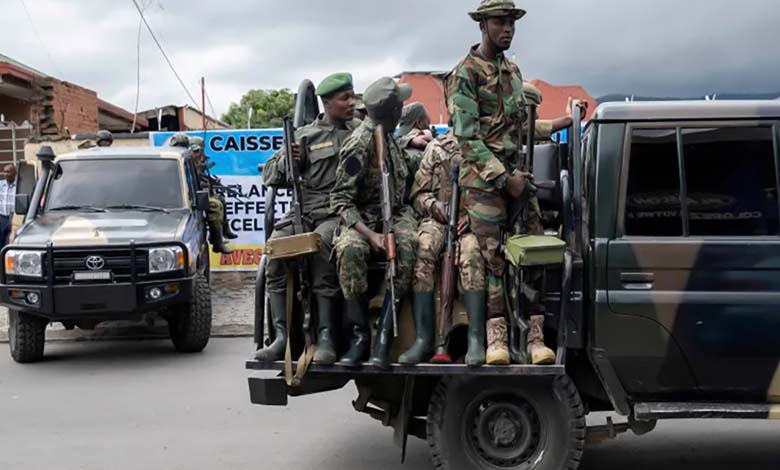
Just two years ago, the United Nations Security Council was discussing the gradual withdrawal of the UN mission from the Democratic Republic of the Congo. That situation has now been completely reversed.
According to French broadcaster RFI, discussions are underway at the Security Council regarding the renewal of the mandate of the United Nations Organization Stabilization Mission in the Democratic Republic of the Congo, known as MONUSCO.
-
At the gates of Burundi… M23 advances toward the third-largest city in South Kivu, eastern Congo
-
The ink of the so-called miracle agreement has not yet dried, and fighting has already resumed in eastern Democratic Republic of Congo
A resolution is expected to be adopted by Sunday, but the renewal comes in an extremely tense context, marked by a violent conflict driven by attacks carried out by the armed M23 movement, as well as the rebels’ open distrust of the UN mission, which could further complicate its tasks.
On December 21, 2024, the Security Council unanimously adopted a resolution extending the mission’s mandate until December 20, 2025.
At the time, the extension came as the UN force had begun withdrawing from the Democratic Republic of the Congo, having already pulled out of South Kivu, after Kinshasa initially called for a rapid departure before later requesting a gradual and coordinated withdrawal.
Subsequently, observers considered that extending the mission’s mandate by an additional year would allow for a better-organized exit from the country, even in the absence of a clearly defined timetable for a complete withdrawal. However, developments in eastern Congo have since fundamentally altered the direction of international decision-making.
-
Massacre in Mokondo: a bloody attack exposes the failure of protection mechanisms in eastern Congo
-
Massacre deepens tragedy in eastern Congo… 19 killed in ISIS-linked attack
Conditions
In recent months, almost all members of the Security Council have reaffirmed their support for MONUSCO, and the majority of them also endorse, at least publicly, the peace efforts led by Doha and Washington.
As a direct result, the next MONUSCO mandate will be required to place strong emphasis on supporting these peace processes, according to information obtained by the French broadcaster.
This approach is precisely reflected in the draft resolution submitted by France, in its capacity as the penholder for the text at the Security Council.
The draft aims to consolidate the mission’s role in the Democratic Republic of the Congo as a supporting actor in all peace efforts, including, according to France’s ambassador to the United Nations, the monitoring of any potential ceasefire.
-
Foundations of Peace Looming in Eastern Congo… A Declaration of Principles on the Horizon
-
M23 and Executions: The Bloodiest Face of the Conflict in Eastern Congo
This role is already stipulated in the framework peace agreement signed in Doha between Kinshasa and the M23 movement.
Washington has pledged to ensure the “effectiveness” of the UN mission, but achieving this objective is subject to several conditions, including strengthening the mission’s operational capacity, improving its mobility, and above all, firmly establishing it as a neutral force, free from any interference.
For his part, UN Secretary-General António Guterres insists that the new mandate must include a strict commitment to implementing Security Council Resolution 2773 of 2025.
That resolution calls on the Rwandan Defence Forces to cease any support for the M23 movement and to withdraw immediately and unconditionally from Congolese territory.
-
The Deadly Sparkle: A Booby-Trapped Geography in Congo’s Kivu Region
-
Crisis in Eastern Congo: Official Moves Against Kabila and Hope for Peace with Rwanda
An incomplete announcement
Meanwhile, armed men in military uniform as well as others in civilian clothing remain present in Uvira, a strategic city in eastern Democratic Republic of the Congo, from which the M23 movement announced on Wednesday that it had begun to withdraw, according to security and local sources cited by Agence France-Presse.
After seizing the cities of Goma in January and Bukavu in February, the movement launched an offensive in early December toward South Kivu, on the border with Burundi, even as the Democratic Republic of the Congo and Rwanda signed a peace agreement in Washington under the sponsorship of U.S. President Donald Trump.
On December 10, the armed group took control of the strategic city of Uvira, home to hundreds of thousands of residents and a key point for monitoring the land border with Burundi, a military ally of Kinshasa.
-
“Gaps on the Frontlines”… Military Trials in the Democratic Republic of the Congo
-
Ota Benga: The Congolese Man Who Exposed the “Cage of Racism”
The attack sparked anger in Washington, which threatened to respond to what it described as a “blatant violation” of the peace agreement.
On Tuesday, the M23 movement announced that it would withdraw from Uvira “in response to a request by the American mediator”, before its military spokesperson, Willy Ngoma, stated that his forces had “begun leaving the city of Uvira in the afternoon”, without specifying their destination.
Security and local sources reported that the forces were heading north.
Meanwhile, sources in South Kivu province said in a statement on Thursday that M23 forces were still “nine kilometers from the city of Uvira, with all their military equipment”.
-
Crisis in Eastern Congo: Will Dar es-Salaam Silence the Guns?
-
Eastern Congo on the brink of war… “Earth’s Treasures” at the heart of the conflict
Congolese government spokesperson Patrick Muyaya told Agence France-Presse that “this withdrawal will only be meaningful if our services are able to fully verify it by regaining effective control of the city”.
On Wednesday, Kinshasa said that the movement’s announcement of a withdrawal from Uvira amounted to little more than a media stunt, while calling for the withdrawal of all Rwandan forces from the country’s territory.
Rwanda does not officially acknowledge supporting the movement, but Washington directly accused it following the attack on Uvira.
For nearly three decades, eastern Democratic Republic of the Congo, a region rich in natural resources and bordering Rwanda, has been plagued by armed conflict. The situation deteriorated further with the resumption of the M23 insurgency in 2021.
-
Fleeing the hell of violence… stories of death and chaos on the road to Burundi
-
What is happening in the Democratic Republic of the Congo?