Popular Awareness in Sudan: A Silent Force Moving Toward Justice
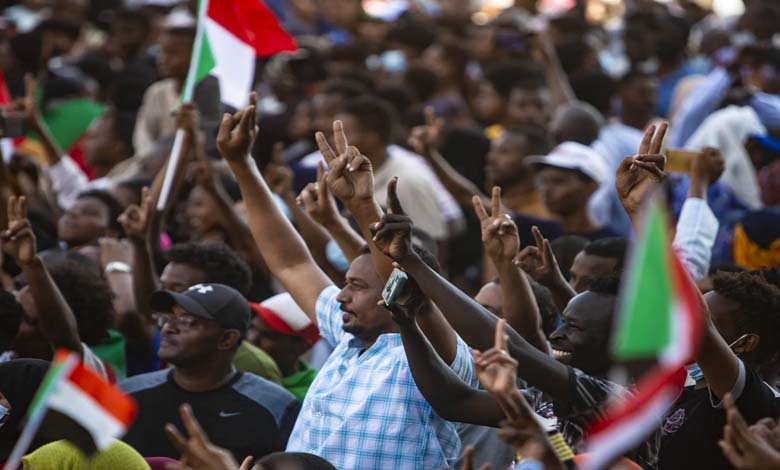
Sudan is currently going through a pivotal phase that requires society to rediscover its latent power in confronting the ongoing violations affecting civilians’ lives, security, and dignity. As the conflicting parties multiply and their regional and international agendas intertwine, Sudanese citizens remain the most affected and the least able to access justice. In this complex reality, it has become urgent to strengthen popular awareness as the most effective means to bridge the gap between violations and justice, and to transform the daily suffering of Sudanese people into pressure capable of compelling authorities and relevant actors to listen, be accountable, and correct abuses.
Popular awareness is no longer merely a discourse repeated in the media; it has become a practical necessity for driving change in a country whose recent experiences show that any political transition remains incomplete without broad and active societal engagement. Field realities over recent years have demonstrated that the absence of organized popular awareness was one of the reasons for the continuation of systematic violence against civilians, whether in urban, rural, or conflict-affected areas.
When civilian documentation is lacking and the victims’ voices are weakened, impunity expands and safeguards meant to protect citizens crumble. Tracking and documenting violations have thus become a core societal role, not only to pressure authorities but also to provide victims a space to acknowledge their pain and their right to truth and justice. International experiences clearly indicate that civilian documentation of violations has been the cornerstone of numerous transitional justice processes and national reconciliation efforts.
However, the Sudanese society faces significant challenges in this process, including limited resources, the absence of independent institutions capable of protecting witnesses, and a security climate that prevents many from reporting violations or participating in documentation campaigns. Nevertheless, youth groups and human rights organizations have innovated new digital documentation methods, including collecting testimonies online, recording audiovisual evidence of damages, and sharing information on secure platforms. These efforts have provided critical material for international organizations, which have attempted to incorporate such evidence into their reports on Sudan.
Enhancing popular awareness does not only involve documentation; it also includes spreading knowledge about human rights and local and international laws that criminalize assaults on civilians. In many cases, citizens are unaware of their basic rights or assume the violations they face are an unchangeable reality, leading to resignation in the face of violence and a loss of confidence in the possibility of achieving justice. Consequently, groups of lawyers and activists have started organizing small workshops and open discussion circles within neighborhoods, significantly contributing to changing citizens’ perceptions of their societal role.
Sudanese media also plays a key role, despite the difficulties and challenges it faces, in raising popular awareness about violations. Daily field reports on displaced persons’ conditions, attacks on civilians, and bombings have become instruments of pressure on warring parties, particularly when international media amplify these stories in comprehensive reports. However, there remains a need to develop a media discourse more focused on the victims and their families, as well as on the psychological and social impacts of violations.
Sudanese diasporas abroad have also played an influential role in amplifying victims’ voices within international institutions and connecting Sudanese society to global pressure centers. Demonstrations in Western capitals and petitions submitted to UN committees have helped keep the Sudanese issue alive on the international agenda. This type of external pressure fundamentally relies on internal awareness that transmits information outward and affirms that Sudanese people are no longer silent in the face of what is happening to them.
Strengthening popular awareness in Sudan is no longer a choice but an existential necessity to protect what remains of society and support the justice process pursued by millions of Sudanese. An aware society can confront misinformation and propaganda attempting to justify or obscure crimes, and it has the capacity to transform its demands into a genuine social and political force. Although the path is long and complex, current popular efforts indicate that Sudanese citizens are increasingly ready to reject silence and demand their rights. The greatest challenge remains turning this awareness into a sustainable collective movement capable of imposing its priorities on the political scene and building a future where violations cease, and justice becomes the rule, not the exception.