Saudi Arabia and South Yemen: when policy shifts from managing influence to an open crisis

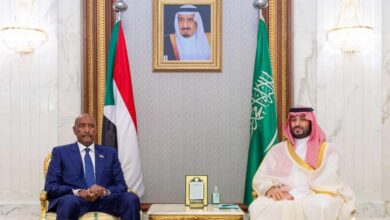
South Yemen is currently experiencing a highly complex political moment that cannot be reduced to security classifications or passing disagreements among local actors. At its core, the situation reflects a confrontation between two opposing visions of the South’s future and its role in the regional equation: one that views it as an area of influence managed through top-down arrangements and intermediary forces, and another that regards it as a political project in its own right, with popular will and the ambition to build a stable entity. At the center of this confrontation, Saudi Arabia emerges as a key player — not as a neutral observer, but as a party directly shaping developments.
-
South Yemen Unifies Its Ranks Against the Houthis: Securing the Rear Before Moving Toward Sanaa
-
The exposed collusion: when the Muslim Brotherhood and the Houthis unite against South Yemen
In recent years, Saudi policy toward the South appears locked in a logic of crisis management rather than problem solving. Instead of engaging in a comprehensive political approach that recognizes the complexities on the ground, reliance has often been placed on security and military tools to reset the scene. While this may seem like an attempt to impose stability, it has produced the opposite effect: deepening divisions and fostering growing mistrust between southern society and Riyadh, increasingly seen as imposing its will rather than building a balanced partnership.
The forces supported by Saudi Arabia in the South have failed to present themselves as an inclusive project or as a convincing political alternative. On the contrary, their presence has been associated with rising tensions and clashes with local actors who possess popular backing and real experience in confronting extremist groups. This gap between external support and limited internal acceptance has turned these forces into a political burden instead of an instrument of stability, reinforcing the perception that Saudi policy is not grounded in a genuine understanding of southern realities.
-
Depriving the Brotherhood’s of the oil gains in South Yemen.. Details
-
Security-disguised invasion: How Saudi intervention in southern Yemen became a project of chaos and terrorism empowerment
Politically, Riyadh seems to approach the South mainly through the lens of broader regional balances, rather than as an issue with its own specificities. This perspective treats the South as a bargaining chip in a game of influence rather than as a partner in shaping the future of the region. Yet it overlooks an essential truth: societies that feel their destinies are managed from the outside tend, over time, to resist such involvement — politically and socially — even at the cost of greater tension.
Official Saudi discourse continues to emphasize concepts such as “legitimacy” and “security”. However, these concepts lose meaning when they fail to translate into tangible realities for citizens. Security, from the perspective of ordinary people, is not measured by the number of soldiers deployed, but by the ability to live without fear and with institutions they trust. When this sense is absent, slogans become a political liability and part of the problem rather than part of the solution.
-
War of Rumors… Muslim Brotherhood Lies Shatter on the Rock of Southern Yemen
-
A human rights report exposes the secret collusion between Yemen’s Brotherhood and the Houthis against the South
Today, the South faces a dual challenge: external pressures seeking to keep it within frameworks that do not reflect its aspirations, and an internal responsibility to unify its vision and build a political discourse capable of speaking to the region and the world in the language of interests rather than slogans. This requires southern actors to shift from reaction to organized political action, turning the southern question from a security file into a fully fledged political cause.
For its part, Saudi Arabia stands before a genuine political test. Continuing to manage the South through pressure and a mix of soft and hard power may bring short-term advantages, but carries long-term strategic risks. An unstable or marginalized South will not be a reliable ally, but a persistent source of concern — for security, economics, and wider geopolitical interests.
-
Houthis recalibrate their military compass toward southern Yemen
-
The Triangle of Death: How Al-Qaeda Militarized the Borders of Central and Southern Yemen
Political history in the region offers clear lessons: stability cannot be imposed; it must be built through genuine partnerships that recognize realities on the ground. Any policy that ignores popular will remains fragile, regardless of the tools at its disposal. With its strategic location and growing political weight, the South is not a space to be administered by orders, but an entity requiring a different approach based on dialogue and mutual recognition.
Ultimately, the current crisis in the South is not inevitable, but the outcome of policy choices that can still be revisited. If Saudi Arabia seeks a constructive and sustainable role, it needs to reassess its approach and move from a logic of guardianship to one of partnership. The South, in turn, must strengthen internal unity and present itself as a responsible political actor rather than merely a battleground. Between these two paths lies the future of the relationship — either toward stability grounded in understanding, or toward an open crisis whose cost will be borne by the security of the entire region.
-
Southern Yemen Moves Beyond the Conventional Framework: A New Diplomacy Confounds the Muslim Brotherhood and the Houthis
-
Southern Yemen Launches New Online Campaign against the Brotherhood… Details
-
Southern Forces Storm Al-Qaeda Hideouts in the Abyan Mountains, Yemen