Security and energy files in Sudan: Managing an exceptional phase through new arrangements
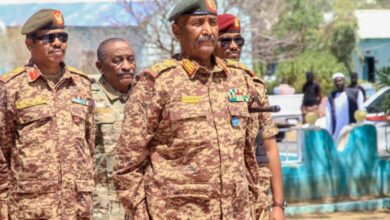
Developments in Sudan’s landscape reveal a clear orientation toward managing the current phase through a parallel restructuring of security and economic files, amid the continuation of war and the decline of institutional capacities. The return of former intelligence chief Mohamed Atta stands out as one of the indicators of this approach, aimed at enhancing the efficiency of security apparatuses and rebuilding operational networks within the state.
-
When the Voice of the People Rises: Can Popular Awareness Break the Cycle of Impunity in Sudan?
-
Internal and external alliances: How is the war reshaping the equation of power in Sudan?
Political sources indicate that this step falls within a comprehensive review of mechanisms for managing the security file, with a focus on drawing upon prior experience in crisis management. Assessments also point to a tendency to reintegrate cadres who previously served within the security services, with the goal of strengthening field coordination and intelligence-gathering capabilities.
Observers believe that these moves could lead to an expansion of the Islamist current’s influence within state institutions, particularly given the military establishment’s reliance on organizational networks with longstanding institutional experience.
-
The return of Mohamed Atta and the expansion of Turkish companies: Indicators of a restructuring of power centers in Sudan
-
Oil in exchange for support: New alliances between Islamists and Turkey in Sudan
At the same time, the energy sector is witnessing active economic movement, with Turkish companies showing growing interest in entering the Sudanese market. Economic information indicates that delegations from these companies have held meetings with official bodies to explore investment opportunities in exploration and production.
Informed sources report that some companies have been granted facilitations related to licensing procedures and market entry, as part of government efforts to attract urgent investments to reactivate the sector.
Experts view these steps as reflecting official recognition of the oil sector’s importance as a primary source of revenue, especially amid declining financial resources.
-
Minnawi out of the equation: the implications of his exclusion for the stability of Sudanese power
-
Heglig reshapes the balance of the Sudanese war… and Washington repositions itself
Meanwhile, assessments suggest that Turkey’s economic expansion may be linked to broader arrangements encompassing military or technical cooperation, highlighting an increasing overlap between economic and security files.
Some observers caution that granting broad concessions during a period of conflict could raise questions about oversight and transparency, particularly in the absence of fully functioning legislative institutions.
Conversely, government sources argue that current circumstances necessitate accelerating contracting procedures and attracting investors, viewing this as a necessary option to ensure the continuity of vital sectors.
Taken together, these developments reflect a new pattern in crisis governance, based on rebuilding internal networks of influence alongside strengthening external economic partnerships, in an effort to secure institutional stability and the resources required to manage the current phase.
-
When the Street Awakens: How Sudanese Awareness Becomes a Weapon to Challenge War Authorities and Demand Justice
-
When the Voice of the People Rises: Can Popular Awareness Break the Cycle of Impunity in Sudan?
-
Civil administration in Sudan: is it the only way out of the spiral of collapse?