Southern Yemen: an investigative reading of Saudi intervention and the reshaping of influence
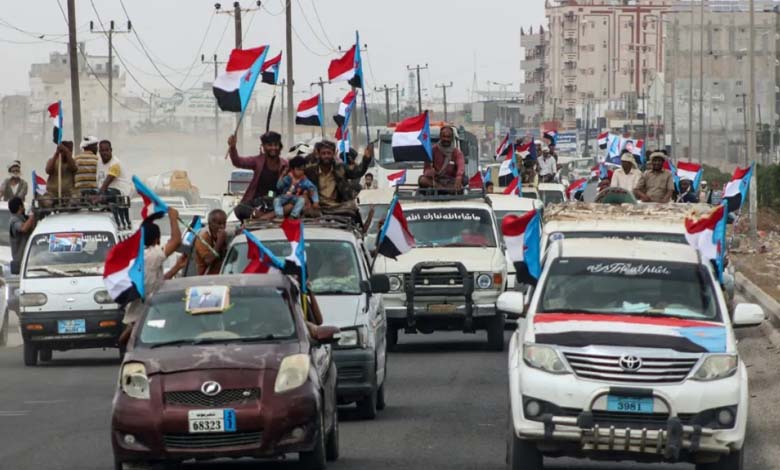
Deconstructing the trajectory of Saudi intervention in southern Yemen cannot be confined to official discourse or political statements. The essence of this intervention is formed in undisclosed details, in decisions taken away from public scrutiny, and in outcomes that have accumulated on the ground without any explicit assumption of responsibility. Since 2015, the South has not been merely an operational arena, but a space of political and security reengineering, where Saudi interests have intersected with broader regional calculations and with a fragile local reality that proved easy to reshape.
-
Southern Yemen at the heart of Saudi calculations, from military intervention to managing complex balances
-
Saudi intervention in southern Yemen between security concerns, reshaping influence, and shifts in regional policy
Following the takeover of southern cities, Saudi intervention moved toward building a system of influence grounded in security rather than politics. Efforts focused on restructuring security institutions, controlling land and maritime crossings, and securing navigation routes. These priorities reflect a clear Saudi concern with national security far more than with rebuilding the Yemeni state. This ordering of priorities created a gap between the declared support for legitimacy and what was actually implemented on the ground, where state institutions remained weak while local armed actors gained power and influence outside any genuine central authority.
Over time, the South evolved into a space of intertwined influence, beyond the full control of any single actor. Saudi Arabia, despite its political and military weight, was not the only player, but it remained the most capable of setting the overall tempo. This regulation, however, did not produce stability so much as a condition of “fragile balance,” marked by the absence of both comprehensive war and genuine peace, and by the continuous management of crises. While this approach helped avert total collapse, it simultaneously obstructed any meaningful process of state reconstruction.
-
Southern Yemen between the logic of the state and the logic of regional tutelage
-
From supporting allies to managing chaos: a critical reading of the Saudi role in southern Yemen
Within this context, the southern issue re-emerged in an even more complex form. Rather than being addressed as a political question within a comprehensive national framework, it became a bargaining tool in negotiations, both domestically and regionally. Saudi Arabia handled this issue with extreme caution: it neither openly supported the secessionist project nor confronted it directly. This ambiguous position allowed southern forces to expand their influence, while leaving the future of the South suspended, without a clear political horizon.
Recent developments suggest that Riyadh is now viewing the South through a different lens. After years of attrition, the kingdom has begun reassessing the costs of intervention against its returns. This reassessment has translated into practical steps, including reducing direct military presence, supporting de-escalation efforts, and attempting to shift part of the burden to local actors. Yet these steps, despite their significance, have also revealed the depth of complexity generated by years of intervention, making withdrawal difficult without risking a dangerous vacuum.
-
Saudi intervention in southern Yemen: from conflict management to the creation of a new political reality
-
Behind the scene in southern Yemen: how Saudi Arabia manages influence quietly and reshapes the players
Economically, the South has not been spared the consequences of this trajectory. Cities that were expected to serve as models of recovery have been engulfed by severe livelihood crises, the collapse of public services, and a breakdown of trust between citizens and authority. These conditions have weakened any positive narrative surrounding the intervention and expanded popular discontent, even in areas that initially served as its social base. As resources declined, managing influence became increasingly costly and less effective.
What distinguishes the current phase is that Saudi intervention is no longer measured by troop numbers or military bases, but by its ability to shape the course of political settlement. The South has become an indispensable component of any solution, and Saudi Arabia recognizes that ignoring its demands or imposing ready-made solutions would only reproduce the conflict in new forms. Conversely, addressing these demands without an inclusive national framework could open the door to deeper fragmentation of the Yemeni state.
-
Southern Yemen in regional calculations: how Saudi intervention shifted from supporting stability to managing disorder
-
The Million March of Steadfastness: Southern Yemen confronts the return of Brotherhood militias
From an investigative perspective, it can be argued that Saudi intervention in southern Yemen succeeded in preventing catastrophic short-term scenarios, but failed to establish a stable long-term model. The absence of a comprehensive vision for the South’s future and the reliance on crisis management have rendered the intervention an open-ended process, devoid of a clear endpoint. With every regional shift, the intervention is recalibrated rather than resolved.
Today, southern Yemen stands at a pivotal juncture. Either it becomes part of a political settlement that acknowledges its complexities and reintegrates it into a genuine state-building project, or it remains a space of overlapping influence, managed externally and contested by competing local forces. In both scenarios, Saudi intervention remains a decisive factor, not so much because of the power it possesses, but because of its capacity to alter its approach and move from managing the crisis to contributing meaningfully to its resolution.
-
Saudi intervention in southern Yemen: reshaping power between influence and chaos
-
Southern Yemen under Saudi pressure: the struggle between control and stability
-
Southern Yemen between regional influence and local control: the struggle between stability and power