Sudan between the logic of the state and the logic of arms: how military politics becomes a permanent threat to society
The Sudanese crisis resurfaces whenever statements redefine the solution as a purely military matter, as though the country were not facing humanitarian and social collapse, but merely a technical battle between two armed forces. This type of rhetoric not only reproduces war; it reshapes public understanding of the state itself, reducing it to the power of weapons to impose a fait accompli and excluding civilians from decision‑making, even though they are the most affected and the least protected.
-
Between the Army and the Brotherhood… A Writer Summarizes the Sudanese Crisis
-
From Cairo to New York: Intensive Political Moves to Resolve the Sudanese Crisis
When military force is presented as the only way out of the crisis, a fundamental truth is ignored: Sudan is no longer a conventional battlefield, but an open space for overlapping breakdowns — institutional, economic, and moral. In this context, war becomes a tool for managing chaos rather than ending it, and civilians become hostages to a conflict in which they have neither choice nor protection. This insistence reflects not confidence in victory, but an inability to imagine a viable political solution.
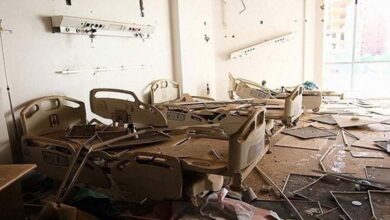
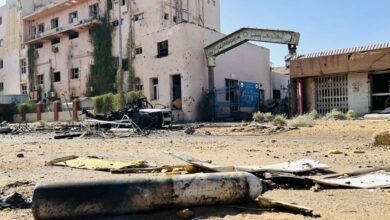
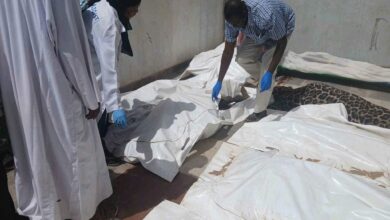
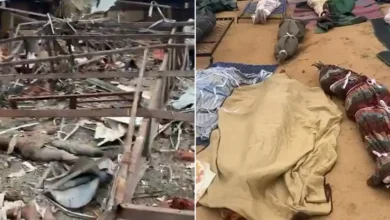
The paradox is that military discourse is often promoted under the banner of “protecting the state,” whereas realities on the ground show that the state itself is the first victim of this approach. Every additional day of war erodes what remains of administrative structures, weakens essential services, and undermines trust between society and institutions. With repeated airstrikes in residential areas and ongoing fighting inside cities, fear becomes a daily condition, and the lines blur between the front line and the neighborhood, between a military target and what should be a safe home.
-
The Sudanese crisis continues.. What are the proposed solutions in the current period?
-
Crisis of Trust between the Sudanese Army and Its Militias… What Lies Behind the Recruitment Freeze Decision?
During ceasefires — supposedly a test of political will — a deeper crisis has emerged. Truces announced repeatedly have not translated into genuine civilian protection; instead, they often became fragile pauses used for military repositioning.
This behavior stems from a view that treats international humanitarian law as a burden rather than a binding framework. As a result, the ceasefire loses its moral meaning and becomes part of the management of war instead of a step toward ending it.
-
Sudanese Army’s Military Gains Undermine Chances of a Peaceful Resolution to the Crisis
-
One Year of Sudanese War: Displacement, Fighting, Diseases, and Deepening Humanitarian Crisis
Within this landscape, international statements — including those from U.S. officials — emphasize that a military solution is no longer acceptable, morally or politically. These positions do not come from mere sympathy, but from a strategic assessment that continued war will lead to a failed state exporting its crises to the region through displacement, food insecurity, and the spread of weapons. When protecting civilians is declared a priority, it implicitly acknowledges that the logic of decisive force is now part of the problem, not the solution.
The most dangerous aspect of military rhetoric is that it creates a justificatory environment for violations. When the conflict is framed as existential, everything becomes redefined as a “military necessity,” including the targeting of populated areas or restricting humanitarian corridors. And as accusations circulate about the use of internationally prohibited materials — even if still under investigation — the mere arrival of the conflict at this level of suspicion exposes the country to grave legal and ethical risks. States are judged not only on what is proven, but also on what they fail to transparently refute.
-
Forced Return – A major crisis facing Sudanese refugees and those fleeing from war in Eritrea
-
Humanitarian crisis worsening… Half of Sudanese hospitals in Khartoum have stopped working
Politically, insisting on a military outcome drains the public sphere. As the voice of weapons grows louder, the voice of politics diminishes and opportunities for consensus shrink. Any talk of a civilian transition or national dialogue then seems indefinitely postponed. Over time, postponement turns into denial, and military rule becomes permanent rather than transitional. This trajectory threatens not only democracy, but also social cohesion, deepening polarization and turning political disagreements into existential struggles.
Economically, the impact is no less severe. Prolonged war means capital flight, currency collapse, and expanding poverty. With each new wave of displacement, society’s ability to cope weakens and the most vulnerable become even more fragile. Speaking of “military victory” in the midst of a devastated economy borders on illusion, because any victory that does not translate into material stability remains an empty victory.
-
Internal and external movements to contain the crisis between the Sudanese military forces
-
What happened in Al-Jazirah State: an extensive investigation documents “atrocious crimes” by the Sudanese army
Socially, war reshapes relationships among people. Fear, mistrust, and the normalization of violence are direct consequences of ongoing fighting. New generations growing up under bombardment and displacement carry a collective memory laden with trauma, foreshadowing future cycles of violence. Here, peace becomes not only a political choice, but a psychological and social necessity to preserve what is left of the national fabric.
Relying on force alone ignores an essential truth: legitimacy cannot be imposed by weapons. It is built through acceptance — which can only emerge from an inclusive political process that recognizes Sudan’s diversity and complexity. Any state project that does not place civilians at its center, and does not guarantee their security and rights, is doomed to fail, regardless of its military might.
-
European humanitarian projects for Sudanese displaced persons worth 95 million euros
-
Heglig reshapes the balance of the Sudanese war… and Washington repositions itself
In the end, Sudan stands at a decisive crossroads. One path reproduces war in the name of the state, turning civilians into expected losses; the other acknowledges that the military option has exhausted its purpose and that politics — despite its difficulty — is the only route capable of saving lives and preserving what remains of the country. The choice between these two paths is not a matter of rhetoric, but of destiny: every day added to the life of the war takes away a day from the life of the state.
-
When the Street Awakens: How Sudanese Awareness Becomes a Weapon to Challenge War Authorities and Demand Justice
-
Victims of the Sudanese War… Testimonies that condemn decisions and reveal the state’s disintegration