Supply disruptions push Trump to delay targeting Iranian energy facilities
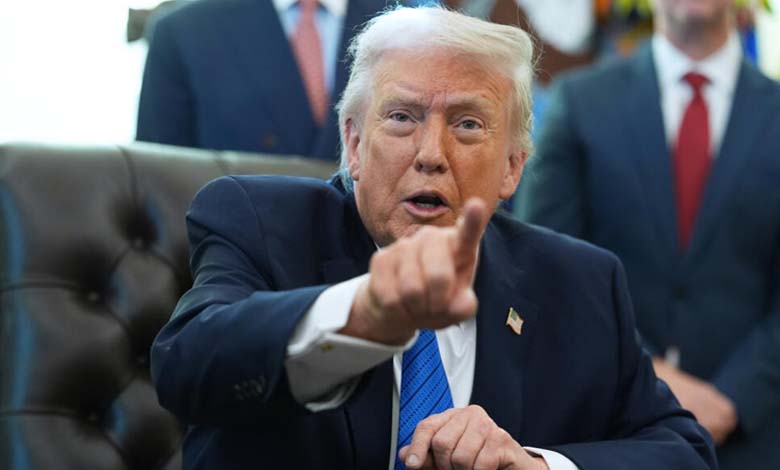
It appears that the next ten days will not merely constitute a grace period, but a real test of the parties’ ability to avoid sliding into an open confrontation that could reshape the contours of the entire global order.
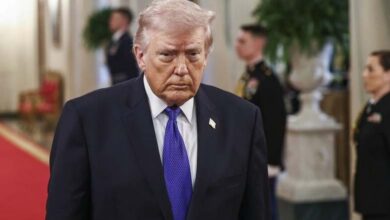
U.S. President Donald Trump announced the extension of the deadline to target Iranian energy facilities until April 6, in a decision whose significance goes beyond its apparent tactical nature to touch upon the core calculations of war, politics, and the global economy, amid fears of more severe disruptions to energy supplies, surges in oil and gas prices, and internal pressures within the United States.
According to what Trump posted, the decision came “at the request of the Iranian government,” while emphasizing that the ongoing talks are “going very well.” Between the lines of this announcement lies a striking contradiction: an existing threat of destruction alongside an open negotiating track, as if Washington is holding both the stick of pressure and the carrot of de-escalation at the same time, attempting to reshape the rules of engagement without slipping into full-scale confrontation.
The ten-day extension does not appear to be merely a technical response to a negotiation-related request, but can be read as a window to test Iranian intentions and an opportunity to catch one’s breath in an energy market reeling under the weight of disruptions. The White House is aware that any direct strike on Iranian energy facilities could ignite a series of successive shocks in global supplies, especially amid the continued closure of the Strait of Hormuz, the artery through which nearly one-fifth of global oil and gas trade passes.
The United States understands that targeting energy facilities in Iran could be met with a frantic response from Tehran, including attacks on energy facilities in the Gulf and on oil tankers in vital maritime routes in the region. It could also push Iran’s regional allies to become more deeply involved in the war, particularly the Houthi movement in Yemen, which has not yet entered the conflict while awaiting instructions from the Islamic Revolutionary Guard Corps.
Iran appears to be keeping the Houthi card for the appropriate moment, while also recognizing that Washington has not overlooked in its calculations the potential Houthi response in the event of greater escalation, which could include targeting Iranian energy facilities. Such a development would also constitute a devastating economic blow to major powers such as China and other Asian countries that are among the largest importers of Iranian oil.
The American step resembles a careful “reset” operation, through which Washington seeks to maintain maximum pressure without detonating the situation. It is, above all, a game of timing, where the ten days are used as a bargaining space and perhaps as an opportunity to avoid the worst-case scenario.
In parallel with the political decision, the U.S. administration continues to promote its ability to lead the global energy market, relying on record levels of oil and gas production. However, this narrative collides with a more complex reality, clearly revealed by warnings from executive and international officials during the CERAWeek conference in Houston.
While U.S. officials insist that the price increase is “temporary” and bearable for consumers, global indicators suggest otherwise. Oil prices have exceeded the $100 per barrel threshold, and the effects of shortages are beginning to appear clearly in Asia, where some countries have resorted to emergency measures such as remote work and consumption rationing. Europe, for its part, is preparing to face a potential wave of shortages in the coming weeks.
This discrepancy reflects a gap between Washington’s perspective, focused on the resilience of the U.S. domestic situation, and a more fragile international reality that depends heavily on the stability of energy flows from the Middle East.
The current disruptions have not remained confined to energy markets but have spread to the arteries of the global economy. Rising fuel prices have increased transportation and production costs, directly affecting food and essential goods prices and contributing to slower growth in several regions.
The damage inflicted on energy infrastructure, whether in Iran or in other countries affected by the conflict, means that the consequences of the crisis may last for months or even years. Consulting firms estimate that billions of dollars will be required for reconstruction, in addition to the long time needed to restore previous production levels.
Trump’s decision to extend the deadline comes at a politically sensitive moment for his camp. Opinion polls have shown a decline in his popularity to its lowest level since the beginning of his second term, driven by Americans’ concerns over rising prices and the repercussions of the war.
The current U.S. administration recognizes that any further escalation could worsen economic pressures on citizens, especially with the congressional midterm elections approaching in November, elections considered decisive and a barometer for the presidential race. The extension can therefore also be viewed as an attempt to contain domestic anger by postponing a potential shock in energy prices.
Trump’s decision reveals a delicate attempt to balance two contradictory paths: military escalation on the one hand, and openness to negotiation on the other. The extension of the deadline is not merely a postponement of a strike, but a complex message directed simultaneously at Tehran, the markets, allies, and the American electorate.
However, this balance remains fragile. A miscalculation or uncontrolled escalation could turn this “temporary truce” into the spark of a broader crisis. In a world where energy routes intersect with political maps, the next ten days will not be merely a time extension, but a real test of the parties’ ability to avoid an open confrontation that could reshape the contours of the entire global order.