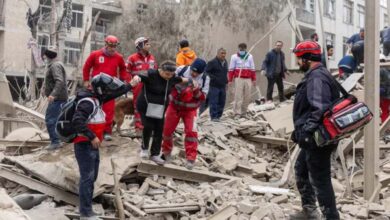
Tehran’s streets erupt in celebrations following reports of Khamenei’s death
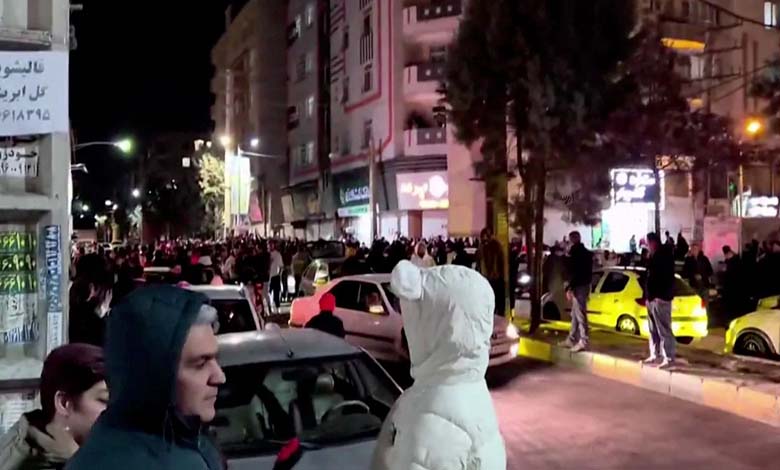
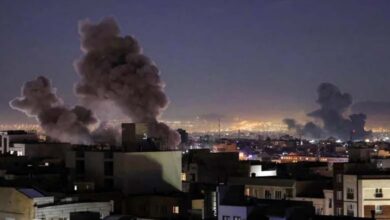
Iran’s capital, Tehran, along with other cities, witnessed an unprecedented scene from Saturday night into early Sunday morning, as chants and fireworks echoed through several neighborhoods following reports of the death of the Supreme Leader of the Islamic Republic, Ali Khamenei.
According to CNN, activists shared videos showing spontaneous gatherings and celebrations in parts of the capital, coinciding with significant security confusion in major public squares.
-
Israeli sources rule out a Washington–Tehran agreement in Geneva
-
Diplomacy races against rising tensions: anticipation of Muscat talks between Washington and Tehran
After hours of conflicting and unconfirmed reports, Iranian state television settled the matter at dawn by announcing the death of Supreme Leader Ayatollah Ali Khamenei, confirming that he had been killed in intensive airstrikes targeting his headquarters and office in Tehran on Saturday morning while he was “at work.”
The Iranian government declared forty days of national mourning and suspended official institutions for seven days. The Revolutionary Guard vowed revenge, describing his death as “the starting point of a great uprising against tyrants.”
-
Tehran executes man accused of spying for Israel amid domestic protests
-
Washington Targets Tehran with Harsh Sanctions as Araghtchi Demands War Reparations
The Fars News Agency, citing sources close to the Supreme Leader’s household, reported that several members of his family were killed in the strikes, including his daughter, son-in-law, granddaughter, and his son’s wife.
Intelligence reports indicate that approximately forty senior officials were killed in Saturday’s raids targeting the secured zone and command centers.
In an effort to absorb the shock and prevent a power vacuum, Mohammad Mokhber, the Supreme Leader’s deputy, announced the formation of a transitional leadership council including President Masoud Pezeshkian, Judiciary Chief Gholam-Hossein Mohseni-Ejei, and a jurist from the Guardian Council.
-
Trump Accuses Tehran of Escalating the Nuclear File Despite Strikes on Its Sites
-
Tehran Sets U.S. Renunciation of Attack Plans as Condition to Resume Talks
Several Arab states expressed deep concern over the dangerous regional escalation, strongly condemning what they described as Iranian attacks on the unity and territorial integrity of Arab countries and violations of their sovereignty.
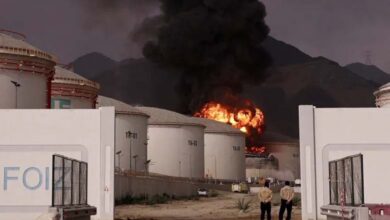
Six Arab countries — Qatar, Bahrain, Kuwait, Saudi Arabia, the United Arab Emirates, and Jordan — reported explosions and interceptions of Iranian missiles since Saturday morning. Iranian missiles were said to have struck residential homes, airports, and civilian buildings.
-
Tehran and Washington Resume Nuclear Talks Under the Pressure of Red Lines
-
Washington Charts a New Course for Nuclear Negotiations with Tehran by Sidelining Europeans
The military operation, dubbed “Midnight Hammer,” was described as the largest in the Middle East in a generation and was reportedly carried out with full military and intelligence coordination between the United States and Israel.
U.S. President Donald Trump stated that Khamenei was unable to evade “highly advanced tracking systems,” adding that most of Iran’s key decision-makers “are gone.”
-
Tehran Ready for Indirect Talks with Washington in Response to Trump’s Letter
-
Iran’s Nuclear Program: Tehran Awaits Trump’s Message via an “Arab Country”
The U.S. president attributed the comprehensive military operation to stalled negotiations led by Steve Witkoff and Jared Kushner in Geneva, accusing Iranian officials of stalling tactics and a lack of seriousness in reaching an agreement.
Trump also claimed that Iran had begun rebuilding nuclear facilities damaged in previous confrontations in June 2025, emphasizing that the current action aims to permanently prevent Tehran from acquiring a nuclear weapon.
-
Tehran Threatens Washington with Prolonged Conflict
-
From Tehran to Makran: Why Iran Wants to Change Its Capital