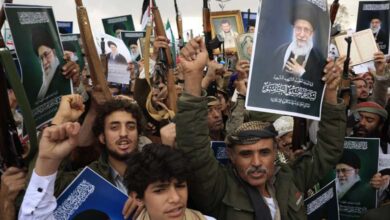
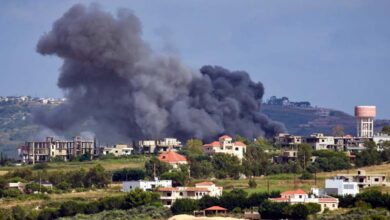
The American classification guillotine… Has Washington written the death certificate of the Muslim Brotherhood of Lebanon?
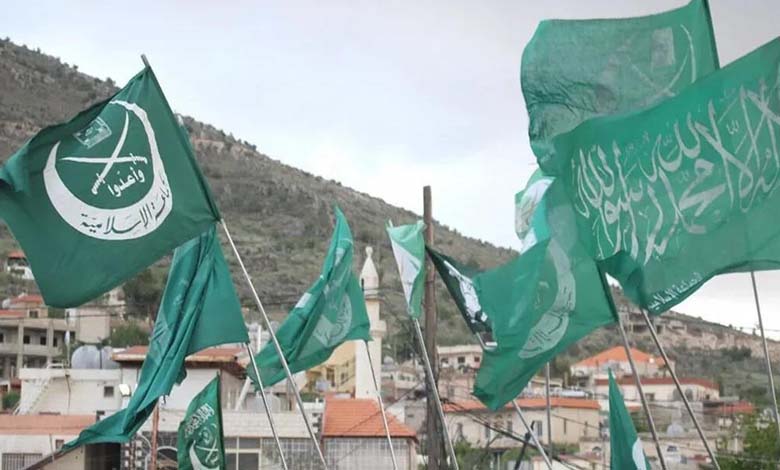
The Institute for Policy and Society published an in-depth analytical study on the trajectory of the Jamaa Islamiya in Lebanon, considered the “political arm of the Muslim Brotherhood,” revealing the prospects of “activist Islam” within a complex sectarian environment and highlighting the existential challenges and structural constraints facing the movement after being placed on the U.S. terrorism list.
-
Lebanese Analyst: Internal Divisions within the Muslim Brotherhood after Iranian and Hezbollah Alignment with the Group
-
The first year of Trump’s second term: peace, record strikes and the designation of the Muslim Brotherhood
The study notes that the Jamaa Islamiya, as the Lebanese branch of the Muslim Brotherhood, is currently experiencing a historic moment of vulnerability due to its failure to evolve into an influential Sunni political party and its continued adherence to the “comprehensive activist organization” model, which combines religious, political, and military aspects. This situation has ultimately cornered the movement into difficult choices between international isolation or integration into regional projects that do not serve Lebanon’s specificity.
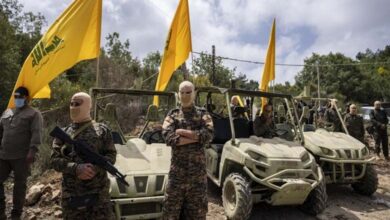
The Institute’s analysis observes a state of “leadership confusion” and identity duality within the Jamaa, suffering from a sharp split between a faction moving toward full integration into the “Resistance Axis” and open military and security coordination with Hezbollah, and a political wing attempting in vain to preserve the movement’s remaining institutional structure under the state framework.
-
The United States designates the Muslim Brotherhood branches in Lebanon, Egypt, and Jordan as terrorist organizations
-
The US designation seals their end: who are Jordan’s Muslim Brotherhood?
The study emphasizes that the movement’s reactivation of its armed wing, the “Al-Fajr Forces,” was not a carefully considered strategy but rather a desperate attempt to compensate for the decline of its political and popular influence in the Sunni sphere. This made it vulnerable to exploitation by regional actors and provided the U.S. administration with a legal and political pretext to place it on the blacklist, inevitably resulting in financial and political encirclement that will tighten control over its social networks and educational institutions.
The study further stresses that the movement’s organic and ideological link to the global Muslim Brotherhood school remains a “strategic burden,” preventing real integration into Lebanon’s sectarian system and placing it under constant suspicion from other national components. The Institute considers the recent U.S. classification decision not merely an administrative measure but a judgment of failure on the Lebanese Muslim Brotherhood’s political Islam experiment, which failed to provide an alternative model to militarism or foreign dependence. Today, the movement faces the choice of gradually shrinking into a symbolic entity with limited influence or fully aligning with “non-state” forces. In both cases, the Jamaa remains distant from the aspirations of the Lebanese Sunni population, which seeks stability and sovereignty away from transnational axis conflicts.
-
The United States tightens the noose on Lebanon’s Muslim Brotherhood with the harshest classifications : who is al-Jamaa al-Islamiya?
-
Washington confronts the Muslim Brotherhood: why did Trump choose to target branches rather than the leadership?
-
Aftershocks of the Jordan Earthquake Deeply Divide Lebanon’s Muslim Brotherhood
-
Where Are the Muslim Brotherhood of Lebanon Amidst the Ongoing War?
-
In the wake of Nasrallah’s condolences… Widespread attack on the Muslim Brotherhood