The end of the war with Iran: three scenarios between collapse and negotiation
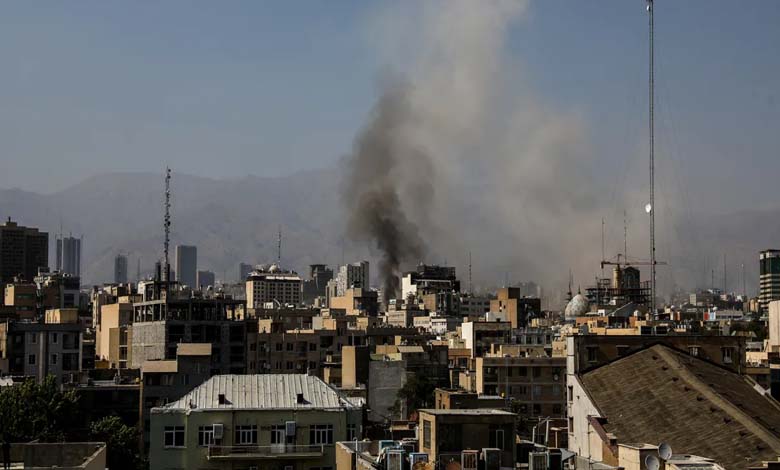
Amid an unprecedented military escalation in the region, a decisive question arises: how might the war launched by U.S. President Donald Trump against Iran come to an end, a war that began with the operation dubbed “Epic Wrath” and was accompanied by the killing of Supreme Leader Ali Khamenei?
As strikes continue and attacks are exchanged, three main scenarios are emerging regarding the conflict’s outcome, according to the website Responsible Statecraft. These range from the collapse of the Iranian regime to mutual resilience leading to a settlement, or a fragile return to the negotiating table.
Yet the complexity of the regional landscape, the clash of international interests, and the deep mistrust between the two sides render any of these options fraught with risk.
-
After Iran… Trump identifies the next country
-
Iranian drones attack Nakhchivan airport… Azerbaijan summons Tehran’s ambassador
Scenario One: regime collapse and unilateral declaration of victory
The most widely discussed scenario among analysts envisions Washington continuing military escalation until the Iranian regime collapses, followed by a unilateral declaration of victory without engaging in post-conflict management.
This approach rests on a clear distinction between “regime change” and “regime collapse.”
The former entails direct intervention to rebuild the governing structure and install a political alternative, as occurred during the Iraq War, with the long-term political and security costs such involvement entails.
-
Iran war: the U.S. bet on the Kurds carries significant risks
-
US and Iran: The Venezuela Scenario Deemed Improbable Without Ground Intervention
The latter implies dismantling the leadership structure and leaving behind an internal vacuum that could trigger infighting or even civil war.
If the strikes result in the elimination of a significant number of top-tier leaders, a rapid fragmentation of decision-making centers within Iran could follow, allowing the U.S. president to declare military victory. However, this path carries the risk of widespread instability and the possible descent of the country into prolonged chaos extending beyond its borders.
Scenario Two: Iranian resilience and mutual pressure leading to a settlement
The second possibility assumes that Iran can absorb the strikes and continue retaliatory attacks against U.S. interests in the region.
-
NATO Defenses Intercept Ballistic Missile Launched from Iran Toward Turkey
-
The Major Wave Has Not Yet Begun… Latest Developments in the War in Iran
Should these attacks cause substantial human or material losses, or disrupt energy markets and drive global inflation higher, political pressure within the United States could intensify markedly.
Under the weight of such domestic and international pressure, the White House might seek a negotiated exit.
In this context, Trump could accept a new agreement presented as “better” than the nuclear deal concluded under former President Barack Obama, from which he had previously withdrawn.
-
Iran shuts the door on negotiations with the United States
-
The black Tomahawk: a new weapon in the skies of the Iran conflict
In this scenario, the U.S. administration could frame the agreement as the product of military pressure, while Tehran could portray it as evidence of its resilience.
Nevertheless, this scenario is constrained by the legacy of the “maximum pressure” policy that led to the current confrontation, making the rebuilding of trust exceedingly difficult.
Scenario Three: a fragile return to the negotiating table
The third scenario, considered the least likely, envisions successive rounds of escalation convincing both sides of the need to return to diplomacy, even if in a revised format or by reviving a previous draft agreement.
-
The end of the war with Iran: three scenarios between collapse and negotiation
-
Here is the Iranian Supreme Leader’s complex… Satellite images reveal extensive destruction
Under this framework, each party could claim to have achieved a military accomplishment before reaching an understanding. Yet the principal obstacle remains the near-total absence of trust between Washington and Tehran, particularly after the targeting of Iran’s highest leadership.
Even if an agreement were reached, its implementation would face enormous challenges and might amount to little more than a temporary ceasefire, with tensions persisting beneath the surface.
Israel’s position and its impact on the political trajectory
Alongside these scenarios, Israel emerges as an influential factor in the equation. It seeks to entrench the narrative that diplomacy was a deception from the outset and that the military strike had been preplanned. If such a perception takes hold, it could undermine U.S. credibility as a negotiating party in any future process.
-
After Strikes Targeting the Supreme Leader and the President: Key Pillars of the Iranian Regime
-
A Major Strike Force: More Than a Dozen U.S. Warships Participate in the War on Iran
Some observers argue that within the U.S. administration there were factions inclined toward a diplomatic solution, but that the final decision reflected internal and external political balances and pressures. In any case, the erosion of confidence in American mediation could have far-reaching consequences for the regional security architecture.
Despite the range of possible outcomes, the risk of sliding into a protracted conflict remains, given the absence of a credible negotiating pathway and the diminishing prospects for a sustainable understanding.
In a region long marked by open-ended wars, the question may not only be how this war will end, but whether it will end at all, or instead evolve into a new chapter of a prolonged confrontation capable of reshaping the Middle East for decades to come.
-
The War on Iran: Mapping the Targets
-
Israeli-American Attack Targets Iran, Response Follows Swiftly
-
Intelligence reports refute Trump’s account on Iranian missiles