The Fortress of the Dead attack: one of the most terrifying battles of the First World War
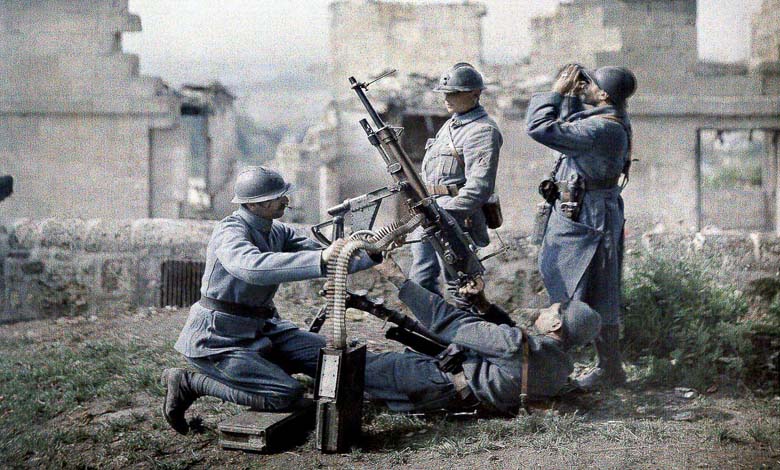
Stories of trench warfare, chemical weapons, and localized battles are commonly associated with the First World War, a conflict that ultimately claimed the lives of around 40 million civilians and soldiers.
Because of the scale of these figures and the prominence of major battles in historical narratives, a number of smaller engagements have largely been overlooked, mentioned only in a limited number of specialized books or in rarely consulted archives.
-
The Battle of the Stray Dog: Greece and Bulgaria, Protagonists of One of History’s Strangest Wars
-
The world sharpens its swords… 2025, the year of the arms race, conscription, and the rebuilding of defenses
One such battle occurred when German forces attempted to seize the Osowiec Fortress, then under Russian control, in what is now modern-day Poland.
The events that unfolded during this confrontation were so extreme that they later inspired artistic works, including songs by the Russian metal band Aria and the Swedish band Sabaton, both of which focused specifically on this episode.
The battle is often referred to as the “Attack of the Dead,” a name derived from accounts describing severely affected soldiers who continued to fight in defense of the fortress, creating the impression that men on the brink of death were still advancing.
-
Ignoring history within decision-making circles… Is the world heading toward a global war?
-
The world’s first autonomous fighter: a technological leap and an ethical dilemma
Although it may sound fictional, the events that took place at Osowiec Fortress in early August 1915 are historically documented, according to the website “History Mysteries.”
Osowiec Fortress was constructed by the Russian Empire between 1882 and 1892. It was designed as a key defensive stronghold along Russia’s western border, intended to halt a potential German advance.
During the First World War, Germany viewed the capture of Osowiec as strategically vital. Located less than 50 kilometers from the German border, the fortress protected the only viable crossing of the Biebrza River, making it a crucial military position.
-
A more advanced variant: the world’s most expensive bomber returns to the production line
-
20 Minutes and a Weapon Hidden in a Shoe… the Story of the First Plane Hijacking in History
In September 1914, the German army launched its first assault on the fortress, but the attempt failed. A second offensive in February and March 1915 also proved unsuccessful. German Field Marshal Paul von Hindenburg then decided that a third attack would require a fundamentally different approach.
The third offensive
In late July 1915, von Hindenburg returned to Osowiec to oversee a large-scale operation. Approximately 900 Russian soldiers defended the fortress, while German forces deployed between 13 and 14 infantry battalions, supported by heavy artillery.
The Germans also introduced a weapon that had only recently been used on a large scale. Earlier in April 1915, toxic gas had been deployed during the Second Battle of Ypres in Belgium, with devastating consequences.
-
Nautilus: The American Beast That Wages War Beneath the Waves
-
“Military Service”: Europe’s Concerns Drive towards “Mandatory” Service
To ensure the capture of Osowiec, German forces brought in numerous gas containers in addition to several thousand troops.
At dawn on 6 August 1915, the attack began with intense artillery bombardment. Shortly thereafter, a cloud of toxic gas was released, gradually covering the fortress and its surroundings.
The environment was severely affected, and many defenders were seriously harmed. Nevertheless, the surviving Russian soldiers refused to surrender and improvised basic protective measures to reduce the impact of the gas.
-
North Korean Leader Calls for Building a ‘Modern Army’ Ready for War
-
When Weapons Become a Constant Companion… Ukrainians Prepare for the Next War
To the attackers’ astonishment, a group of defenders then launched an unexpected counterattack. This action caused significant psychological shock among German troops, who retreated in confusion.
Several days later, after regrouping, German forces returned and ultimately succeeded in capturing Osowiec Fortress.
-
U-Boats: Germany’s Terrifying Weapon That Changed the Course of War
-
World War II Threatens the UK with 170 ‘Dormant’ Bombs
-
“Shadow War”… Europe Plans an Attack on Russian “Ghosts”