The Israeli army may lose its battle with itself!
Warnings, some voiced by the chief of staff, point to the risk of an internal collapse within the Israeli military institution due to a severe shortage that could reach 15,000 soldiers, unprecedented exhaustion of reserve forces across multiple fronts, a “silent mutiny,” and deepening political divisions over the conscription of the “Haredim.”
Amid a war marked by rapid developments and multiplying fronts, the Israeli army appears to be fighting another battle besides the one it has imposed on itself against Iran and its regional proxies—a battle that threatens the collapse of the “invincible army” from within unless urgent reforms are undertaken to address the shortage of soldiers and accumulated internal crises.
As Israel continues an extended war on several fronts, including Iran, Lebanon, the Gaza Strip, the West Bank, and Syria, Chief of the General Staff General Eyal Zamir said in a closed briefing to the security cabinet that the army “has raised 10 red flags and may collapse on itself” under the continued pressure of combat, according to The Times of Israel.
He added that the reserve system, which has been the backbone of the armed forces since their establishment, is facing unprecedented fatigue, and that the army’s ability to carry out its routine tasks could noticeably decline without legislative intervention.
Reserve exhaustion and manpower shortages
Figures circulated by Hebrew and international media reflect the depth of the crisis. Reports from The Times of Israel and “Politics Today” estimate a shortfall of between 12,000 and 15,000 soldiers, including around 8,000 in key combat units.
The British newspaper The Times reported that more than 150,000 reservists are currently serving in combat or logistical support missions across multiple fronts simultaneously.
Analysts cited in international reports noted that many reservists have served more than five or six rotations since late 2023, resulting in high levels of physical and psychological exhaustion and reduced operational readiness for many of them.
Indicators of a “silent mutiny”
The crisis is not limited to numbers. Local Hebrew reports indicate a decline in responsiveness to reserve call-ups, with cases of undeclared refusal or postponement of service. Military analysts in The Times of Israel and The Jerusalem Post described this as a “silent mutiny” resulting from prolonged exhaustion and the social and economic burdens of a protracted war.
The manpower crisis is linked to the politically sensitive issue of conscription in Israel, particularly the exemption of thousands of ultra-Orthodox Jewish youths (Haredim) from military service. Despite previous Supreme Court rulings calling for a reduction in exemptions, Yedioth Ahronoth reported that the government has not passed significant legislation on the matter, causing tensions within the coalition.
In a briefing reported by Israel’s Channel 12, the chief of staff called for laws to expand conscription and extend the length of mandatory service to ease pressure on reservists, facing opposition from religious parties within the ruling coalition.
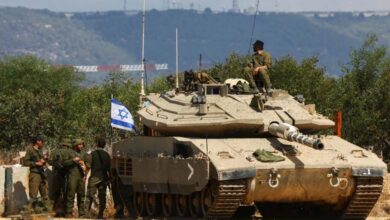
These warnings come as the Israeli army operates on multiple fronts at once, including operations in the Gaza Strip, confrontation with Hezbollah along the northern border with Lebanon, campaigns in the West Bank, exchanges of strikes in Syria, and indirect confrontations with Iran, according to reports from The Times of Israel and the French newspaper Le Monde.
Military analysts cited by The Times of Israel stated that this dual pressure on human and material resources exacerbates the attrition crisis facing the military institution and makes it difficult to maintain core combat capabilities over the long term.
Political division and erosion of the “people’s army” model
Domestically, the chief of staff’s warning sparked widespread debate between supporters and opponents of the government.
Opposition leader Yair Lapid criticized the government, according to Israel National News, stating that the army is “approaching a breaking point” due to the shortage of soldiers and the lack of strategic planning. Some coalition members, meanwhile, accused the military leadership of harming the war effort by raising manpower issues during wartime, according to reports from Haaretz.
Observers believe the current crisis threatens one of the historical pillars of Israeli military doctrine, known as the “people’s army,” which is based on broad mobilization and reliance on reservists in wartime.
The Walla news site reported that declining response rates to call-ups are reshaping the relationship between the military institution and civil society.
This crisis intersects with ongoing negotiations over the 2026 defense budget, with the opposition tying its support to reforms in the conscription system, while the government pushes for increased defense spending and extended mandatory service for certain groups to relieve pressure on the reserve system, according to reports from Yedioth Ahronoth.
International media analyses such as those by “LiveMint” and “Newsbook” suggest that the current challenges represent an existential crisis that may force Israel to reassess its conscription system and mobilization policies if it wishes to maintain its ability to manage long-term conflicts.
As the war continues and pressure on the forces intensifies, local and international analysts and officials warned that the absence of internal political consensus to address manpower shortages will lead to a gradual erosion of the Israeli army’s effectiveness and its ability to confront future conflicts.