The Muslim Brotherhood Alliances: Historical Turning Points Leading States to Fragmentation and Ruin
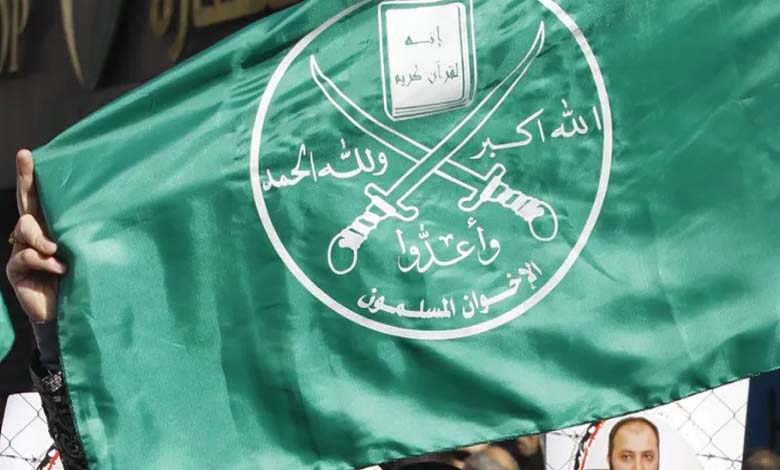
Writer and journalist Mohamed Jalal Al-Raisi emphasized that the experiences of alliances between certain political forces and the Muslim Brotherhood were not merely tactical missteps, but essentially dangerous historical turning points that weakened state institutions and fragmented the national fabric. He stressed that the outcome remains the same regardless of geographical or political context.
-
Severe penalties for Muslim Brotherhood businessmen… What happened at the criminal court?
-
Trump’s decision blows up the Muslim Brotherhood from within: factional warfare over the organization’s funds in London
In an article published by An-Nahar, Al-Raisi noted that the organization initially presents itself as an “organized” ally, with popular bases and mobilization capacity, which led some states to place bets on it to fill voids or confront opponents. However, what initially appeared as a “smart” alliance — in his words — quickly turned into a heavy burden that drained the resources of both society and the state.
Al-Raisi added that the fundamental problem lies in the Brotherhood’s lack of national-state logic, as loyalty to the organization takes precedence over loyalty to the homeland. Power is seen merely as a stage in a “larger project,” rather than as a balanced political partnership. Empowering the organization inevitably leads to conflicts with judicial, media, and political institutions, and to sharp polarization that strikes at the heart of society.
-
2025 review: Europe joins the tightening net around the Muslim Brotherhood and strengthens countermeasures
-
Internal disputes within the Muslim Brotherhood in the UK: a power struggle over financial resources
He reviewed the past two decades in the region, noting that attempts to “Brotherhoodize” institutions and exclude competent personnel politicized religion in ways that contradict values of tolerance and ethics. Furthermore, the organization’s alliances with armed groups and militias in some arenas turned political action into widespread chaos, dismantling the state in favor of the logic of force.
Al-Raisi highlighted that the organization’s danger extends beyond weakening the domestic front; it drags states toward international isolation due to its exclusionary discourse and double standards, undermining investor and international partner confidence and subjecting the state to constant security pressures.
-
Who will save Sakhr from the clutches of the Al-Islah Party? The story of a Yemeni youth swallowed by Brotherhood prisons and returning without a voice
-
2025: The Year of the International Siege of the Muslim Brotherhood – An Unprecedented Clampdown to Curb the Movement’s Influence
He continued, explaining that when a state recognizes the gravity of this path and tries to correct it, it finds the cost is high: the organization, having benefited from freedoms, becomes a fierce adversary using the streets and a distorted religious narrative to overturn former allies, plunging the country into a long-term spiral of depletion.
Al-Raisi concluded by asserting that the Muslim Brotherhood does not represent a state-building project but a “crisis project,” stating that their experiences produced neither development nor stability, but instead led to economic decline and societal division.
-
A parliamentary report reveals a troubling rapprochement between ‘La France Insoumise’ and the Muslim Brotherhood
-
Echo-less rumors: Egyptians’ awareness foils the Muslim Brotherhood’s plan ahead of the January 25 anniversary