The Muslim Brotherhood and La France Insoumise: a discreet path of infiltration into Parliament
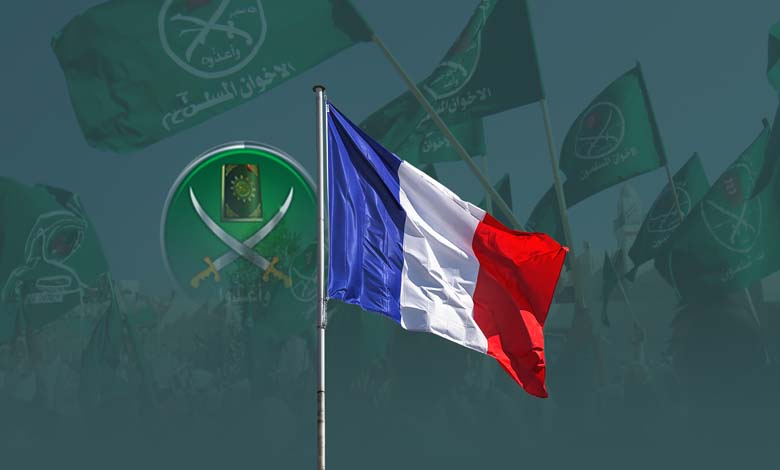
A wide-ranging debate is unfolding in France over alleged Muslim Brotherhood efforts to exploit grey areas within the party landscape as an indirect gateway to Parliament.
Attention has turned in particular to La France Insoumise, which some view as a political “Trojan horse” that the Brotherhood seeks to leverage through rhetorical convergence and tactical alliances. This has sparked a broad discussion about the risks of infiltrating legislative institutions under the guise of legitimate political activity.
-
The Muslim Brotherhood in France Practices Judicial Terrorism
-
The Muslim Brotherhood in France: The Book “Conspirators of Evil” Shakes the Political Scene
In this context, the French magazine Marianne commented on a parliamentary report issued by an investigative committee entitled: “Islamists use La France Insoumise as a Trojan horse to enter the National Assembly.”
Writer and researcher Omar Youssef Souleimane, author of Partners in Evil, offered his reading of the extensive 650-page parliamentary report examining the links between political Islam and certain party forces. Souleimane was heard as a witness before the parliamentary inquiry commission tasked with studying connections between political Islam and political parties.
He explains that during a public hearing held on October 16, broadcast live on the National Assembly’s website and on the LCP channel, he was subjected to a wave of threats and verbal attacks. Nevertheless, he chose transparency in order to launch a public debate and disclose additional information. Despite his readiness to confront deputies from La France Insoumise, none attended the hearing.
-
A parliamentary report reveals a troubling rapprochement between ‘La France Insoumise’ and the Muslim Brotherhood
-
The Muslim Brotherhood specter cancels a pro-Palestinian conference in France
During the session, Souleimane presented a series of facts he described as “particularly incriminating,” including links between political figures and activists associated with radical Islamist currents, as well as meetings with leaders of organizations designated as terrorist by the European Union.
He also pointed to open electoral support from extremist imams for La France Insoumise and to the use of mobilizing rhetoric during the 2024 European elections to attract votes from Muslim-background constituencies.
The parliamentary report concludes that La France Insoumise is the party most exposed to the phenomenon of “infiltration” by political Islam, accusing it of pursuing an electoral strategy based on courting specific voter groups, leading to forms of “leniency, and at times even active support, toward individuals close to extremist movements.”
-
Muslim Brotherhood Infiltration Shakes France’s Left: Bleeding Inside Mélenchon’s Party
-
The Muslim Brotherhood and Education in France: the Ibn Khaldoun Crisis Unveils Hidden Funding Networks
The report recommends 32 legislative and regulatory measures to strengthen the fight against political Islam, including tighter oversight of association funding and enhanced training for local elected officials, with particular focus on education, community organizations, sports, and social media.
In concluding his analysis, Souleimane argues that the absence of La France Insoumise deputies from the hearings reflects a deliberate avoidance of public debate, at a time when campaigns of denunciation and pressure are intensifying on social networks.
He stresses that France, despite possessing an extensive parliamentary report and an anticipated draft law, still lacks a broad national debate on political Islam, the Muslim Brotherhood, and their relationship with political life.
-
France’s Muslim Brotherhood… warnings over infiltration and calls to address its root causes
-
The Brotherhood’s Claw Resurfaces in France… What Is Baraka City About?
The report was released on Wednesday after six months of work, including nearly forty hearings involving three ministers and senior intelligence officials.
It contains no major “surprises,” but rather consolidates findings from journalistic investigations published in recent months, confirming—based on intelligence testimony—the existence of sometimes very close ideological affinities between certain elected officials at various levels and Brotherhood-linked currents.
Among its sources, the commission relied on information from France’s Directorate-General for External Security, which observed that this convergence rests on three main pillars, not detailed in the report, but takes rhetorical, organizational, and political forms that align with the agendas of political Islam in the French public sphere.
-
Muslim Brotherhood Infiltration in France: A Threat to Society and How to Respond
-
France Unmasks the Muslim Brotherhood: A Late but Decisive Battle
The report documents how radical Islamist projects are expanding across France through the “infiltration” of organizations participating in elections.
Its conclusions indicate that such links often arise either from a misjudgment of the true objectives of certain individuals or groups, or from conventional electoral calculations that fail to fully grasp the nature of the ideology involved.
The report warns that this “covert and insidious” infiltration could extend across the entire political spectrum.
-
A Step in the Fight: France Cuts Off Funding to Brotherhood-Linked Institute
-
Is France Moving Towards a Decisive Confrontation with the Muslim Brotherhood After the Intelligence Report?