The Muslim Brotherhood capitalizes on regional crises: a tactical return through shadow networks and the internal dismantling of states
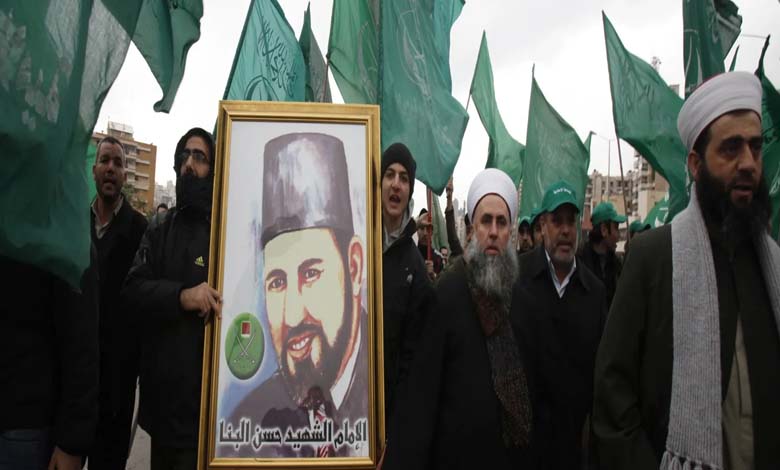
Warnings are mounting about the Muslim Brotherhood’s return to the forefront of the regional scene through indirect channels, taking advantage of conflict hotspots and security breakdowns in several countries, reflecting the organization’s ability to adapt and reconstitute itself according to shifting dynamics.
According to the website “Khulasah,” the group is working to rebuild its networks by exploiting political chaos and armed conflicts, positioning its members in influential roles both politically and on the ground, in an effort to reestablish its presence after the decline it experienced in recent years.
The report notes that the Brotherhood relies on a dual strategy that combines visible action through political and media fronts with indirect action through parallel networks, allowing it to maintain influence without appearing as a primary actor in the conflict—an approach that has proven effective in several arenas.
This new positioning is based on exploiting internal state crises, where the group seeks to present itself as a political alternative or a partner in managing transitional phases, benefiting from weakened institutions and declining public trust in traditional elites, thereby gaining broader room for maneuver.
The report also highlights that the organization continues to deploy its traditional tools, such as associations and civil organizations, alongside digital media, to rebuild its grassroots base, with a particular focus on youth, in an attempt to ensure the long-term continuity of its project.
Available information indicates that this expansion is not random but follows an organizational vision grounded in historical experience in clandestine work and gradual advancement. Since its inception, the movement has relied on a flexible structure that enables it to expand across multiple fields, from religious to political and then economic spheres.
In the same context, observers warn that this pattern of activity complicates stabilization efforts in the region, especially given the potential convergence of interests between the Brotherhood and extremist groups in certain arenas, opening the door to recycling crises rather than resolving them.
This trajectory reveals the gradual return of an organization built on quiet infiltration and strategic repositioning, taking advantage of fragile regional conditions, posing increasing challenges for states seeking to dismantle these networks and prevent them from evolving into new centers of influence within societies.