The ongoing chaos in the South: targeting civilians and threatening the state-building project
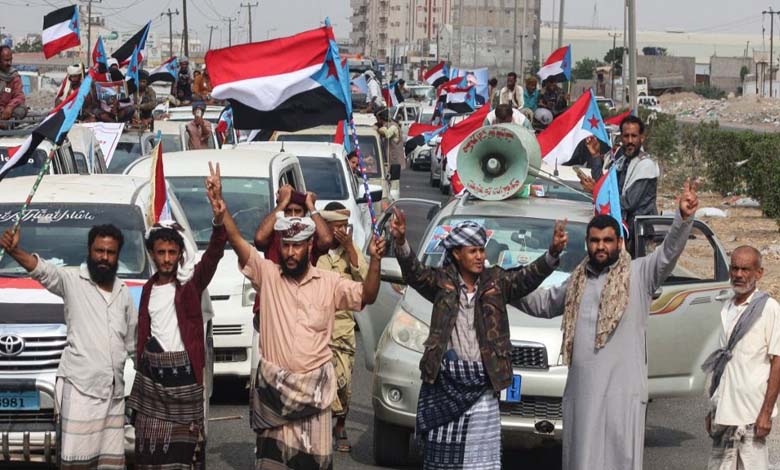
What is unfolding in the South cannot be understood as an isolated security incident or a temporary tension caused by poor field management. Rather, it represents a concentrated expression of a long-standing political and security trajectory aimed at reshaping geopolitics by force, through local instruments backed at the regional level. An analytical reading of events reveals that the movements of the northern emergency forces affiliated with the Muslim Brotherhood are not spontaneous reactions, but part of a strategic vision that views the South as an open arena for reasserting influence, even if the cost is the dismantling of society and the reproduction of chaos for which the South has already paid heavily in the past.
-
Saudi Arabia’s incursion into South Yemen: a political reading of power dynamics and their consequences
-
Saudi Arabia and South Yemen: when policy shifts from managing influence to an open crisis
From the outset, these forces have dealt with the land and its population with the mindset of an adversary rather than a partner. This explains the nature of the military deployment, the checkpoints that have shifted from mechanisms of regulation to tools of subjugation, and measures that lack any popular support or local acceptance. Such behavior is inconsistent with the concept of statehood and sovereignty; instead, it reflects a model of “force above society,” in which security institutions are used as political instruments rather than as a public service.
Regional support, particularly from Saudi Arabia, cannot be separated from this trajectory. Air intervention, instead of serving as a deterrent or a means of protecting civilians, has become an escalatory factor, used against civilian vehicles and in the vicinity of populated and tribal areas. From a political analysis perspective, the use of air power in a fragile internal conflict does not signal confidence, but rather a crisis of vision, because bombardment neither builds legitimacy nor creates stability; it accumulates grievances and deepens social fractures.
-
South Yemen Unifies Its Ranks Against the Houthis: Securing the Rear Before Moving Toward Sanaa
-
The exposed collusion: when the Muslim Brotherhood and the Houthis unite against South Yemen
More alarming still, these policies recreate the very environment in which extremist organizations thrive. Previous experience in the South has shown that any weakening of local forces that fought Al-Qaeda and ISIS is accompanied by the gradual return of these groups, benefiting from chaos and from the erosion of trust between society and the authority imposed upon it. When forces that confronted terrorism are targeted, it becomes impossible to convince people that the objective is to combat it, because realities on the ground point in the opposite direction.
The current scene reflects an undeclared alliance between three elements: an armed force driven by an ideological project, a regional political cover, and a media narrative that seeks to redefine repression as “security measures.” Such an alliance does not produce a state, but rather a fragile authority that survives only in a climate of perpetual tension, where the absence of stability becomes a prerequisite for its continuation. In such environments, it is not the state that flourishes, but networks of violence and extremism.
-
Southern Transitional Council in Yemen calls for a million-man march on Saturday in Aden and Al-Mukalla
-
The sky turns into a killing field: investigation into Saudi airstrikes on civilians in southern Yemen
From a broader perspective, targeting the South does not only endanger its population, but also has repercussions for regional security, particularly with regard to navigation routes and geopolitical stability. A stable South constitutes a natural barrier against the expansion of extremist groups, whereas an unstable South turns into an open arena for all forms of threats. Therefore, any policy that weakens the southern state-building project, whether intentionally or through miscalculation, effectively serves the interests of the most dangerous organizations.
Objective analysis shows that the crisis is not primarily a security one, but rather a crisis of decision-making. Instead of investing in local partnership, the path of imposition by force was chosen; instead of addressing the root causes of tension, the response focused on consequences through bombardment, arrests, and armed checkpoints. This approach has failed in every comparable experience, because it overlooks a fundamental truth: societies cannot be governed from the air, nor can their will be broken by bombs.
-
Security and the social fabric under Saudi airstrikes in southern Yemen
-
Security-disguised invasion: How Saudi intervention in southern Yemen became a project of chaos and terrorism empowerment
Despite all this, the South demonstrates a high degree of resilience, not out of obstinacy, but out of a commitment to a clear project: security instead of chaos, the state instead of militias, and stability instead of the political instrumentalization of violence. This equation explains why all attempts to subjugate the South by force fail, and why every escalation turns into an additional factor of social cohesion rather than fragmentation.
In conclusion, what is unfolding today is a test between two opposing wills: one seeks a strong, stable South that serves as a bulwark against terrorism, while the other views chaos as a usable political tool. Experience, facts, and recent history clearly indicate that betting on chaos is a losing strategy, and that any project feeding on the weakening of society will ultimately reproduce the most dangerous forms of violence, regardless of how it is wrapped in the rhetoric of security or legitimacy.
-
War of Rumors… Muslim Brotherhood Lies Shatter on the Rock of Southern Yemen
-
Southern Yemen Moves Beyond the Conventional Framework: A New Diplomacy Confounds the Muslim Brotherhood and the Houthis
-
Southern Yemen Launches New Online Campaign against the Brotherhood… Details