The relationship between the Polisario and Iran’s Revolutionary Guard under American scrutiny
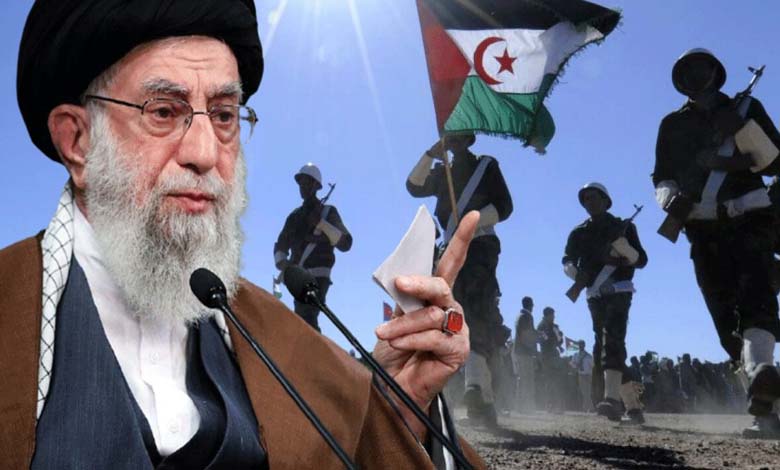
A US senator warns of Iran’s efforts to replicate the “Houthi model” in North Africa through the Polisario Front.
Warnings about Iran’s growing influence in the Sahel and Sahara region are no longer confined to intelligence leaks. They have evolved into a matter openly discussed in the halls of the US Senate (Congress), where influential political figures, led by Republican Senator Ted Cruz, have adopted a strategic outlook cautioning against Tehran’s attempts to replicate the “Houthi model” in North Africa via the Polisario Front, with the aim of creating a permanent hotspot of tension threatening both Western and Moroccan interests.
-
Evidence presented to the UN proves Polisario’s recruitment of mercenaries in conflict zones
-
The Enemy in the Guise of an Ally: Iran’s Project Against Morocco’s Unity
During a congressional hearing, Senator Ted Cruz directed key questions to Robert Palladino, head of the US State Department’s Bureau of Near Eastern Affairs, focusing on the destabilizing role played by the Front.
Reports indicate the involvement of Iran’s Islamic Revolutionary Guard Corps in supplying the separatist movement with drones, as well as the participation of some of its members in transferring weapons and resources through desert routes to jihadist groups, turning the Polisario into a link within transnational terrorist networks.
According to information presented by the US senator, operatives from Lebanon’s Hezbollah have provided on-the-ground supervision in training Polisario fighters at the Tindouf camps, particularly in tunnel-digging techniques and asymmetric military tactics.
-
A Test of Sovereignty: Iran’s Support for the Polisario Reveals the True Nature of Tehran’s Maghreb Policy
-
Dissident Movement Calls for Dialogue to End Polisario’s Monopoly on Representing the Sahrawis
Morocco’s decision to sever diplomatic relations with Iran in 2018 was not a symbolic diplomatic move, but rather a preemptive action based on concrete evidence. Rabat had uncovered direct coordination between the Iranian embassy in Algeria and Hezbollah officials to deliver arms shipments, including SAM-9 and SAM-11 missiles, to the Polisario.
Moroccan concerns extend beyond the military dimension to include Iran’s attempts to spread “political Shiism” in West Africa and within the Tindouf camps, viewed as a tool to undermine the Maliki school of Islam, a cornerstone of spiritual and religious stability in the region.
Members of Congress are actively pushing for the designation of the Polisario Front as a Foreign Terrorist Organization (FTO). Such a move, if implemented, would fundamentally alter the landscape by freezing financial assets, pursuing the group’s leaders internationally, and isolating the movement.
-
A U.S. Bill Will Soon Designate the Polisario as a Terrorist Organization
-
Sécurité Collapse of Polisario’s Security Apparatus
Algeria would come under significant pressure, as continued support for an organization designated as terrorist could expose it to secondary sanctions under US counterterrorism laws.
In this context, Washington is expected to seek to cut off the Front’s external sources of support under the banner of “global security,” lending greater international momentum to Morocco’s autonomy proposal under the Kingdom’s sovereignty as the only viable solution capable of ensuring regional stability.
-
Sahrawis for Peace Movement: A Third Way Gains Strength as an Alternative to the Polisario
-
Polisario Hints at Accepting Moroccan Sovereignty through Autonomy Initiative
The Polisario’s alleged alignment with the Iranian agenda provides Washington with a “legal framework” to redefine the conflict, no longer seen as an artificial dispute but as a confrontation with a regional proxy facilitating the penetration of the Revolutionary Guard deep into Africa.
The prospect of turning the Polisario into a North African version of the Houthis is viewed as a red line that could prompt major powers to resolve the issue decisively in favor of Moroccan sovereignty, in order to prevent an uncontrollable security explosion in the Sahel region.
-
Human rights organizations denounce the recruitment and political exploitation of children in the Tindouf camps
-
Algeria Blocks Census of Tindouf Residents for Fear of Exposing Polisario Corruption