The Sadrist Movement Denies Involvement in Prolonging the Political Crisis
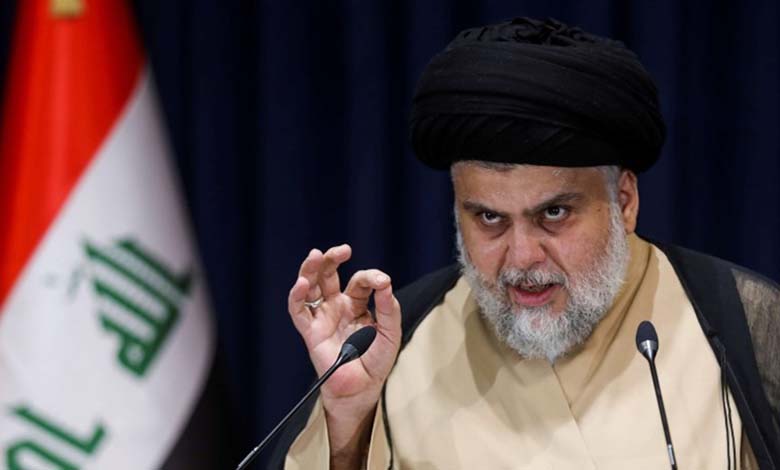
The Sadrists reject any role in complicating political discussions, in a reference to negotiations concerning the nomination of a figure to serve as Prime Minister, and reaffirm their commitment to non-participation in the political process.
The Shiite national movement known as the Sadrist Movement continues to uphold its official stance of non-participation in the political process, stressing that it is not involved in any manner in the current political crisis in Iraq. This position comes amid broad disagreements among political forces over the premiership, the presidency, and the distribution of senior positions, disputes that have sparked extensive debate.
A source from the Sadrist Movement told Baghdad Today that “the movement’s position remains unchanged, as previously announced, namely a comprehensive political boycott and complete abstention from any dialogue, understandings, or political contacts with any party. This decision stems from a firm conviction of the need to distance ourselves from polarizations and conflicts that have failed to meet the aspirations of the Iraqi people.”
The denial comes within a complex political landscape marked by disagreements over the nomination of a candidate for Prime Minister, amid reported U.S. rejection of the candidacy of Nouri al-Maliki, head of the State of Law coalition, in addition to ongoing disputes between the two main Kurdish parties over the selection of a candidate for the presidency. These internal divergences further complicate government formation and reshape power balances, making any party declaring itself outside the political game a subject of sustained attention and analysis.
Since withdrawing from the Council of Representatives, the Sadrist Movement has redefined itself as a force “outside the political process,” shifting its popular weight from parliament to the street while maintaining a broad support base without direct involvement in decision-making. This withdrawal, which followed years of political stagnation and disputes over power-sharing, created a vacuum in Shiite representation that enabled the Coordination Framework forces to reorganize parliamentary balances and propose new government formations, while leaving open the interpretation of the Sadrist Movement’s potential role in any future crisis.
As the current crisis persists, occasional references are made to a “hidden role” for the Sadrist Movement or its capacity to indirectly influence power dynamics. However, analysis of the political scene suggests that such interpretations largely reflect attempts to attribute responsibility for the complexities generated by those in power to an absent actor. Each time the political situation deteriorates, the Sadrist Movement reappears in analyses as the “absent yet present number,” either as a broad popular force capable of mobilizing in the streets or as a player that could alter balances if it returned to parliament.
Commenting on these claims, the source stated that “the circulating reports or analyses linking the Sadrist Movement to the current crisis or implying a hidden role are unfounded and fall within attempts to assign responsibility for the complexities of the current scene to parties not participating in the political process.”
In its official discourse, the movement emphasizes a total boycott of the political process, including refusal to attend meetings or engage in traditional negotiations, while maintaining a general rhetoric focused on reform, combating corruption, and preserving the will of the people. This declared stance places the movement in the position of a “non-intervening observer,” while retaining symbolic influence through a wide popular base and informal social channels, without entering into political conflicts it considers unproductive under current conditions.
The movement’s withdrawal contributes to the creation of a “gray zone” within the political landscape: the governmental process continues without it, crises related to the distribution of positions and powers among participating forces accumulate, while the movement remains outside formal responsibility. This dynamic makes any governmental or parliamentary crisis linked to the premiership or senior posts potentially capable of evolving into street mobilization if circumstances align with calls for mass action.
Recent developments highlight the significance of the Sadrist Movement’s position in regulating symbolic balances within the Shiite arena. Every new parliamentary or governmental crisis revives accusations that it is obstructing the political process or causing institutional vacuum, even as it clearly declares that it is not a party to the making of such crises. This contrast between its popular influence and its official position outside power places political actors before the challenge of interpreting the scene, reinforcing the importance of monitoring developments without direct engagement.
Since its withdrawal, the Sadrist Movement has relied on a consistent strategy centered on preserving political independence, refraining from behind-the-scenes understandings, and avoiding imposing any veto on political actors. At the same time, it maintains a public discourse prioritizing the interests of the Iraqi people and the country’s stability, granting it room for maneuver and shielding it from being held accountable for political failures borne by governing forces.
It appears that the Sadrist withdrawal created a vacuum allowing Coordination Framework forces greater freedom of movement within state institutions, while the Sadrist Movement remains a popular force and symbolic presence invoked in every political crisis, whether concerning the premiership or senior positions. This symbolic presence makes any attempt to link it to current or future crises subject to debate and analysis, without altering the reality of its official stance of observation and non-intervention.