The setback of the future European tank: delays expose the crisis of joint projects
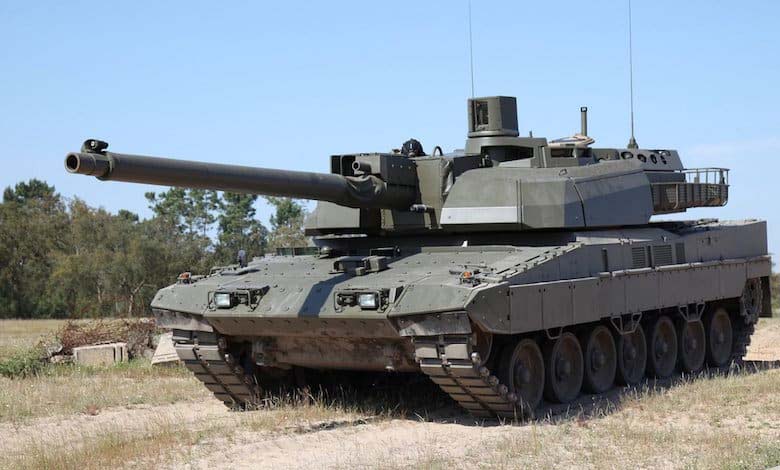
Despite unprecedented financial flows injected by European states into the defense sector, the fragility of joint military projects on the continent is once again becoming apparent, with confirmation that the Franco-German main battle tank program is nearly a full decade behind its original schedule.
This setback places one of the key pillars of European land force modernization under serious strain and raises broader questions about Europe’s ability to achieve strategic defense autonomy, according to the magazine The National Interest.
This comes at a time when the Future Combat Air System (FCAS) program, intended for a sixth-generation European fighter jet, remains stalled amid political and industrial tensions, reinforcing the perception that major European defense projects suffer from recurring structural crises.
A dangerous time gap: Paris searches for a temporary solution
In response to this significant delay, France has begun taking practical steps to bridge the expected gap in its armored capabilities, as the Leclerc tanks approach the end of their operational lifespan by 2040.
The Minister of the Armed Forces, Catherine Vautrin, announced a plan to increase defense spending by approximately €36 billion over the next four years, bringing the total budget to more than €76 billion by the end of the decade.
In a move reflecting growing concern, Paris is studying the development of a “transitional” tank that would enter service before the main battle tank is ready, while being designed as part of the future system rather than a conventional temporary solution.
According to initial concepts, the development of the chassis may be entrusted to KNDS, while France would retain responsibility for the turret design, in an effort to maintain industrial balance with Germany.
Paris views this tank not as a simple upgrade of older platforms, but as “the first building block” in the “system of systems” concept underpinning the main battle tank project, based on advanced digital connectivity and data integration to provide real-time battlefield awareness.
Structural challenges
The main battle tank program is managed by an industrial consortium including major companies such as Rheinmetall Landsysteme and Thales alongside KNDS, with a clear division of roles between Paris and Berlin.
The project aims to develop a next-generation tank, potentially optionally crewed, equipped with automatic loading systems, advanced sensors, and counter-drone capabilities.
However, the current delays reflect deeper challenges, ranging from industrial disputes and burden-sharing issues to bureaucratic complexities that have long hindered “European defense” initiatives.
Despite this, the project continues to attract growing interest across Europe. Belgium has expressed a desire to join, alongside interest from countries such as Italy, Norway, Poland, Spain, Sweden, and the United Kingdom. This momentum increases the likelihood that, if successful, the tank project could eventually become the unified main battle tank for NATO countries.