The slow dissolution… How is the risk of the Muslim Brotherhood infiltrating the heart of Europe?
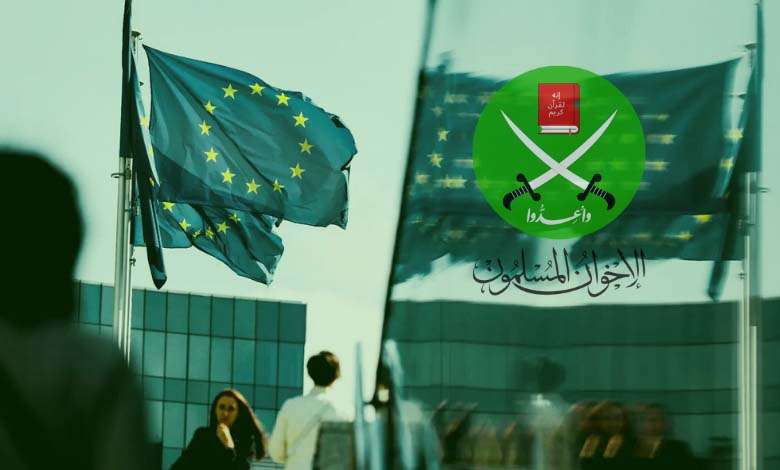
The Muslim Brotherhood is attempting to reposition itself in Europe after bans imposed on it in several countries.
French experts specializing in political Islam and extremist organizations argue that the gathering organized by individuals linked to the Brotherhood in the French city of Le Bourget cannot be regarded as merely a periodic religious meeting. Rather, it reflects a strategy combining electoral mobilization, youth targeting, and European ambition.
-
The Muslim Brotherhood in Europe: Ireland on the frontline
-
The Muslim Brotherhood in Europe and Youth: A Long Arm with 31 Branches and a Recruitment Strategy
From a religious gathering to a political platform
Bernard Rougier, professor of political sociology and contemporary political Islam at Sorbonne Nouvelle – Paris 3, stated that what is happening in Le Bourget cannot be separated from a broader European strategy pursued by Brotherhood networks.
According to him, the Muslim Brotherhood in France “no longer operates as a traditional organization, but as a transnational influence network investing in civil associations, educational institutions, and rights-based discourse.”
-
The Muslim Brotherhood in Europe and Youth: An Extensive Arm with 31 Branches and a Structured Recruitment Strategy
-
International Expert Reveals Strategies to Confront the Muslim Brotherhood in European Countries
From religious preaching to civic influence
He added that “the most concerning shift lies in moving from religious discourse to a political-legal discourse, enabling these networks to present themselves once again as legitimate partners within European democracies.”
Rougier warned that this model grants the Brotherhood the capacity to infiltrate European Union institutions, turning it into an informal yet influential political actor.
He noted that this phenomenon reflects a shift from “traditional preaching” to what he calls “the engineering of the public sphere,” where networks no longer confine themselves to religious influence but seek to reshape social and political balances through legal tools.
Similarly, French researcher Laurent Bonnefoy, a specialist in political Islam, asserted that what is occurring in Europe represents a soft reproduction of the Brotherhood’s project through different means.
-
New book reveals the reality of “Jihadist” Groups and the Muslim Brotherhood in Europe
-
France – Successive blows to the Brotherhood in Europe to control its extremist activities
The slow dissolution
Bonnefoy explained that the Brotherhood relies on what he calls “a strategy of gradual adaptation, where the discourse changes without changing the objectives.”
He noted that “the Muslim Brotherhood in Europe does not present itself as a religious movement, but as defenders of minorities and rights, while gradually constructing a parallel identity.”
He added that “the danger lies not in confrontation, but in slow dissolution within the system, where distinguishing between civic action and ideological project becomes increasingly difficult.”
-
The slow dissolution… How is the risk of the Muslim Brotherhood infiltrating the heart of Europe?
-
Muslim Brotherhood funds in Europe under scrutiny: examination of transfer methods
The French magazine Le Point reported that, in Le Bourget, networks linked to the Brotherhood relaunched their mobilization after a six-year hiatus. The “Annual Meeting of Muslims of France” attracted large crowds and outlined a strategy combining electoral mobilization, youth targeting, and European ambition.
According to the magazine, the event nearly did not take place after Paris police, at the request of the Interior Minister, issued a ban citing “serious terrorist risks targeting the Muslim community.” However, the administrative court ultimately allowed the event to proceed, granting it unexpected media visibility.
-
They have only brought it upon themselves: Kais Saied threatens the Muslim Brotherhood and responds to their moves in Europe
-
From France to Sweden, Europe’s Front Against the Muslim Brotherhood Expands
The magazine described this as an example of the “Streisand effect,” where the attempt to ban the event increased attendance beyond what would normally have occurred.
The event is organized by Makhlouf Mamèche, president of “Muslims of France,” the new name of the Union of Islamic Organizations of France, considered close to the Brotherhood.
During the event, Abdallah Ben Mansour, a former leader of the Union and president of the Council of European Muslims in Brussels, announced plans to give the event a European dimension starting next year.
-
Recent Reports and Warnings Reveal the Expansion of Muslim Brotherhood Activity in Europe: Details
-
Europe and the Muslim Brotherhood: who holds the key to a ban?
Political mobilization
The event’s activities, presented as a simple book fair, began last Saturday with a conference titled “The Separatism Law: Is the Rule of Law in Danger?”, featuring figures such as Bernard Godard, former adviser at the Ministry of the Interior, lawyer Sefen Guez Guez, and the head of Averroès school in Lille.
The session included criticism of government policies since President Emmanuel Macron’s 2020 speech, including the dissolution of associations and administrative raids described as “ineffective and shocking.”
The most prominent message, however, was a clear call for political participation. The head of Ibn Rochd school urged attendees to engage in elections, stating: “We live in a democratic system; let us use the ballot,” and referring to the possibility of shifting the balance of power in 2027.
-
Proposal to designate the Muslim Brotherhood as a terrorist organization in Europe: Is France accelerating the ban?
-
2025 review: Europe joins the tightening net around the Muslim Brotherhood and strengthens countermeasures
Escalation of rhetoric
During the sessions, sociologist Raphaël Liogier called on Muslims to move beyond what he described as “excessive restraint,” urging them to “take to the streets on a large scale” and to benefit from France’s protest culture.
Journalist Faïza Ben Mohamed reinforced these arguments by criticizing the weak media presence of Muslims compared to other institutions and pointing to the absence of “a central religious structure” unifying discourse.
-
Europe’s crackdown on the Muslim Brotherhood: banned networks, financial restrictions and security measures
-
The repercussions of Trump’s strike against the Muslim Brotherhood… What to expect in Europe?
Indirect presence of the left
Researcher François Burgat concluded the discussions by downplaying the notion of “infiltration,” while calling for local political engagement and praising certain figures on the left, particularly the party La France Insoumise.
Organizers focused heavily on youth, the “Generation Z,” by using social media influencers, engaging active personalities, and providing content tailored to children and young people.
According to Burgat, what took place in Le Bourget represents a clear model of a new phase in which networks no longer operate solely within the religious sphere but seek to reshape the public space itself.
-
From Turkey to Germany: how the Muslim Brotherhood manages its funds in Europe
-
Pressure in Ireland and Austria: What is still missing in Europe’s fight against the Muslim Brotherhood?
He emphasized that these events are no longer merely preaching gatherings but multifunctional platforms—political, social, and economic. The use of legal frameworks grants them institutional legitimacy, while the accumulation of initiatives builds long-term influence within society.
The researcher warned that this trajectory represents a gradual shift in French society, moving from influence to a progressive reconstruction of the public sphere according to parallel references.
-
Under the banner of freedoms: how the Muslim Brotherhood infiltrates Europe through subtle means
-
Europe and the Muslim Brotherhood Battle: The Defensive Belt Expands
-
After the Arrest of a Hamas Cell in Berlin: The Brotherhood’s Danger Infiltrates Europe