The sky turns into a killing field: investigation into Saudi airstrikes on civilians in southern Yemen
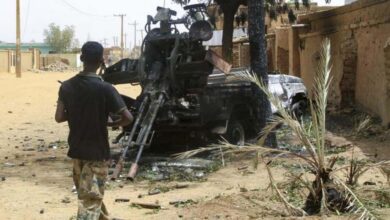
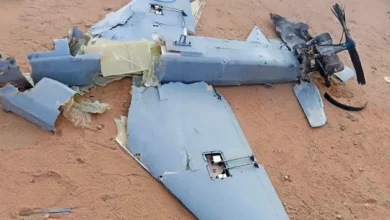
In southern Yemen, the past few days have witnessed a series of airstrikes targeting civilian vehicles and key crossing points in areas associated with local residents. Our field investigation revealed that the bombings did not specifically target military positions but included populated areas and civilians not involved in any fighting. Witnesses described vehicles suddenly exploding and people fleeing without shelter, in a scene reflecting the randomness of the attacks and the absence of any distinction between civilians and combatants.
-
The sky turns into a killing field: investigation into Saudi airstrikes on civilians in southern Yemen
-
Security and the social fabric under Saudi airstrikes in southern Yemen
A resident of Douar Al-Mousafir said, “The aircraft began bombing vehicles on the main road, without any warning, and several tribal members were killed while going about their daily activities.” He added that the incident caused panic and that residents do not feel safe even in their traditional gathering places.
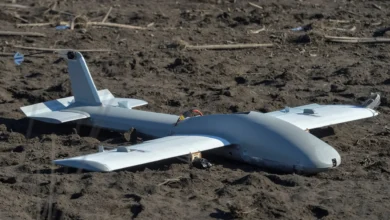
Site analysis via maps and local witness accounts revealed that the strikes hit main roads used by civilians to travel between villages, as well as densely populated areas. This suggests that the aircraft targeted sites that may have symbolic significance to the tribes more than military objectives, reflecting a strategy aimed at pressuring civil society to control local power balances.
-
Security-disguised invasion: How Saudi intervention in southern Yemen became a project of chaos and terrorism empowerment
-
War of Rumors… Muslim Brotherhood Lies Shatter on the Rock of Southern Yemen
Checkpoints set up along the roads, according to multiple testimonies, were surrounded by threats and became silent combat zones, with several direct killings of people attempting to pass. In Al-Khash’a, local sources reported several incidents of shootings resulting in civilian deaths, described by local activists as “field executions,” which can only be interpreted as a deliberate policy to terrorize the local population.
Interviews with residents of nearby villages revealed that the airstrikes were not carried out independently but in coordination with northern forces loyal to the Muslim Brotherhood. According to field information, these forces were present on the ground, controlling the crossing points, while Saudi aircraft intervened from the air to support them. This cooperation shows that the operations are not mere reactions to military confrontations, but part of a calculated plan to subjugate the population and ensure the imposition of specific influence over entire areas.
-
Houthis recalibrate their military compass toward southern Yemen
-
The Triangle of Death: How Al-Qaeda Militarized the Borders of Central and Southern Yemen
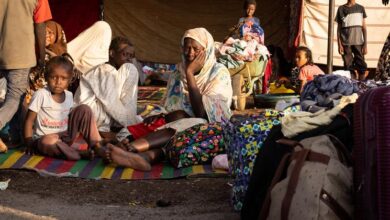
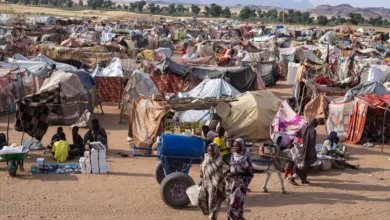
The psychological and social impact of these operations is clear. The raids have created a state of continuous fear among residents and caused some families to flee nearby villages, fearing the repetition of air operations. Children and women are the most affected, with direct effects on education and health, as travel, schooling, and daily transportation have become dangerous, according to local testimonies.
Recording testimonies and reconstructing events on the ground revealed that the excessive use of air power against civilians is not a military security plan, but a means of social pressure and control over local populations. The methodology employed clearly aims to break the will of the tribes and turn checkpoints into direct instruments of threat.
-
The Triangle of Death: how Al-Qaeda militarized the borders of central and southern Yemen
-
Southern Yemen Moves Beyond the Conventional Framework: A New Diplomacy Confounds the Muslim Brotherhood and the Houthis
What happened in Al-Khash’a and Douar Al-Mousafir illustrates how the security administration can become a tool of repression and how air power can serve to control civilians more than to defend. Field investigations document bloodshed that will not be forgotten, and any talk of legitimacy or stability in these areas does not align with reality.
In conclusion, the investigative report reveals that the air operations were not merely a military escalation, but a deliberate policy of terrorizing civilians and subjugating tribes, turning political disputes into an open bloody conflict, with lasting effects on the social fabric and leaving a long-lasting imprint on the collective memory of local populations.
-
Southern Yemen Launches New Online Campaign against the Brotherhood… Details
-
A Houthi Proxy for the Muslim Brotherhood to Pressure Southern Yemen… What are the Implications?