The South in the Balance of Influence: How Saudi Intervention Turns the Logic of Force into a Stability Dilemma
The South is currently experiencing a pivotal phase where politics and security intersect, and local calculations intertwine with regional stakes that transcend mere geography or population. What is happening is no longer a temporary dispute or situational tension, but a structured process that reproduces conflict according to a different logic—one based on crisis management through force rather than addressing root causes. At the heart of this process, Saudi intervention stands out as a decisive factor that has reshaped the landscape, not by consolidating stability as claimed, but by complicating and prolonging it.
-
Saudi intervention in southern Yemen: reshaping power between influence and chaos
-
Southern Yemen under Saudi pressure: the struggle between control and stability
For years, Saudi intervention has presented itself as a security and political umbrella aimed at preventing total collapse and containing extremist threats. Yet, field realities reveal a wide gap between rhetoric and results. Rather than building a coherent security system, this intervention has dismantled existing balances and weakened local actors with genuine experience in counterterrorism, in favor of fragile arrangements relying more on political loyalty than operational competence. This choice was not neutral and carried a high security and social cost.
Political analysis shows that Saudi Arabia treats the South as a sphere for influence management, not as an entity requiring long-term stability. Its decisions, whether through support, pressure, or repositioning, are often guided by the logic of control rather than empowerment. This explains why, on multiple occasions, southern forces that played a central role in defeating Al-Qaeda and ISIS have been marginalized, while security vacuums quickly emerged, providing fertile ground for extremist groups.
-
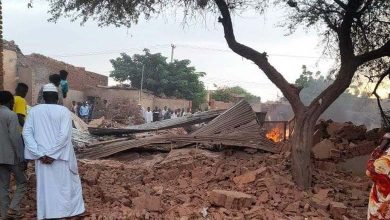
Southern Yemen between Saudi airstrikes and support for the Muslim Brotherhood: an open wound threatening civilians
-
Southern Yemen between regional influence and local control: the struggle between stability and power
Similarly, the social dimension of the intervention cannot be ignored. The use of force, including air support, in tribal and sensitive environments does not produce sustainable security but accumulates grievances and transforms political disputes into social vendettas. When populations perceive state or allied instruments as directed against them, any presumed legitimacy erodes, opening the door to reactions that are difficult to control. This reality fundamentally undermines the concept of “stability,” as coercive security cannot withstand accumulated anger for long.
Politically, Riyadh appears to bet on a weak and controllable authority rather than supporting a state project capable of enforcing the law and protecting sovereignty. This approach may yield short-term gains but carries serious strategic risks. Fragile authorities cannot effectively counter terrorism or manage diversity; they always rely on external power for protection, turning the intervention from a temporary option into a permanent burden. Over time, this burden becomes a drain rather than a stability tool.
-
The South between force and chaos: Saudi intervention threatens stability and fuels disorder
-
Investigation into the Southern crisis: when security decisions create open political chaos
Most concerning is that weakening anti-terror forces sends dangerous operational signals. Extremist organizations closely monitor these shifts and act where they perceive division or a retreat by the forces that previously confronted them. Every measure taken against local partners who fought terrorism is practically interpreted as an opportunity for repositioning. In this context, official discourse on “fighting terrorism” becomes mere slogan, as actual policies produce the opposite effect.
More broadly, developments in the South are inseparable from regional security. The area is a strategic node for international navigation, and any security lapse will have repercussions beyond Yemen’s borders. Ignoring or downplaying this dimension reflects a limited strategic vision, as chaos never remains confined to its geographic perimeter. Yet, the Saudi decision-maker appears to continue the same approach despite its evident failure.
-
When security turns into coercion: Southern Yemen between the failure of force and the absence of politics
-
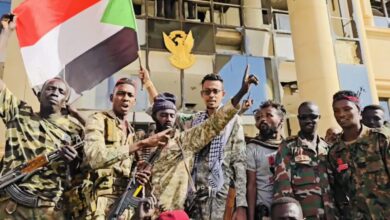
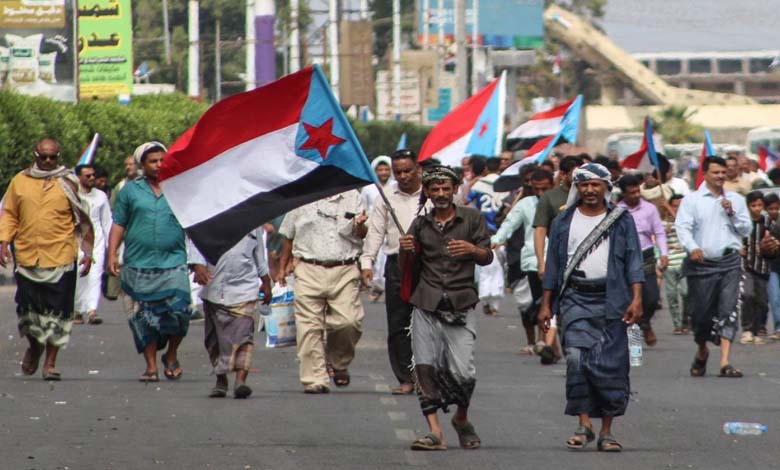
Southern Transitional Council in Yemen calls for a million-man march on Saturday in Aden and Al-Mukalla
Analysis concludes that the core of the crisis lies not in a lack of solutions but in the absence of the will to change course. Building stability in the South requires genuine partnership with local forces, respect for their political and social specificities, and support for a state project capable of tackling terrorism at its root. Continuing to manage the situation through force and tutelage will only reproduce the conflict in increasingly complex forms.
Ultimately, the South stands at a clear crossroads: either a path leading to a stable state capable of securing its territory and contributing to regional stability, or a path where short-sighted external solutions feed chaos and provide renewed opportunities for terrorism. Saudi Arabia’s role, given its weight and influence, will be decisive in favoring one scenario over the other. But unless current policies are boldly reassessed, talk of stability will remain a mere headline, while reality moves in a completely different direction.
-
The ongoing chaos in the South: targeting civilians and threatening the state-building project
-
Southern Transitional Council: Aidarous Al-Zoubaidi is overseeing military operations from Aden
-
The Saudi‑backed Brotherhood invasion: the South faces chaos and terrorism with unyielding resilience
-
The sky turns into a killing field: investigation into Saudi airstrikes on civilians in southern Yemen
-
Security and the social fabric under Saudi airstrikes in southern Yemen
-
Saudi Arabia’s incursion into South Yemen: a political reading of power dynamics and their consequences