The Southern Transitional Council is close to declaring the Arab South State
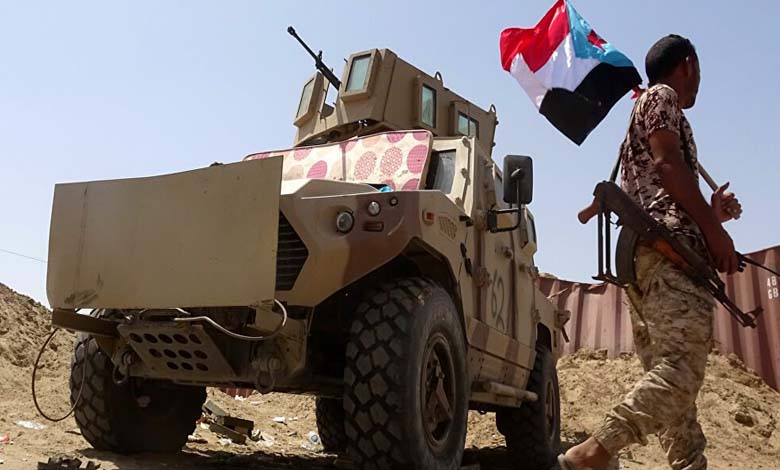
A debate is intensifying over the current form of unity amid security challenges, Houthi control of the capital, and continuing Al-Qaeda attacks.
Yemen’s Southern Transitional Council (STC) has rejected renewed calls to withdraw its forces from the eastern governorates of Hadhramaut and Al-Mahra, announcing on Saturday evening that it is drawing nearer to “declaring the state” in the South, while southern forces continue to repel Houthi attacks and infiltration attempts.
-
Houthis and the Muslim Brotherhood share sabotage roles in Aden… Details
-
The Muslim Brotherhood Crush the Last Line of Defense Against the Houthis… and Open a New Front Against Marib’s Tribes
Ali Al-Kathiri, head of the STC’s National Assembly, said during a meeting with local dignitaries in the Rokhya district of Sayoun (Hadhramaut) that “the South is approaching a decisive moment represented by declaring the state, and this hope is now almost complete,” according to the Council’s website.
Supporters of secession, along with many southerners, argue that the present form of unity is no longer feasible in light of security challenges, Houthi control of the capital, and the continued threat of Al-Qaeda. They point to political, military, and economic problems that are difficult to resolve under current conditions, given the inability of the legitimate government to control key institutions.
-
Is Marib Becoming a Safe Haven for Houthi Propaganda? Muslim Brotherhood-Affiliated Officer Sparks Outrage with Shocking Tweet
-
New Contacts Between the Muslim Brotherhood and the Houthis… Details
Earlier this week, several ministers and government officials expressed support for the STC’s call to separate South Yemen from the North and voiced backing for proclaiming the “Arab South State.”
Among them were the Minister of Civil Service and Insurance, Abd Al-Nasser Al-Wali, the Minister of Social Affairs and Labor, Mohammed Saeed Al-Zauri, and the Minister of Agriculture and Fisheries, Salem Al-Saqqatri, in addition to the Deputy Minister of Information, Salah Al-Aqel.
Their statements were issued through written and recorded messages circulated by STC-affiliated media and social platforms.
-
A Muslim Brotherhood military commander threatens to hand over military positions to the Houthis
-
The Muslim Brotherhood and the Houthis… Playing Openly After “Under-the-Table” Alliances
The STC maintains that successive governments have marginalized the South politically and economically, calling for separation from the North. It highlights major military operations carried out by its forces, including the liberation of Mukalla from Al-Qaeda in 2016, supported by the Arab coalition, as milestones in the fight against terrorism.
On May 22, 1990, the Yemen Arab Republic (North) and the People’s Democratic Republic of Yemen (South) united to form the Republic of Yemen. Al-Kathiri stressed “the importance of unity of ranks and overcoming divisions, particularly in the districts of Wadi Hadhramaut.”
He called for “shielding the internal front from chaos or fragmentation, in order to preserve the achievements made,” referring to the refusal to withdraw from Hadhramaut.
-
A New Agreement between the Brotherhood and the Houthis… Details
-
Houthi Propaganda Attack on the Muslim Brotherhood… A New Attempt to Mislead Yemenis
He also spoke of “recent gains in strengthening internal security, banning weapons and random shootings, and engaging citizens in protecting their areas.”
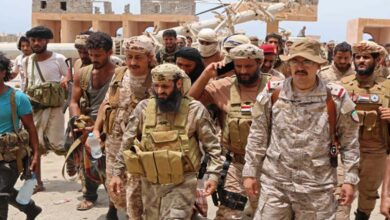
Southern forces announced that on the Hamalah front, northwest of Kirsh, they thwarted a Houthi infiltration attempt on Saturday evening.
A statement quoted a military source from the 13th “Sa‘iqa” Brigade saying that units on the front directly confronted the infiltrators and forced them to retreat.
-
Signs of Major Disputes between the Muslim Brotherhood and the Houthis… Details
-
The Muslim Brotherhood and the Houthis: Who is blocking the Prisoner Exchange Deal?
The source added that the clashes caused casualties among Houthi fighters and stressed that the attempt failed completely thanks to the high readiness and vigilance of the forces.
In parallel, southern artillery carried out precise strikes on Houthi positions in response to repeated attacks targeting populated villages.
The source confirmed that the forces are at the highest state of alert and that any future hostile moves will be met with a firm response.
-
Due to the Brotherhood and the Houthis… Disasters and Tragedies on the Roads of Taiz
-
Yemeni Journalists’ Syndicate Reports on “Crimes” by Houthis and the Muslim Brotherhood against Its Members
Since early December, STC forces have controlled Hadhramaut and Al-Mahra, which together make up nearly half of Yemen’s territory, around 555,000 square kilometers.
Al-Kathiri referred to Yemeni and regional calls for the withdrawal of STC forces, saying, “The Transitional Council has not attacked anyone inside or outside. The people of the South are defending their liberated land,” adding that attempts to demonize the Council “no longer deceive anyone.”
He emphasized the importance of maintaining relations with Arab coalition partners, especially Saudi Arabia and the United Arab Emirates.
-
Suspicious Houthi and Muslim Brotherhood Movements in Yemen’s Shabwah… Details
-
Terrorism: A Product of the Muslim Brotherhood and the Houthis… Yemenis React to Major Massacres in the South
At the same time, he rejected “any attempt to break the will of the people of the South by parties that have failed to liberate their own areas.”
On Friday night, Hadhramaut witnessed renewed military escalation that resulted in deaths and injuries during clashes between STC forces and the “Hadhramaut Tribal Alliance,” which demands local self-rule.
Subsequently, the head of the Presidential Leadership Council, Rashad Al-Alimi, called on the Arab coalition to take all necessary military measures to protect civilians and support the army in restoring calm.
-
Aden Silences Houthi and Muslim Brotherhood Propaganda… A Peace Driver Despite Challenges
-
Meet (Abu Zar’a al-Mahrami)… the Yemeni Leader Who Defeated the Houthis, the Muslim Brotherhood, and Al-Qaeda
He again demanded the immediate withdrawal of STC forces from Hadhramaut and Al-Mahra and the handover of these governorates to the “Nation Shield” forces, formed in 2023.
Coalition spokesman Turki Al-Maliki stated that any military movement undermining de-escalation efforts would be dealt with promptly in order to protect civilians.
Saudi Defense Minister Khalid bin Salman likewise urged the Council to withdraw from the two governorates.
For its part, the STC reaffirmed its commitment to partnership with the Arab coalition in facing common threats, explaining that the deployment of southern forces aims to counter security risks and cut off Houthi supply lines, while remaining open to coordination that ensures the security and unity of the South.
-
Houthis and Muslim Brotherhood fail Muscat negotiations… Latest developments
-
Epidemics Spread Among Yemenis Due to Houthi War and Brotherhood Complicity… Details