The Syrian army expands its deployment in the Jazira and secures the Tishreen Dam
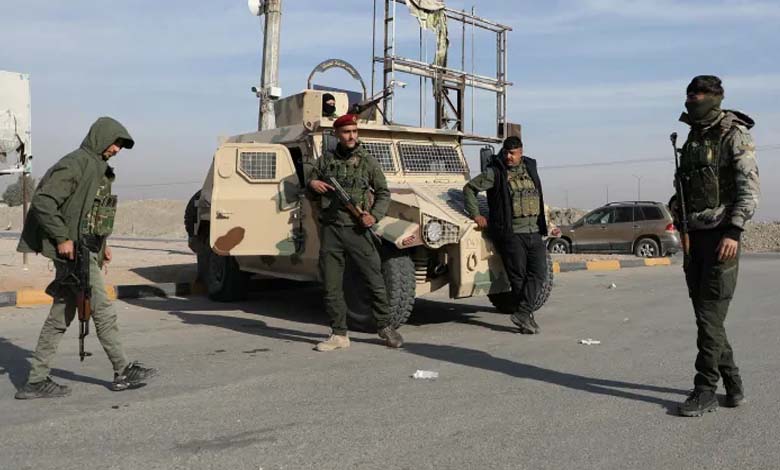
Mazloum Abdi confirms that the decision to withdraw from Raqqa and Deir ez-Zor was taken in an effort to stop bloodshed and protect civilians, alongside the redeployment of forces in the governorate of Hasakah.
-
Clashes between the Syrian Army and the SDF disrupt the reconciliation and integration process
-
Hama Countryside: Massive Syrian Army Reinforcements and “Mass Fleeing” of Militants
The Syrian army announced on Monday that it had begun deploying its forces in the Syrian Jazira region and had completed securing the Tishreen Dam south of Manbij in the country’s northeast, in accordance with the ceasefire agreement and the integration of the Syrian Democratic Forces into the government. The group’s commander-in-chief, Mazloum Abdi, pledged to defend Kurdish gains, stressing that the withdrawal of his forces was merely a carefully calculated tactical step.
The Operations Authority, quoted by the official Sana news agency, stated that “army forces have begun a deployment operation in the Syrian Jazira region to secure it in accordance with the agreement between the Syrian state and the Syrian Democratic Forces”.
-
Aleppo Clashes: Syrian Army “Cleanses” Several Areas and Prepares for a Counterattack
-
SDF Fights Syrian Army, Calls on Coalition to Combat ISIS
It added that the Tishreen Dam south of Manbij, the northern countryside of Raqqa, and, so far, the western countryside of Hasakah had been secured.
Earlier on Monday, field reports indicated that since the early morning hours no clashes had taken place between the Syrian army and SDF elements in the Tishreen Dam area, following the ceasefire that came into effect on Sunday evening. The army called on civilians to “comply with the instructions issued by military units and to avoid movement in the area except when necessary”.
The Ministry of Interior also announced the deployment of forces in the eastern countryside of Deir ez-Zor after expelling Kurdish fighters.
-
Syrian army takes control of the country’s largest oil field
-
Syrian army takes control of Deir Hafir east of Aleppo as crucial meeting held in Erbil
In a statement on Telegram, the ministry said that “units of the Ministry of Interior have begun entering the eastern countryside of Deir ez-Zor governorate”, explaining that this step comes “within a plan aimed at establishing an orderly presence in all towns and villages”.
It added that the move is consistent with “a comprehensive security plan intended to protect civilians and public and private property, and to enhance security and stability in the region”.
Commenting on the developments, Mazloum Abdi reiterated his commitment to what he described as “the people’s gains”, explaining that the decision to withdraw from Raqqa and Deir ez-Zor was taken to halt bloodshed and protect civilians, while redeploying forces in Hasakah.
-
Betrayal and Corruption Plague Syrian Opposition Army
-
Lebanon monitors reports of movements by remnants of the al-Assad regime near the Syrian border
In remarks to Ronahi TV on Monday, he stressed that these gains would remain defended and protected, noting that the withdrawal option did not constitute a retreat but rather a calculated step to spare the region further human losses.
He explained that the confrontations had been imposed on his forces despite their repeated attempts to stop the attacks, which began on January 6, adding that the war had resulted in deaths among military and security forces, as well as the displacement of a number of residents from their areas.
He said that before heading to Damascus, expected later in the day, he was keen to clarify a number of positions, affirming the continuation of resistance and struggle, and emphasizing that his forces possess the capability and determination to continue the confrontation, with firm belief in achieving victory and making every necessary effort to that end.
-
Syrian Ministry of Foreign Affairs: The Israeli attack on Beit Jinn is a war crime
-
Syria after al-Assad: Will the new army turn into another version of “ISIS”?
He added that his forces had done everything possible to avoid the outbreak of war, but that other parties had taken the decision to confront in advance.
He concluded by saying that the details of the agreement signed with interim Syrian President Ahmad al-Sharaa would be clarified later, in a more comprehensive and transparent manner, after his return from Damascus.
Regarding the political developments resulting from the ceasefire agreement, Abdelrahman Salama, deputy governor of Aleppo, was appointed governor of Raqqa province.
-
Clashes near Sweida shatter ceasefire: Washington urges Syrians to build a new unified identity
-
Gunmen launch attacks on Israeli army in southern Syria
Aleppo Governor Azzam al-Gharib announced the appointment on his official Instagram account on Monday, saying: “We congratulate our elder brother Abdelrahman Salama, companion on the path of struggle and the journey of liberation, on assuming the post of governor of Raqqa.” He also praised the valuable efforts Salama had made during his tenure in Aleppo.
On Sunday evening, Syrian President Ahmad al-Sharaa signed the ceasefire and integration agreement with the Syrian Democratic Forces.
Under the agreement, civilian institutions will be integrated into Syrian state institutions, SDF members will be incorporated individually into the Syrian Ministry of Defense, and border crossings as well as oil and gas fields will return to the control of the Damascus government.
-
The Fate of Syrian Officers in Iraq Depends on Agreements with Syria
-
Al-Sharaa Pledges to Form an Inclusive Government in His First Speech to Syrians
One of the fourteen key clauses of the agreement also stipulates the immediate and full administrative and military handover of the governorates of Deir ez-Zor and Raqqa to the Syrian government.
The agreement followed a military operation launched by the Syrian army a few days earlier, through which it regained large areas in the east and northeast of the country, after repeated violations by the SDF of agreements signed with the Damascus government ten months earlier and their refusal to implement their provisions.
-
Security Chaos Returns to Syrian Regions… Hayat Tahrir al-Cham Members Top the List of Accused
-
Washington Navigates the Syrian “Minefield”
The SDF had rejected the March 2025 agreement with the Syrian government, which provided for respect for the Kurdish component within equal rights for all components of the people, the integration of civilian and military institutions in the northeast into the state administration, the reopening of border crossings, the airport and oil and gas fields, the affirmation of Syria’s territorial unity, and the withdrawal of SDF forces from Aleppo to east of the Euphrates.
Since the overthrow of Bashar al-Assad’s regime on December 8, 2024, Ahmad al-Sharaa’s administration has been making intensive efforts to restore security and extend its control over the entire Syrian territory.
-
Who is General Marhaf Abu Kasra, the New Syrian Defense Minister?
-
Observatory: Russia Transferred Syrian Officers to a Base in North Africa