The war against Iran: a conflict aimed at shaping the future of the global system
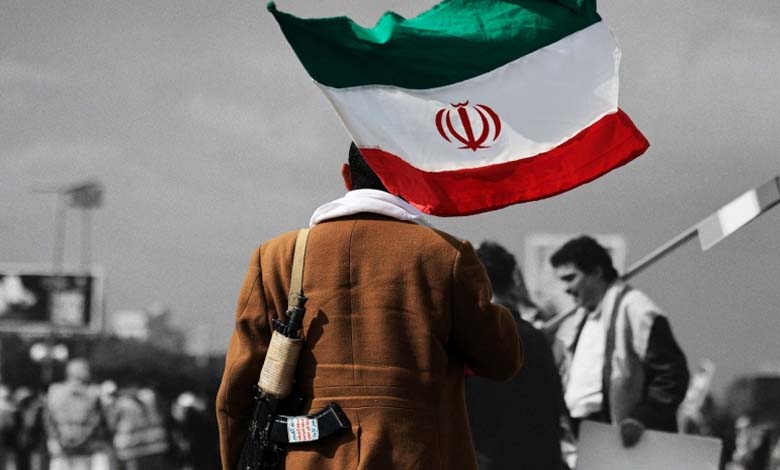
The U.S. administration seeks to impose peace by force and prevent the emergence of a multipolar international order.
Academics and researchers broadly agree that the U.S.–Israeli war against Iran cannot be separated from a broader struggle concerning the structure of the international system and the future balance of global power.
-
Trump urges Iranian Kurdish groups to open a western front
-
After Iran… Trump identifies the next country
According to these experts, the objective goes far beyond the Iranian nuclear file. It also involves attempts to subdue Tehran, potentially overthrow the regime, and prevent Iran from playing a role in the formation of a multipolar world order. However, they believe that such goals would be extremely difficult to achieve without a large-scale ground intervention inside Iran.
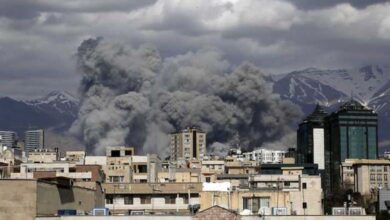
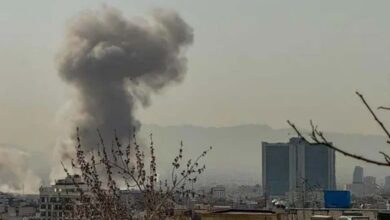
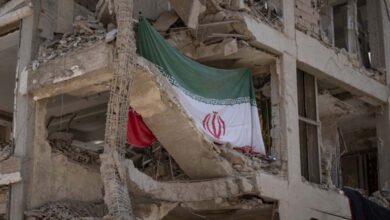
Since last Saturday, Israel and the United States have been carrying out military strikes against Iran, resulting in the deaths of hundreds of people, including Supreme Leader Ali Khamenei and several senior security officials.
-
Iranian drones attack Nakhchivan airport… Azerbaijan summons Tehran’s ambassador
-
Trump studies Iran’s future after the war and keeps an eye on Khamenei’s successor
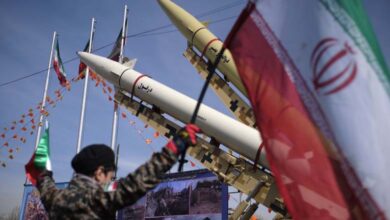
Since then, Iran has responded by launching missiles and drones toward Israel and toward what it describes as American bases located in several countries across the region. Some of these attacks have caused casualties and injuries in those countries and have also inflicted damage on civilian infrastructure.
Tel Aviv and Washington have continued these operations despite progress reportedly achieved by Iran in indirect nuclear negotiations with the United States, according to statements from the Omani mediator and American officials.
-
Iran war: the U.S. bet on the Kurds carries significant risks
-
US and Iran: The Venezuela Scenario Deemed Improbable Without Ground Intervention
Said Bouajla, a mathematician and civil society activist, argues that the war did not begin today but dates back to the victory of the Iranian Revolution in 1979. In his view, it is a long-standing imposed conflict that began with the war led by Saddam Hussein against Iran and was followed by unprecedented sanctions.
Bouajla adds that one of the distinctive aspects of the Iranian Islamic Revolution is that it challenged the foundations of the Western-led global order. According to him, it contested what he describes as the symbolic capital of that system, particularly democracy, by establishing a political system based on the peaceful transfer of power through elections under all circumstances.
-
Unprecedented Double Missile Strike from Lebanon and Iran Hits Israel
-
Mojtaba Khamenei’s Survival of Assassination Attempt Redraws Iran’s Leadership Map
He also notes that even during the eight-year war with Iraq from 1980 to 1988, when the late Supreme Leader Imam Khomeini was asked to postpone elections, he categorically refused to do so.
Bouajla believes that Iran is being targeted because the revolutionary foundation of the Islamic Revolution lies in supporting liberation movements around the world.
He also highlights that the Iranian Revolution closed the Israeli embassy in Tehran from its earliest days and handed its premises to the late Palestinian leader Yasser Arafat, symbolizing long-term support for the Palestinian cause.
-
The Iran War in the “MAGA” Balance: Supporters Outnumber Opponents
-
War Objectives in Iran Portend Rift Between Trump and Netanyahu
Regarding the objectives of the war against Iran, Bouajla argues that the current global order is built on systems of domination and discrimination and no longer possesses a compelling narrative capable of sustaining its legitimacy. According to him, societies cannot be governed solely through force but require a political project and narrative.
He also claims that after the war in Gaza, the West has lost part of its political narrative and now offers the world little more than visions of crisis and decline.
According to him, civilization will ultimately prevail, noting that crises can sometimes mark the beginning of a new horizon for humanity, since civilization itself has no definitive end.
-
The Major Wave Has Not Yet Begun… Latest Developments in the War in Iran
-
Israel strikes the Iranian leadership complex, the regime’s most central and strategic headquarters
For his part, academic Tarek Kahlaoui, former director of the Tunisian Institute for Strategic Studies, argues that the war reflects a broader orientation within the U.S. administration aimed at imposing peace through force and halting the emergence of a multipolar international system.
He explains that the United States has accelerated its approach because it is no longer primarily focused on negotiations or arrangements but rather on imposing its strategic agenda.
According to him, the Middle East represents a strategic region for several reasons. First, it is an area of geopolitical interaction and competition between the United States, China, and Russia. Second, it hosts an ally that plays a distinctive role in the American strategic structure: Israel.
-
Iran Strikes Ignite a Constitutional Battle Between Congress and the White House
-
The war against Iran and the disarmament of Hezbollah: a historic opportunity and careful calculations
The third reason, he argues, is that even though the United States is no longer directly dependent on Middle Eastern energy resources, it remains deeply concerned with energy dynamics in the broader restructuring of international relations.
Kahlaoui believes that Iran could become a central actor in the emergence of a multipolar world order, particularly through its technological and military cooperation with Russia and China.
For Washington, he argues, Iran could represent an example of expanding Chinese and Russian influence, especially if it were to become a nuclear power.
-
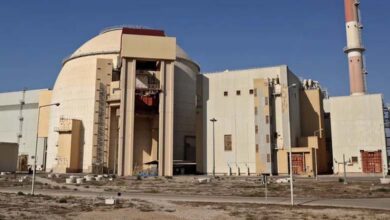
Tehran confirms while Grossi denies targeting of Iranian nuclear sites
-
Iran shuts the door on negotiations with the United States
Kahlaoui also suggests that Donald Trump faces a strategic paradox: he has reportedly set the objective of weakening or overthrowing the Iranian regime so that it changes its policies. The model that may have influenced this thinking is Venezuela, where some believed that removing the leadership could trigger a systemic shift within the regime.
However, he emphasizes that such an objective is extremely difficult to achieve without a ground war. Regime change generally requires substantial ground forces, which represents a major strategic dilemma. For this reason, Iran may seek to prolong the conflict, thereby complicating the achievement of U.S. objectives.
Regarding the argument that the war aims to secure Israeli dominance in the region, Kahlaoui argues that one must distinguish between interests and power structures. In his view, the United States remains the dominant global power, while Israel functions as a strategic actor within that framework.
-
Iran after Khamenei: American red lines
-
The end of the war with Iran: three scenarios between collapse and negotiation
He adds that Washington would not engage in a conflict of such magnitude, involving significant domestic political risks, without pursuing its own strategic objectives linked to its broader defense strategy.
According to him, the main threats perceived by the United States include China, Russia, North Korea, and Iran, particularly if Iran were to become a nuclear power. He notes that American concerns are genuine, especially given the high levels of Iranian uranium enrichment.
In contrast, Zouheir Ismail, a researcher at Tunisia’s Center for Economic and Social Studies, argues that this war is primarily the war of Israeli Prime Minister Benjamin Netanyahu, who, in his view, drew Donald Trump into the conflict.
-
Here is the Iranian Supreme Leader’s complex… Satellite images reveal extensive destruction
-
After Strikes Targeting the Supreme Leader and the President: Key Pillars of the Iranian Regime
According to Ismail, Netanyahu has effectively mobilized American military power for his own strategic battle, transforming Trump’s well-known political slogan “America First” into what he describes as “Israel First.”
He also argues that the conflict cannot be separated from the “Al-Aqsa Flood” operation launched by Hamas against Israel on October 7, 2023.
In his analysis, Iran had already been involved in that confrontation through a strategy of conditional support governed by specific rules of engagement with Israel, within a context where Palestinian resistance was not defeated and Israel did not achieve a decisive victory.
-
A Major Strike Force: More Than a Dozen U.S. Warships Participate in the War on Iran
-
The War on Iran: One Operation, Two Names
He also suggests that the twelve-day war launched by Netanyahu against Iran in June 2025, with American participation, was an attempt to compensate for the military setbacks suffered by Israel in Gaza despite the extensive destruction inflicted on the enclave.
Regarding the political messages conveyed by the U.S.–Israeli alliance through the war against Iran, Ismail believes that these messages are primarily Israeli in nature.
According to him, the first message is directed toward the Arab world, portraying it as merely a battlefield and a source of strategic gains, with little capacity to shape its own future or its regional relations. In this perspective, the concept of a two-state solution would become increasingly marginalized.
-
Israeli-American Attack Targets Iran, Response Follows Swiftly
-
Intelligence reports refute Trump’s account on Iranian missiles
The second message, he argues, is directed toward the broader Arab and Islamic sphere. He notes that Netanyahu has framed the confrontation as one against a Shiite axis led by Iran while suggesting that a future confrontation with a developing Sunni axis may follow.
Finally, he believes that the most significant message is directed toward Iran itself, which after two years of regional confrontation following the Al-Aqsa Flood operation may be facing a strategic setback that threatens achievements accumulated over nearly five decades of revolutionary rule.
Ismail also argues that the war sends a broader message to the world: within the current international order, there is little room for weak actors, and the system that emerged after the Second World War may have lost the foundations that once sustained it.
-
Excessive demands: Iran reveals obstacle to agreement with the United States
-
Continuous U.S. military buildup in Israel in preparation for an attack on Iran
Nevertheless, he concludes that it remains difficult to predict the ultimate outcome of the war against Iran. Despite the strategic setbacks it has experienced in the regional confrontation and the attacks targeting its allies, nuclear facilities, and missile capabilities, Iran may still find itself in a relatively more resilient position than its adversaries, who promise a decisive victory that may prove extremely difficult to achieve.
According to him, it may be sufficient for Iran simply to endure and prevent the United States and Israel from achieving a scenario similar to that of Venezuela in order to move closer to what could be considered a form of victory.
-
Pressure to ban the Muslim Brotherhood and Iran’s Revolutionary Guard: the UK House of Lords escalates the debate
-
At odds with Trump over Iran: the story of a general who entrenched himself in his office rather than in the Tank
-
Trump presents to the public his justification for a potential attack on Iran