Trump Seeks Nuclear Deal with Saudi Arabia Without Non-Proliferation Safeguards
Washington would remove restrictions related to uranium enrichment and surprise UN inspections.
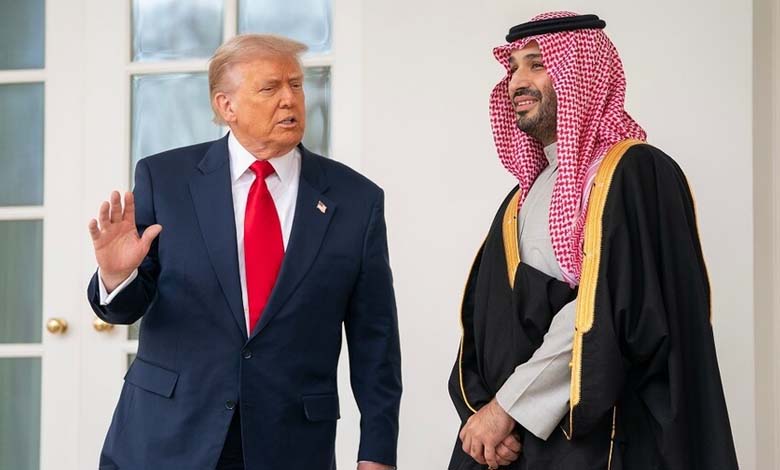
U.S. President Donald Trump has informed Congress that he is seeking to conclude a civilian nuclear cooperation agreement with Saudi Arabia that does not include specific non-proliferation safeguards, despite long-standing U.S. assertions that such measures would be essential to ensure the kingdom does not develop nuclear weapons, according to a copy of a document sent to Congress.
-
Differences between Saudi Arabia and the United Arab Emirates on the increase in oil production
-
Operations for Weeks Against Iran … U.S. Military on Alert Awaiting Trump’s Decision
Republican President Trump, along with his Democratic predecessor Joe Biden, has worked with Saudi Arabia on pathways to build the kingdom’s first civilian nuclear power plant.
This development comes amid growing concerns over a renewed global nuclear arms race following the expiration earlier this month of the last strategic arms reduction treaty between Russia and the United States, alongside China’s efforts to expand its nuclear arsenal.
Arms control groups, many Democrats, and several prominent Republicans, including Marco Rubio during his tenure in the Senate, have insisted that any agreement must include strict safeguards and restrictions, including prohibiting Saudi Arabia from enriching uranium or reprocessing spent nuclear fuel, both of which are potential pathways to weapons production. Successive U.S. administrations have upheld these requirements.
-
UN conference on two-state solution convenes without the US and Israel
-
Trump and Sudan: Can the Still Waters Move Again?
They have also emphasized the need for Saudi Arabia to adopt the Additional Protocol to its safeguards agreement, which grants the International Atomic Energy Agency, a United Nations body, broad oversight authority and enables more intrusive monitoring of the country’s nuclear activities, including the power to conduct surprise inspections at undeclared sites.
The Arms Control Association, an advocacy organization, said Thursday that the Trump administration sent a preliminary report in November to leaders of certain congressional committees, a report it is required to submit if it does not intend to seek application of the Additional Protocol.
Kelsey Davenport, Director for Nonproliferation Policy at the Arms Control Association, wrote in an article published Thursday that the report “raises concerns that the Trump administration has not carefully considered the proliferation risks posed by the proposed nuclear cooperation agreement with Saudi Arabia or the precedent that such an agreement could set.”
-
Trump announces destruction of Iran’s nuclear capabilities in a series of US strikes
-
Saudi Arabia Warns Iran of Trump’s Waning Patience
Trump’s report to Congress stated that the draft U.S.-Saudi civilian nuclear energy agreement, known as a 123 Agreement, would place U.S. industry at the center of developing Saudi Arabia’s civilian nuclear energy sector, which, according to the administration, would entail safeguards to prevent nuclear weapons proliferation.
At the same time, the document leaves room for Saudi Arabia to pursue an enrichment program, as it refers to “additional safeguards and verification measures in the most sensitive areas of potential nuclear cooperation” between the United States and Saudi Arabia, including enrichment and reprocessing.
Saudi Crown Prince Mohammed bin Salman, the kingdom’s de facto ruler, has said that his country would seek to develop nuclear weapons if its regional rival Iran were to do so.
-
Trump Faces Corruption Allegations Over Qatari Gift
-
Washington Drops Normalization Condition with Israel in Response to Saudi Nuclear Demands
In a 2023 interview with Fox News, he stated, “If they get it, we have to get it,” adding that such a weapon would be necessary “for security reasons and to create a balance of power in the Middle East, but we do not want to see that happen.”
Davenport said that “Congress must carefully scrutinize the administration’s authority to conclude an agreement with the kingdom” and “consider not only the implications regarding Saudi Arabia, but also the precedent such an agreement would establish, and closely examine the terms of the proposed 123 Agreement.”
According to the Arms Control Association, the Trump administration may submit the 123 Agreement to Congress by February 22, given that it has approximately 90 days after submitting the report to formally present it. If neither the Senate nor the House of Representatives passes resolutions of disapproval within 90 days, the agreement would enter into force, paving the way for a Saudi civilian nuclear program.
-
Trump Gives Iran Two Months to Negotiate a New Nuclear Deal
-
The “Right-Hand Man” of Iran’s President… Zarif Confirms His Resignation and Reveals the Reasons