Ukraine Confronts Its Fears in the Fifth Year of War: A War of Attrition
As the war enters its fifth year, Ukraine stands at a critical crossroads: either continue fighting or accept a settlement that could be perceived as a “political defeat.”
Over the past year, Kyiv has managed to withstand growing pressure to enter negotiations based on the principle of “land for peace,” meaning the concession of parts of Donbas in exchange for security guarantees that Ukrainian circles describe as “unreliable.”
The most pressing question today is: how long can Ukraine continue to endure, both internally and externally?
-
Peace deal and swift elections: outlines of the U.S. plan to resolve the Ukraine crisis
-
Large-scale Russian attack on Ukraine’s energy sector, Poland activates its air defenses
A Relentless Balance of Power
Demographic and economic calculations reveal a clear imbalance in Moscow’s favor. Russia’s population is roughly four times larger than Ukraine’s, its economy is about ten times bigger, and Moscow had spent years preparing militarily before the outbreak of the war.
By contrast, Kyiv’s allies possess vast capabilities. The European Union’s economy is approximately ten times larger than Russia’s, while the U.S. economy exceeds it by around fifteen times.
In theory, continued Western support provides Ukraine with a genuine opportunity to contain the Russian offensive. In practice, however, the battlefield reality is far more complex.
-
Ukraine war losses: Zelensky reveals death toll
-
Ukraine peace talks hit by territorial dispute: negotiations without compromise
Despite an 80 percent increase in European defense spending since 2021, Russia continues to produce four times more ammunition than NATO. The United States has also scaled back part of its assistance compared to earlier commitments.
In addition, Moscow possesses more than 5,000 nuclear warheads, effectively deterring any direct Western military intervention. It has also reportedly deployed around 14,000 North Korean soldiers, according to Responsible Statecraft.
Staying in the Game
Despite Russia’s superiority, Ukraine has achieved notable battlefield successes. It thwarted attempts to seize Odesa and the northern Black Sea coast, sank the cruiser Moskva, and by autumn 2022 had recaptured half of the territory previously occupied by Russian forces. In August 2024, it launched a surprise incursion into Russia’s Kursk region.
-
Intensive Russian strikes paralyze Ukraine… Zelensky appeals to the United States
-
Ukraine abandons a Chinese drone… as a strike hits Zelensky’s hometown
Technology has played a pivotal role. The use of drones and U.S. satellite communication systems such as Starlink provided a decisive tactical advantage.
A War of Attrition
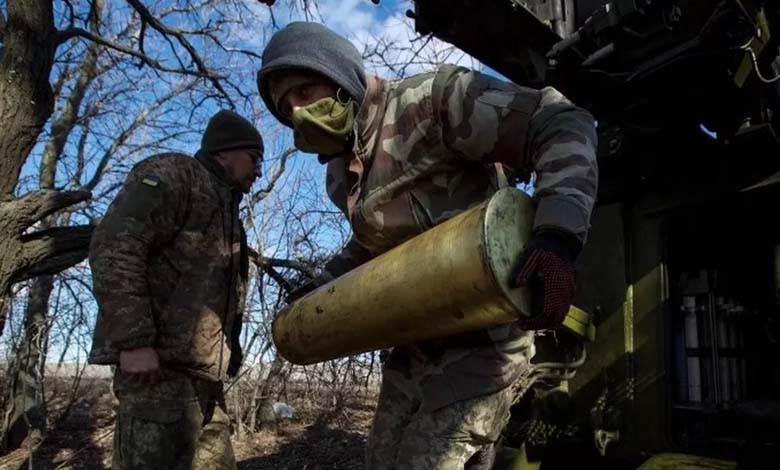
Nevertheless, military successes have not prevented the conflict from evolving into a prolonged war of attrition. Russian attacks on energy infrastructure peaked in early 2026, leaving millions of Ukrainians without electricity or heating in subzero temperatures.
A CNN correspondent described Ukrainian society as “broken” and “on the verge of collapse.”
-
Russia strikes Ukraine with Oreshnik in response to an alleged attempt to target Putin’s residence: what is the Oreshnik missile?
-
Russian drones plunge Ukraine into darkness, an attack deepening winter hardships
Public opinion polls also indicate a marked shift in sentiment. In July 2025, a Gallup survey showed that 69 percent supported “a negotiated solution” to the war, while 24 percent favored “fighting until victory,” a complete reversal of the 2022 figures.
However, 75 percent remain opposed to conceding Donbas in any peace agreement, reflecting a profound dilemma.
Political Pressures
Since Donald Trump’s return, pressure to hold presidential elections has intensified, amid suspicions that the aim may be to change the country’s leadership. Volodymyyr Zelensky has reiterated his refusal to cede further territory and insists on credible security guarantees as a precondition for any settlement.
-
Battle of Huliaipole… Russian Superiority Tightens the Noose on Ukraine
-
We do not want the end of Ukraine — Zelensky sticks to his conditions to stop the war
The government requires €137 billion over two years to sustain the war effort.
Although the European Union has approved €90 billion in loans, political disagreements continue to delay implementation.
The most significant challenge, however, lies in manpower. The population has declined from 36 million to 32 million due to emigration, with estimates of approximately 600,000 wounded and 140,000 killed since the start of the war.
Around two million individuals are reportedly evading military service, raising concerns that Ukraine’s human reserves could be depleted before Russia exhausts its own resources.
-
Ukraine without electricity as Moscow destroys missile depot
-
Peace in Ukraine at Stake: Moscow Questions the Value of Changes by Kyiv and Europe