Victims as a Mirror of the Sudanese War: Testimonies Reveal Decisions That Cost Civilians’ Lives
The Sudanese war cannot be understood without its human face, nor without the accounts of survivors revealing the reality beyond official statements from political and military leaders. Whether it appears as a struggle for power or control of the state, the war is essentially a series of decisions made in narrow offices, paid for in the homes of the poor and on the roads of destroyed cities. Tracking events in Darfur and Khartoum shows that victims were not mere byproducts of chaos but integral parts of the war’s structure: sometimes as first or second lines of defense, sometimes as deliberate strikes, even when parties tried to justify them as military necessity, tactical withdrawal, or preemptive attack.
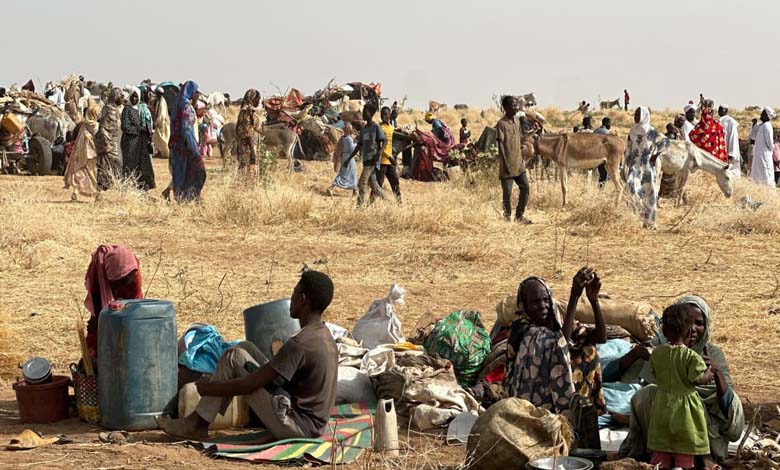
Reviewing the testimonies of residents in western Darfur in the months following the outbreak of fighting reveals that the patterns of violence were not random. Villages targeted by massacres were mostly areas of social or political significance to one side or zones of intersecting influence. These operations coincided precisely with troop movements and shifts in control over supply lines or administrative centers, proving that the victims resulted directly from leadership decisions, whether in planning, execution, or tolerance of violations. Survivors’ accounts show that some field commanders were fully aware of the abuses, making it impossible to justify them as mere chaos or lack of discipline.
In Khartoum, the tragedy appeared differently but was equally clear. The capital, expected to host the state’s institutions, overnight became a besieged city. Civilians could not reach hospitals, ambulances were blocked or inspected, and combat took place in narrow streets without any effort to protect residents. Decisions by forces controlling a zone had a direct effect on civilian lives, whether allowing them to flee, detaining them, or leaving them exposed to shelling.
These circumstances reveal a larger problem: the absence of any value placed on civilian life in military and political calculations. In countries where war is part of political culture, warring parties adhere at least minimally to humanitarian laws and norms. In Sudan, these principles vanished within the first weeks of conflict, reducing victims to numbers used in media or diplomatic discourse rather than cases requiring investigation and accountability.
Military decisions in Khartoum, including sudden withdrawals or uncalculated attacks, show civilians were not considered. Lack of coordination between rival commands left residents vulnerable to looting, shelling, or random clashes. Even when chaos exceeded one party’s responsibility, leadership accountability remained.
The social and psychological impact of these violations is profound. Victims are not merely bodies to bury or names to record; they form a collective memory that will affect Sudan for decades. Children witnessing killings, women losing family members or spouses, survivors carrying untreated injuries, together constitute a mix of pain, anger, and mistrust, likely deepening social fractures without genuine acknowledgment of responsibility.
Media and journalism play a crucial role in documenting these stories, not out of sentiment but because they form the foundation for future justice. Citizen documentation via smartphones has often been more professional than official institutions, accurately reporting what occurred.
The key question remains: will this evidence lead to accountability? The answer is uncertain, as Sudan’s political environment remains unstable. Nevertheless, the accumulation of evidence places the warring parties under unavoidable moral and historical responsibility. Digitally recorded crimes will not disappear, and justice will eventually come, as victims hold inalienable rights, not mere historical details.
Sudan faces an existential test: post-war reconstruction requires recognition, justice, and accountability, or the cycle of violence will repeat. Victims, with all their painful stories, are the indispensable mirror for anyone seeking a different future. Ignoring them weakens the state further; acknowledging them constitutes a real start to rebuilding and protecting human lives before any military considerations.