Victims of the Sudanese War… Testimonies that condemn decisions and reveal the state’s disintegration
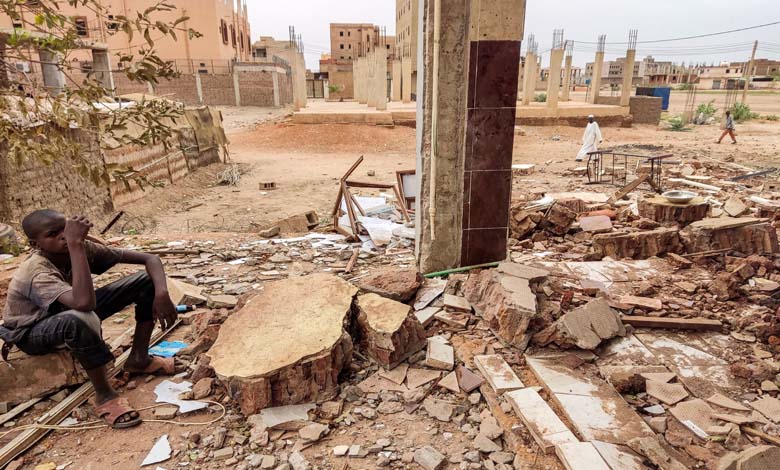
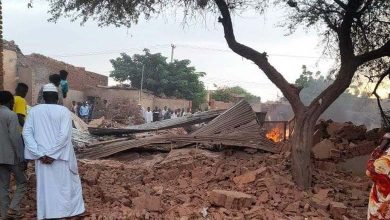
The war in Sudan today is more than an armed conflict between two forces vying for power; it represents a process of total disintegration of the state, the political system, and society. At the heart of this process, victims’ stories provide the clearest evidence of the scale of collapse and of the nature of decisions made on the ground and in command centers, whose direct impact is reflected in civilians’ lives: their homes turned into front lines, their children’s schools into abandoned shelters, and their streets into battlefields. Treating victims as mere numbers is an insult before it is a reduction of the catastrophe, as each story carries clear political and security implications, identifies specific responsibilities, and documents what the warring parties tried to deny or evade.
The Sudanese experience clearly shows that civilians have always been the most exposed to harm. Regions such as Darfur, al-Jenina, and Zalengi, as well as parts of Khartoum, were not just theaters of combat but testing grounds for policies of force
and control. Victims in this war are therefore not mere collateral damage, as some military rhetoric suggests, but victims of direct decisions. Patterns of violence were not random; they followed the movement of forces and the tactical orientations of each side. Each advance into a particular area was preceded by waves of violations – killings, looting, assaults, and forced displacement – indicating that violence was a tool of war, not a byproduct.
Citizen documentation, often captured via mobile phones, has been as important as official human rights work, and sometimes surpasses it in transparency and realism. These recordings helped link field commanders’ decisions to catastrophic outcomes on the ground, especially in Darfur where operations targeted specific areas for political rather than military reasons. In Khartoum, the situation was more complex, as the capital represents the center of power and the symbol of the state. Its collapse exposed the fragility of the system and revealed to the world the inability of the government, army, or any political actor to protect civilians.
Some attempt to justify these violations as a result of “exceptional wartime circumstances,” but political and military responsibility is clear. Decisions regarding attacks, withdrawals, or deployments had direct impacts on civilians. Doctors’ testimonies about ambulances being prevented from reaching hospitals, and citizens’ recordings of mass killings, show that victims were part of a deliberate conflict plan, not accidents.
These testimonies are crucial for the post-conflict period. Sudan cannot build a new state without acknowledging what happened and restoring victims to their rightful place: not as a “cost of war,” but as rights holders. Experience from other countries shows that any peace that is not grounded in justice and accountability will reproduce violence. Documents and testimonies collected by activists, journalists, and citizens will play a central role in transitional justice and in shaping the historical narrative of the war.
For now, the international community remains hesitant, merely expressing concern and calling for a ceasefire, without taking concrete measures to protect civilians. This delay has increased the number of victims, as warring parties understood that no real accountability awaited them. Nevertheless, the volume of accumulated documentation makes it impossible to ignore these crimes in the future, whether before the International Criminal Court or regional mechanisms.
In this context, victims’ stories are not merely humanitarian details but integral to the political landscape: they reveal who controls military decisions, who can stop the violence, and who chose to ignore civilians’ cries for political or military gain. These stories redefine the war itself, transforming it from a struggle for power into a human tragedy with deep political implications, each documented case carrying legal weight, even without a trial.
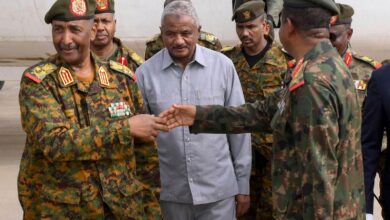
Sudan stands at a crossroads: resolving the crisis requires acknowledging the direct responsibility of leaders and systems that allowed this level of collapse. Victims, in Darfur and Khartoum alike, are not mere memories but the foundation for any future reform, as a state is built on acknowledged truth, not its ruins. Victims’ accounts must become national memory, the basis for new policies centered on people, to prevent the tragedy from repeating, regardless of the warring forces or shifts in power.