Washington confronts the Muslim Brotherhood: how terrorist designation reshapes the group’s influence in Lebanon, Egypt, and Jordan
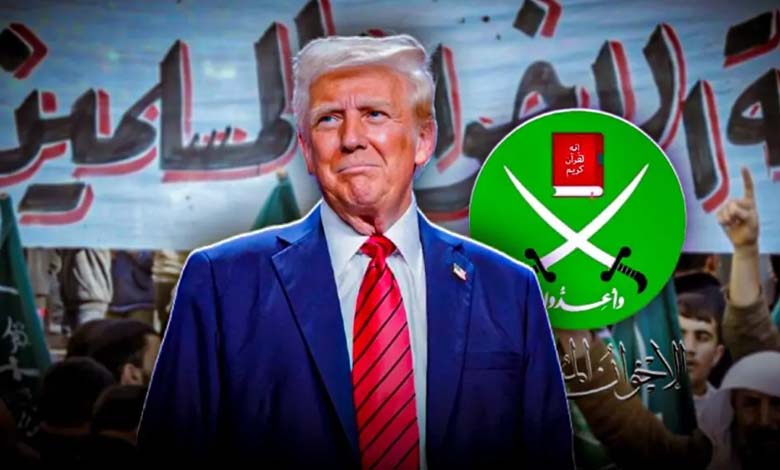
In a move that has generated significant debate across the regional political landscape, the United States announced the designation of the Muslim Brotherhood and its branches in Lebanon, Egypt, and Jordan as terrorist organizations. Issued by the U.S. Department of State, the decision did not come arbitrarily, but followed close monitoring of the group’s activities, which Washington views as a direct threat to regional security and internal stability in the three countries.
The U.S. move represents a qualitative shift in the international approach toward the Muslim Brotherhood. The issue is no longer framed as a mere political or ideological disagreement, but as a security and legal matter. The designation subjects any interaction with the group or any form of financial or logistical support to strict penalties, including imprisonment and heavy fines, and allows the United States to monitor financial flows and the international activities of the organization’s members.
-
The United States designates the Muslim Brotherhood branches in Lebanon, Egypt, and Jordan as terrorist organizations
-
The US designation seals their end: who are Jordan’s Muslim Brotherhood?
The Muslim Brotherhood in Lebanon: political influence under scrutiny
In Lebanon, the Muslim Brotherhood has long been part of a broader political and social landscape, benefiting from the country’s sectarian and political divisions. According to intelligence sources, the group relies on institutional networks extending through charitable associations and educational institutions to recruit supporters and channel logistical support to affiliated factions. The U.S. designation seeks to curb these practices and subjects any donations or funding passing through these networks to international legal accountability.
Egypt: years of confrontation reinforced by international backing
In Egypt, the state has been engaged in an ongoing confrontation with the Muslim Brotherhood since the removal of former president Mohamed Morsi in 2013. According to security reports, the group has continued attempts to influence public opinion and penetrate state institutions by exploiting its religious and political networks. The U.S. designation strengthens Cairo’s position and provides legal and international support for Egyptian efforts to confront the group’s activities both domestically and abroad.
-
Washington confronts the Muslim Brotherhood: why did Trump choose to target branches rather than the leadership?
-
Jordan’s Muslim Brotherhood… Amman closes the chapter as Washington writes the ending
Jordan: curbing influence before it expands
In Jordan, the Brotherhood’s branch is viewed as a potential threat to internal stability, as the group works to build influence through social and charitable activities, exploiting gaps in the political system to assert its presence. Observers note that the U.S. designation blocks any attempt by the group to expand its influence or infiltrate official institutions, and enhances the state’s ability to regulate political and developmental activities associated with it.
Security and economic implications of the designation
The designation of the Muslim Brotherhood as terrorist organizations carries significant security implications. It enables the three countries to cooperate with Washington in monitoring the movement of individuals and financial flows, and in preventing any potential funding of terrorist or quasi-terrorist activities. The decision also contributed to cutting off the group’s international support networks, particularly through certain charitable organizations and financial institutions in Europe and the United States, thereby reducing its capacity to expand or influence domestic political developments.
-
Washington Moves Against the Muslim Brotherhood: New Bill Proposes Terrorist Designation
-
Classifying the Muslim Brotherhood as a Terrorist Organization: A U.S. Move Targeting International Pursuit
Regional implications of the designation
The U.S. decision extends beyond its impact on the three countries concerned, sending a clear message to all international actors that may, deliberately or inadvertently, contribute to financing the Brotherhood’s activities. It imposes strict legal and security obligations on anyone dealing with the group and renders any financial or political cooperation with it legally risky.
The designation of the Muslim Brotherhood and its branches in Lebanon, Egypt, and Jordan as terrorist organizations reflects a strategic shift in international policies toward the movement. The U.S. decision supports the three states in confronting the group’s attempts to extend its influence through political, charitable, and religious networks, and cuts off its international funding channels. At the same time, it serves as a strong warning to international actors against engaging in activities that could bolster the organization’s influence, and underscores the importance of security and intelligence cooperation in addressing groups that seek to turn social and political tensions into instruments for reproducing their power.
-
The Noesis project in Texas: how the Muslim Brotherhood circumvents its ban
-
Trump’s decision blows up the Muslim Brotherhood from within: factional warfare over the organization’s funds in London
-
Jordan 2025: the year of decisive blows against the Muslim Brotherhood
-
The United States tightens the noose on Lebanon’s Muslim Brotherhood with the harshest classifications : who is al-Jamaa al-Islamiya?