Washington considers deploying new military reinforcements to the Middle East
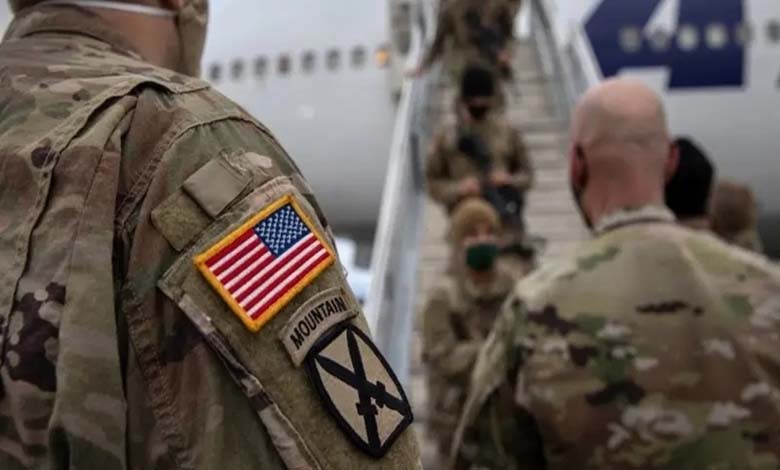
As Washington seeks to strengthen its influence and deter Tehran, any move toward deploying ground forces could open the door to more complex scenarios that may prove difficult to contain in an already volatile region.
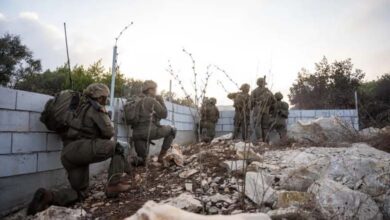
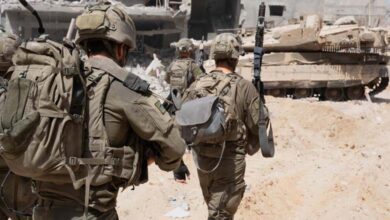
The administration of U.S. President Donald Trump is examining the possibility of expanding its military presence in the Middle East by deploying thousands of troops, in a move that could mark a turning point in the ongoing war against Iran, now entering its third week. While these plans remain under discussion, they reflect Washington’s intent to broaden its operational options amid escalating military and political challenges.
-
Drone theft from a U.S. military base raises fears of a potential Iranian response
-
Continuous U.S. military buildup in Israel in preparation for an attack on Iran
According to a U.S. official and three informed sources, such reinforcements could provide Trump with greater flexibility in making decisions related to expanding military operations. Some of the options focus on securing navigation through the Strait of Hormuz, one of the world’s most strategic energy corridors, a mission expected to rely primarily on air and naval forces, with the possibility of deploying ground troops along Iran’s coastline if necessary.
U.S. plans extend beyond protecting maritime routes to include more assertive scenarios, such as deploying forces to Kharg Island, which accounts for approximately 90% of Iran’s oil exports. Gaining control of the island is viewed as a more effective alternative to destroying it, given its critical importance to Iran’s economy. However, such an operation carries significant risks, as Tehran retains the capability to target the island with missiles and drones.
-
U.S. military signals imminent operation against Tehran
-
Operations for Weeks Against Iran … U.S. Military on Alert Awaiting Trump’s Decision
The United States has already conducted strikes on military targets on the island on March 13 as part of a broader air and naval campaign aimed at degrading Iran’s military capabilities. According to a statement from U.S. Central Command, more than 7,800 strikes have been carried out since the outbreak of the conflict on February 28, resulting in the destruction or damage of over 120 Iranian naval assets.
U.S. officials have also considered the possibility of deploying ground forces to secure Iran’s stockpiles of highly enriched uranium, a highly sensitive and complex objective. Military experts assess that such a mission would be extremely risky, even for elite units, due to operational challenges and the potential for escalation.
-
In Anticipation of a Potential Attack on Iran: U.S. Military Reinforcements to the Middle East
-
Errors or an exhausted system? The puzzle behind the rise in U.S. military aircraft accidents
Despite these discussions, informed sources indicate that the deployment of ground forces Iran is not imminent at this stage. A White House official emphasized that “all options remain on the table,” with no final decision having been made, reflecting a delicate balance between achieving clear military objectives and avoiding a broader confrontation.
The stated objectives of the military operation, dubbed “Epic of Fury,” include destroying Iran’s ballistic missile capabilities, dismantling its naval fleet, curbing the activities of its regional proxies, and ensuring that Tehran does not acquire nuclear weapons.
-
B-52… an old bird indispensable to the U.S. military
-
Trump and the Insurrection Act: Why Deploying the U.S. Military at Home Deepens Division
However, the introduction of ground forces presents significant domestic political challenges for Trump, who had previously pledged to avoid entangling the United States in new wars in the Middle East. This comes at a time when public support for the military campaign is declining, alongside rising casualties among U.S. forces, with 13 soldiers killed and around 200 wounded, most with minor injuries.
Developments also suggest that U.S. military options are influenced by logistical factors, including the withdrawal of the aircraft carrier “Gerald Ford” for maintenance following a fire onboard, which may limit naval operational capacity in the near term.
-
Drone Revolution: The Ukraine War Reshapes U.S. Military Priorities
-
Military Operation in Western Somalia Against Al-Shabaab… ATMIS Under U.S. Criticism
At the same time, Trump’s stance on securing the Strait of Hormuz appears to be shifting, moving from proposing the escort of U.S. vessels to calling on allies to share the responsibility. With many countries reluctant to participate, the U.S. president has hinted at the possibility of stepping back from the mission, questioning the value of protecting a route on which the United States does not directly depend.
These developments highlight a pivotal phase in U.S. strategy toward Iran, where military calculations intersect with political pressures and international considerations. While Washington seeks to strengthen its influence and deter Tehran, any move toward deploying ground forces could open the door to more complex and potentially uncontrollable scenarios in an already tense region.
-
U.S. wants to lead the military exercises with the Greek
-
Reinforcements and thousands of troops: the United States considers expanding its military deployment against Iran.