Washington continues military build-up to pressure Iran
The United States has secretly sent thousands of Starlink terminals to Iran in order to provide internet access, in support of protesters.
The United States plans to deploy a new aircraft carrier to the Middle East as part of preparations for a possible attack on Iran, according to The New York Times, despite ongoing talks in Muscat and mediation efforts aimed at easing tensions and reaching understandings. At the same time, the US administration continues to support protesters calling for the overthrow of the Iranian regime.
-
On the eve of the Muscat talks, five milestones paved the way for Iran and Washington’s return to negotiations
-
Nuclear Talks: Iran Rejects Washington’s Proposal and Prepares an Alternative
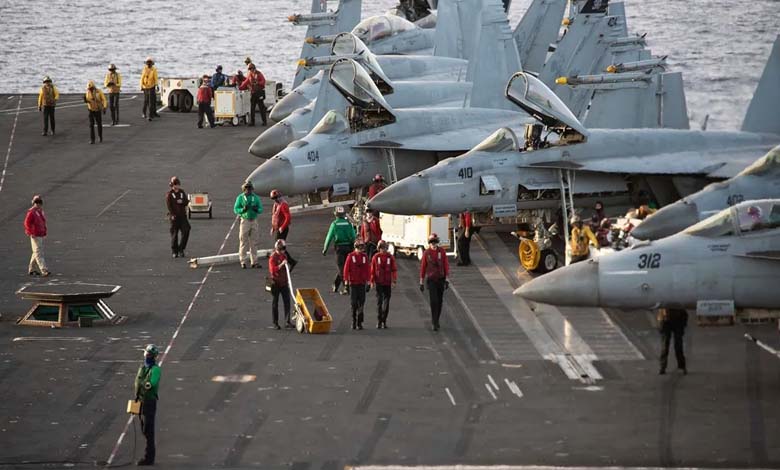
The New York Times reported on Thursday, citing four US officials, that the aircraft carrier USS Gerald R. Ford, currently deployed in the Caribbean, will head to the Middle East along with its accompanying vessels, without specifying its final destination.
The officials, who were not named, said the carrier strike group would not return to its home port before early May.
According to the newspaper, the USS Gerald R. Ford and its escort ships will join the USS Abraham Lincoln carrier strike group, currently present in the Middle East, as pressure on Tehran intensifies and the military option continues to be raised.
-
Khamenei, Iran’s Illness and the Obstacle to Any Agreement with Washington
-
Washington Tests Military Capabilities Amid Escalation Between Israel and Iran
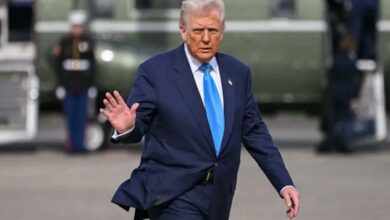
On Tuesday, US President Donald Trump said he was considering sending a second aircraft carrier to the region if nuclear negotiations with Iran fail.
On 26 January, the US Central Command (Centcom) announced the deployment of the USS Abraham Lincoln to the Middle East “in support of regional security and stability.”
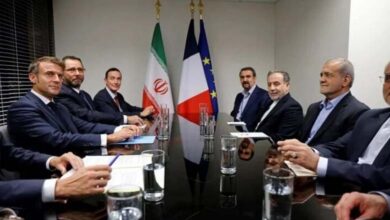
Last Friday, Trump described the first round of indirect negotiations with Iran in Muscat as “very good,” stating that Tehran had strongly expressed its desire to reach a new agreement and that both sides planned to meet again the following week.
-
Washington rules out Iran and its proxies’ involvement in expanding the war
-
Washington sends messages to Iran and Hezbollah via Turkey… Details
Tehran, for its part, believes that Washington and Israel are fabricating pretexts for intervention and regime change. Iran has threatened to respond to any military attack, even a limited one, and insists on the lifting of Western economic sanctions in exchange for curbing its nuclear program.
In contrast, the United States is demanding that Iran completely halt its uranium enrichment activities and transfer highly enriched uranium out of the country.
In a continuation of its pressure strategy and support for protesters, The Wall Street Journal reported, citing US officials, that the United States had secretly sent thousands of Starlink satellite terminals to Iran to restore internet access that had been cut during recent protests.
-
Washington Imposes New Sanctions on Iranian Individuals and Entities… What’s New?
-
Washington doubts the seriousness of forming a naval alliance comprising Iran and Gulf states
According to those officials, approximately 6,000 Starlink terminals were covertly brought into Iran after authorities restricted internet access in the country.
They noted that this was the first time the United States had directly sent Starlink terminals to Iran.
In recent months, particularly in January, the US State Department reportedly purchased around 7,000 Starlink terminals to help activists in Iran bypass internet shutdowns.
Officials stated that Trump was aware of the shipment, though it remains unclear which authority directly approved the plan and how the equipment was transported into Iran.
-
Second Aircraft Carrier Headed to the Middle East… U.S. Pressure Ahead of a Decision on Iran
-
Diplomacy races against rising tensions: anticipation of Muscat talks between Washington and Tehran
Protests erupted in Iran in late December 2025 and lasted for nearly two weeks, driven by a sharp depreciation of the national currency and a worsening economic crisis.
The demonstrations began in the capital, Tehran, before spreading to several other cities. President Massoud Pezeshkian acknowledged public discontent and pledged to work toward improving conditions.
Some protesters had called on American billionaire Elon Musk to provide satellite internet service across Iran through Starlink following the restrictions imposed by authorities.
-
Khamenei speaks of a coup attempt and outlines the response to any U.S. strike
-
Trump and Iran: three military paths on the decision table
In response, Iranian security agencies intensified efforts to locate Starlink terminals, which they said had been smuggled into the country illegally.
Iran has largely succeeded in blocking the Starlink internet service, which is banned in the country.
On 27 January, Iran’s head of economic security police, Hossein Rahimi, announced the seizure of 108 Starlink terminals over the past nine months.
-
Lincoln at the forefront… an overwhelming U.S. force off Iran
-
Has the hour of war struck? Trump announces another war fleet heading toward Iran
-
Iran in the crosshairs of Lincoln and its sisters… Messages of fire before the decision
-
Trump pressures his advisers on Iran, with the zero bullet option on the table
-
Trump threatens to wipe Iran off the map if its leaders consider assassinating him