Al-Burhan’s army and the Muslim Brotherhood… evidence of a blood alliance in Sudan
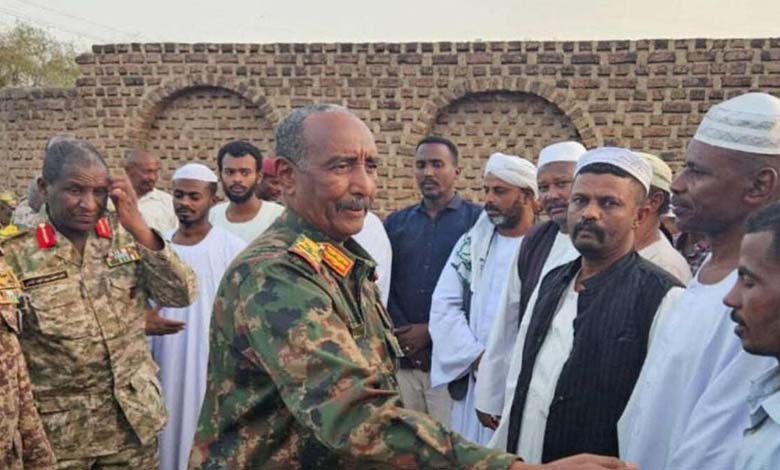
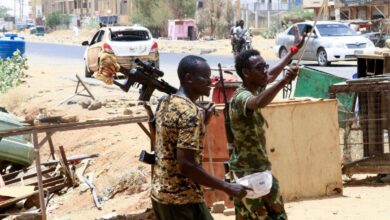
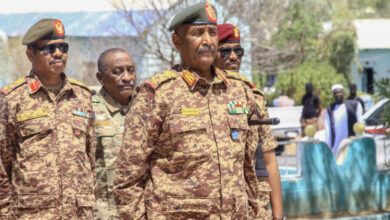
Facts point to a violent approach into which al-Burhan’s forces have descended since they transformed into a militia wing under the control of the Muslim Brotherhood in Sudan.
-
Hemetti Launches Harsh Attack on Al-Burhan and the Muslim Brotherhood… Speaks on Crisis with Egypt
-
The Muslim Brotherhood Backs Al-Burhan: Fueling War and State Collapse in Sudan
The bloody massacre carried out by the Sudanese army’s air force, led by Abdel Fattah al-Burhan, on the first day of Eid al-Fitr, targeting the hospital in Ed-Daein in eastern Darfur, was merely a stark headline and a strong confirmation of a long record of violence and abuses against civilians.
This has been occurring since the Islamic movement — the political front of the Muslim Brotherhood in Sudan — took control of the military institution’s decisions and infiltrated its structures.
From “Ed-Daein” to “Lagawa” in West Darfur, passing through “Sennar,” “Wad Madani,” Khartoum, and other Sudanese cities, the worst violations documented by UN and local reports against civilians have been committed since the outbreak of the war in April 2023.
-
Abdel Fattah al-Burhan: Involved in War Crimes and Subject to the Muslim Brotherhood’s Agenda
-
The Muslim Brotherhood and Al-Burhan lose the battle… The Army is in Turmoil
The relationship with Brotherhood brigades
The severe violations currently committed by al-Burhan’s forces “stem from a state of loss of will and institutional capture within the military, after it allowed Muslim Brotherhood militias and security cells to practice all forms of violence and repression against civilians who oppose the continuation of the war.”
Sudanese military expert Lieutenant Colonel Mohammed Nour Aboukhlef stated that “the Sudanese army, particularly under the leadership of Abdel Fattah al-Burhan, is no longer a national institution, as it has transformed into militias implementing the agenda of the Muslim Brotherhood.”
-
Assassination of Chazali Khidr Abdelkader Reveals Arms and Funding Conflicts within the Sudanese Army
-
Could Tigray Become a Leverage Tool in the Indirect Confrontation Between Sudan and Ethiopia?
Aboukhlef added that the Brotherhood’s armed wings, such as the “Al-Baraa Ibn Malik” militias, “now control the shaping of the security situation in Sudan, and the army leadership cannot oppose the objectives of these terrorist brigades.”
He cited the U.S. decision to designate the Islamic movement and its armed wings, including “Al-Baraa Ibn Malik,” as terrorist organizations.
The expert believes that al-Burhan’s forces have become a tool of violence employed by the Muslim Brotherhood in Sudan to settle scores with political opponents or to impose their own political choices regarding power, governance, and wealth.
-
Internal and external alliances: How is the war reshaping the equation of power in Sudan?
-
The return of Mohamed Atta and the expansion of Turkish companies: Indicators of a restructuring of power centers in Sudan
Previous evidence
Numerous indicators highlight the record of violence and repression practiced by the Sudanese army and allied Islamist factions since the outbreak of the war in April 2023 against the Rapid Support Forces.
In August last year, the “Emergency Lawyers” group directly accused the security cell in the Sudanese capital, Khartoum, of committing serious violations against citizens.
The voluntary human rights group, composed of Sudanese lawyers, accused the security cell of being an Islamist tool of repression and intimidation used in favor of the army, noting that it had documented hundreds of arrests and dozens of disappearances.
-
Al-Burhan and the Sufi Orders: A Strategy to Consolidate Power Amid Fragile Legitimacy
-
The Muslim Brotherhood Returns Through the Security Gate… How Does Mohamed Atta’s Return Reflect Shifts in Sudan’s Landscape?
The group has repeatedly stated that it observed a dangerous increase in violations in Khartoum carried out by this cell, which it considers an instrument of repression and intimidation serving the army.
It noted that the cell has become a direct means of eliminating civilians, arresting individuals in its known offices in the capital and subjecting them to systematic torture and ill-treatment.
It added: “In some cases, detainees are transferred to major detention centers such as Jabal Sarkab, north of Khartoum, where they face various fates.”
-
Al-Burhan’s Meetings with Sufi Orders: New Alliances to Reshape Sudan’s Political Landscape
-
The Muslim Brotherhood and the Al-Baraa ibn Malik Brigade: A New Strategy of Influence in Sudan
These fates include continued detention or referral to police stations in preparation for trials that lack the most basic standards of justice.
Some are released onto the streets in deteriorated physical and psychological condition, while others are found dead after execution or die under torture.
Chemical weapons
It is also noteworthy that international and local reports have raised concerns about the use of internationally prohibited chemical weapons by the Sudanese army during the current war against the Rapid Support Forces.
-
Sudan Between Military Balance and Muslim Brotherhood Influence: An Ongoing Struggle Over Decision-Making
-
The Field Mobilization of the Muslim Brotherhood in Sudan: The Al-Baraa Ibn Malik Brigade and the Challenge of Influence
Numerous local reports have documented the humanitarian and environmental effects of chemical weapons used by the army against the Rapid Support Forces in Khartoum, Al-Jazira State in central Sudan, and Sennar.
In January last year, the U.S. Department of the Treasury’s Office of Foreign Assets Control imposed sanctions on Sudanese army leader Abdel Fattah al-Burhan due to the army’s use of chemical weapons twice against the Rapid Support Forces.
The Ed-Daein tragedy
The teaching hospital in Ed-Daein, eastern Darfur, had previously been struck by a drone attack attributed to the Sudanese army on the first day of Eid al-Fitr, sparking widespread condemnation among Sudan’s civilian political forces.
-
Power struggle between the Sudanese army and the Muslim Brotherhood: rising political tensions
-
Al-Burhan’s Attempt to Court Sufi Orders: A Step to Consolidate Power or a Reshaping of the Political Landscape?
Local calls were also raised for urgent international intervention to protect civilians and stop the targeting of medical facilities.
According to the World Health Organization, the attack on the hospital resulted in at least 64 deaths, including children, medical staff, and patients, making it one of the most violent attacks on a healthcare facility since the conflict in Sudan began.
The Director-General of the World Health Organization stated that the bombing rendered the hospital completely out of service due to severe damage, cutting off essential medical services for the residents of Ed-Daein.
-
Al-Baraa Ibn Malik Brigade: A Tool Used by the Muslim Brotherhood to Strengthen Military and Political Influence in Sudan
-
American magazine: No peace while the Muslim Brotherhood remains at the heart of al-Burhan’s regime
For his part, the hospital director, Dr. Ali Mahmoud, said that among the victims were 13 children and 7 women, including 3 pregnant women, in addition to dozens of men, while the number of injured reached 89, including medical personnel.
The Lagawa attack
Before the blood had dried in Ed-Daein and before the victims’ bodies were recovered from the rubble of its teaching hospital, local reports indicated that the Sudanese army, using drones, redirected its attacks against civilians this time toward a market in the city of Lagawa in West Kordofan State.
The Rapid Support Forces in Sudan released a video on Monday evening claiming to document the moment of the bombing that targeted a market in Lagawa.
-
Ignoring the Muslim Brotherhood… a strategic mistake undermining Western approaches to ending the war in Sudan
-
Heglig reshapes the balance of the Sudanese war… and Washington repositions itself
In a statement, they said the bombardment hit residential neighborhoods and civilian areas, resulting, according to a preliminary toll, in more than 17 deaths and 25 injuries, describing the incident as “tragic.”
The statement added that this action is part of “a series of repeated attacks” targeting civilians, noting the use of drones to bomb markets and public facilities, including healthcare infrastructure.
The Rapid Support Forces stressed that these operations constitute “a blatant violation of international humanitarian law,” including the Geneva Conventions, which prohibit targeting civilians and civilian infrastructure, emphasizing that such acts violate the rules of armed conflict.
They held the army fully responsible for the attack and called for an independent international investigation to hold those responsible accountable, stating that mere condemnations are no longer sufficient to stop what they described as “repeated violations.”
-
Heglig shifts the balance of the war: Tasis forces seize the oil lifeline and Washington reorganizes its pressure cards against al-Burhan
-
Collapse of the Power Equation in Sudan: Heglig in Tasis Hands and Trump’s Pressure Expose Islamists’ Deadlock within the Army