Washington mobilizes to designate the Revolutionary Guards and Hezbollah as terrorist organizations
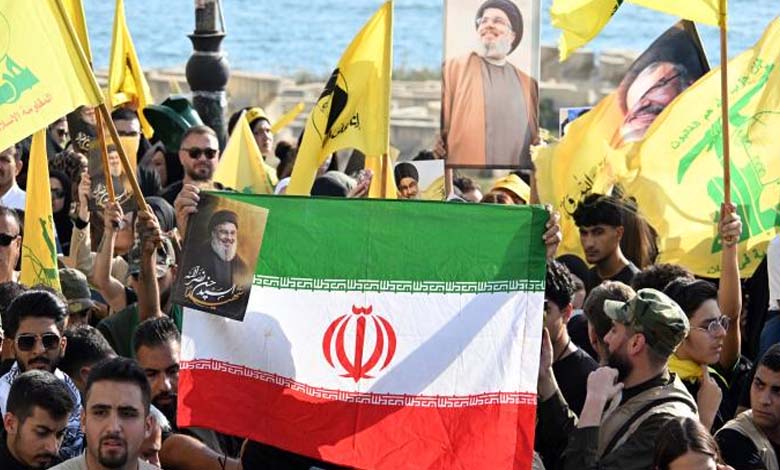
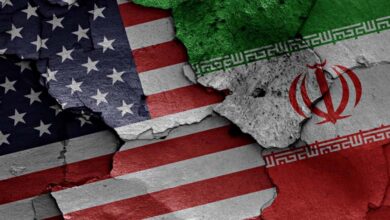
This move reflects a U.S. approach aimed at expanding the scope of political and economic confrontation with Iran by building a more cohesive international front, particularly amid rising military tensions in the region.
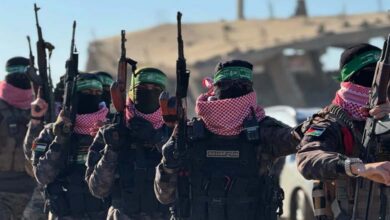
An internal U.S. State Department cable has revealed a broad diplomatic effort led by the administration of President Donald Trump to rally allies to designate Iran’s Islamic Revolutionary Guard Corps and Lebanon’s Hezbollah as terrorist organizations, as part of a wider strategy to increase collective pressure on Tehran and curb its regional influence.
According to the cable, signed by Secretary of State Marco Rubio and dated March 16, all U.S. diplomatic and consular missions worldwide were instructed to engage host governments “at the highest appropriate level” to encourage them to take concrete steps in this direction, with a deadline set for March 20. The instructions also emphasized the need to coordinate these efforts with Israel.
This initiative reflects a U.S. effort to broaden political and economic confrontation with Iran by building a stronger international front, especially amid escalating military tensions in the region. The cable notes that the threat of attacks linked to Iran and its allies is increasing, necessitating urgent action by governments to reduce the ability of these entities to carry out operations targeting Western interests.
Although the United States and some countries have already designated the Revolutionary Guards and Hezbollah as terrorist organizations, Washington is now seeking to persuade other nations—particularly those still hesitant—to join this effort, arguing that collective measures would have a greater impact than unilateral actions.
The cable states that “the Iranian regime is more sensitive to collective measures than to unilateral ones,” suggesting that coordinated pressure could more effectively compel Tehran to change its behavior. It also argues that blacklisting these entities would help limit their ability to finance and support activities described as terrorist in various parts of the world.
However, this U.S. initiative faces clear challenges, as several allies have expressed reservations about fully aligning with the American strategy, particularly since some were not informed in advance of recent military operations carried out by Washington and Tel Aviv against Iran. This reflects divergences between the United States and some of its partners regarding how to handle the regional escalation.
In another indication of these difficulties, several allied countries declined to respond to Trump’s call to send naval vessels to help secure navigation in the Strait of Hormuz, one of the world’s most critical oil transit routes, reflecting international caution about becoming involved in a potentially widening conflict.
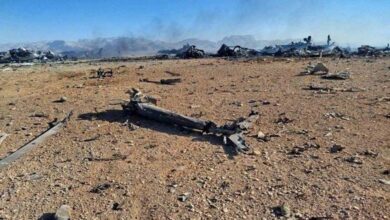
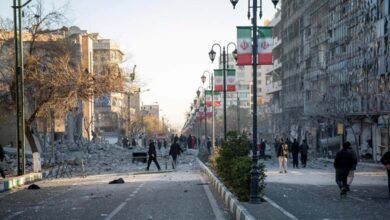
This diplomatic move comes amid an unprecedented escalation between the United States and Israel on one side and Iran on the other, where military confrontations are intertwined with political and economic pressures, reflecting a multidimensional conflict.
For its part, the U.S. State Department affirmed that the Trump administration is focused on achieving stability in the Middle East, while also viewing the Revolutionary Guards and Hezbollah as destabilizing factors due to their support for armed groups and interference in the affairs of regional states.
In light of these developments, Washington appears to be relying on the tool of “international isolation” as a means of pressuring Iran. However, the success of this strategy will depend on the United States’ ability to convince its allies to adopt a unified position, at a time when political and security calculations differ among the countries concerned.