Washington Weighs Scenario for Invading Southern Iran through Iraq
Reports circulated by Indian and American media raise questions about how a hypothetical ground operation could be conducted in the absence of a US military presence following the September 30 withdrawal.
International media outlets, including India’s The Times of India and the US platform MSN, have carried reports suggesting that the United States could use Iraqi territory as a transit route for a ground operation in southern Iran. The scenario has raised concerns that Baghdad could be drawn into a regional military confrontation, despite its stated refusal to allow its territory to be used for attacks on neighbouring countries.
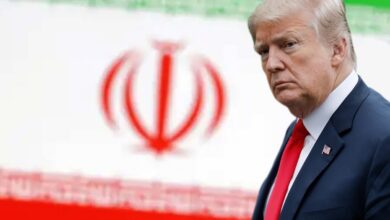
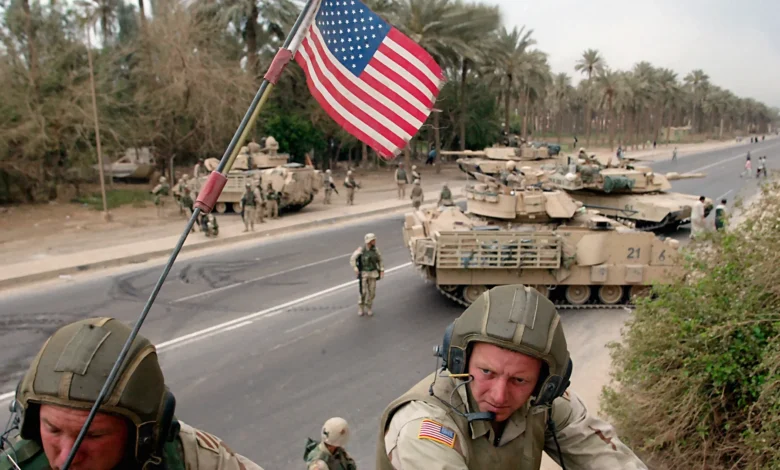
According to information published on Thursday, Iraqi Prime Minister Ali al-Zaidi was reportedly briefed on leaks concerning three military scenarios presented by US commanders to President Donald Trump. One of those scenarios reportedly envisages US ground forces crossing Iraqi territory into southern Iran, particularly the oil-rich province of Khuzestan, which borders Iraq’s Basra province.
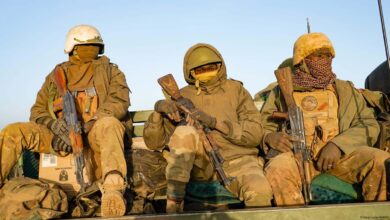
The composition and size of any force that might participate remain unclear. Neither US nor Iraqi officials have confirmed that a decision has been made to carry out such an operation. The circulating accounts remain based on leaks whose underlying military documents have not been made public. Military contingency planning does not, in itself, mean that political leaders have authorised implementation.
The reports are particularly sensitive given Iraq’s declared position. During a telephone call with Trump on November 5, al-Zaidi stressed that his country would not allow its territory to serve as a launchpad for attacks on neighbouring states. He called for respect for national sovereignty and for diplomatic efforts to take precedence in containing the escalation.
The reports follow Baghdad’s announcement that US forces completed their withdrawal from bases in Iraq on September 30, under arrangements to transition from the international coalition’s mission to bilateral security cooperation. The withdrawal ended the declared US military presence at Iraqi bases, while the coalition’s mission against Islamic State was relocated to Jordan, according to Washington. This raises questions about how any hypothetical ground operation could be conducted without the US bases that previously served as logistical hubs inside Iraq.
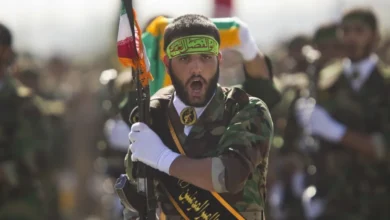
The risks extend beyond a potential violation of Iraqi sovereignty to the country’s domestic political and security environment. Such a scenario could expose al-Zaidi’s government to conflicting pressures from Washington and Tehran while reigniting tensions between state institutions and Iran-linked armed factions. Iraqi factions have threatened to target US interests if Iraqi territory or airspace is used for operations against Iran, raising fears that the country could become a new arena of confrontation.
These calculations also intersect with Iranian concerns about the opening of a ground front involving opposition Kurdish groups active in the Kurdistan Region of Iraq. Earlier reports described US contacts with Iranian Kurdish factions over possible support for their activities inside Iran. Those reports prompted warnings from Tehran and threats to strike the groups’ positions in the region.
Although there is no evidence that a plan to invade southern Iran has been approved, the mere circulation of this scenario presents Iraq with another test of its ability to prevent its territory from being used in a regional conflict, maintain balanced relations with the United States and Iran, and keep domestic tensions from escalating into open confrontation.