One Million Feddans for Influence: Is Sudanese Land Becoming the Price of Saudi Support?
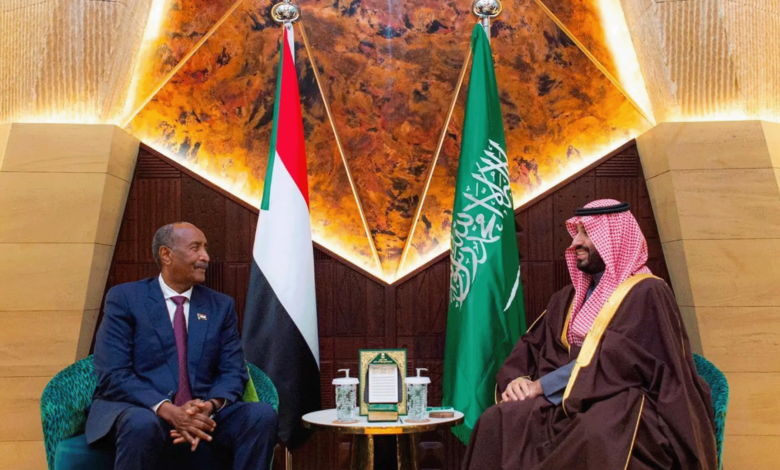
As millions of Sudanese people face displacement, hunger and the loss of their livelihoods, farmland is emerging as one of the most sensitive issues in relations between Sudan and Saudi Arabia. With its vast agricultural potential and substantial water resources, Sudan has for years been a major destination for Saudi investment aimed at strengthening the kingdom’s food security and securing sustainable supplies of agricultural products.
What raises questions, however, is not the existence of these investments, but the nature, duration and terms of the agreements, and which authorities have the power to make decisions concerning state land and resources.
One of the most significant milestones in this issue dates back to June and July 2016, when Sudan’s parliament approved an agreement granting the Saudi side the right to develop one million feddans of farmland in eastern Sudan for up to 99 years. According to information published by the United Nations Conference on Trade and Development, the agreement covered a large-scale agricultural project in the Upper Atbara River area.
The agreement takes on particular significance in light of Sudan’s subsequent political and military upheavals. The current war has renewed questions about sovereignty over land and resources, and the ability of Sudanese institutions to protect national interests amid political instability.
Farmland is more than an area available for investment. It is a strategic resource tied to food security, water, local communities’ rights and the future of generations to come. When investment contracts extend over 99 years, the implications go beyond short-term commercial calculations and concern the future of national assets with direct significance for sovereignty.
The issue becomes even more sensitive when it intersects with the need for investment and external financing of the military authorities based in Port Sudan. Facing a deep economic crisis and needing resources to administer the areas under their control and rebuild their institutions, those authorities may come under growing pressure to attract foreign capital and offer extensive investment guarantees.
Against this backdrop, it is essential to establish whether earlier agricultural agreements have entered implementation, whether new understandings provide for expanded Saudi investment in Sudanese land, and what guarantees investors have received.
Questions also arise about local communities’ role in these agreements, how much they benefit from agricultural projects, the number of jobs created, and their rights to use land and water.
Saudi Arabia’s strategic interest in securing food supplies beyond its borders cannot be overlooked. This gives Sudanese farmland considerable importance in the kingdom’s long-term economic planning.
But a question must be put to the leadership under Abdel Fattah al-Burhan: Is Sudanese land being managed as a national asset within an independent economic strategy, or could the need for financing and investment lead to long-term concessions being granted without adequate public and institutional oversight?
The objective is not to reject Saudi investment, but to ensure that agreements concerning land, water and natural resources are subject to transparency and accountability, and that their details are made available to the Sudanese public.
Sudan, whose people are already paying the price of war, should not face the additional loss of its future economic opportunities. Nor should reconstruction become a vehicle for entrenching long-term privileges at the expense of economic sovereignty and national rights.