What weapons could Washington use in a potential attack on Iran?
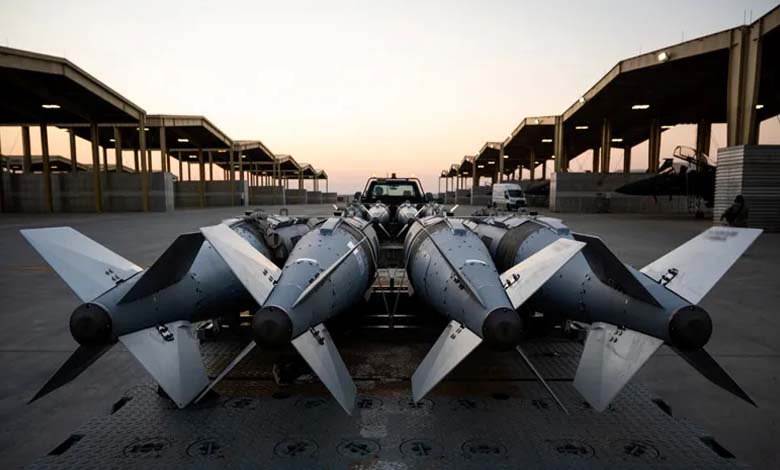
Following the U.S. attack on Iranian nuclear facilities last summer, attention is now turning to possible scenarios for a new strike.
This issue was addressed by the American network CNN in a report examining potential military scenarios and the weapons Washington might employ if it were to carry out another attack on Iran, amid rising tensions between the two sides.
-
A base for Iran and Hezbollah… A new accusation from Washington against Venezuela
-
Washington doubts the seriousness of forming a naval alliance comprising Iran and Gulf states
What weapons might Washington use?
Last year, U.S. Air Force B-2 bombers dropped 14 of the world’s most powerful bombs on Iranian nuclear sites, without any American human or aerial losses. The operation involved dozens of fighter jets, aerial refueling aircraft, and support planes that contributed to the mission’s execution.
However, analysts believe that any new U.S. attack on Iran is unlikely to mirror the strikes that targeted three nuclear sites last summer.
According CNN, the potential weapons include the following:
-
Nuclear Talks: Iran Rejects Washington’s Proposal and Prepares an Alternative
-
Khamenei, Iran’s Illness and the Obstacle to Any Agreement with Washington
First: Tomahawk cruise missiles
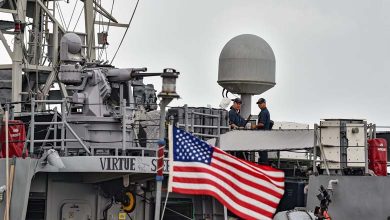
Highly precise Tomahawk missiles can be launched from U.S. Navy submarines and warships from long distances off Iran’s coast, reducing the risk of American casualties.
Second: JASSM
Another cruise missile option is the Joint Air-to-Surface Standoff Missile (JASSM).
This missile carries a 1,000-pound penetrating warhead and has a range of approximately 620 miles, or about 1,000 kilometers.
It can also be launched from a wide range of U.S. Air Force aircraft operating at a distance from Iranian shores, including F-15, F-16, and F-35 fighter jets, as well as B-1, B-2, and B-52 bombers, in addition to the U.S. Navy’s F/A-18 fighters.
-
Washington Tests Military Capabilities Amid Escalation Between Israel and Iran
-
Washington rules out Iran and its proxies’ involvement in expanding the war
Third: unmanned aerial vehicles
Analysts say that drones could also be used.
Although the United States typically maintains an aircraft carrier in the Middle East, the closest carrier, the USS Abraham Lincoln, had been thousands of miles away in the South China Sea until Monday.
Aircraft carriers usually sail with an escort group of ships capable of launching missiles and providing other forms of operational support.
In the fall, the Trump administration deployed a carrier strike group, along with a large number of ships, aircraft, and thousands of troops, to the Caribbean as part of its pressure campaign against Venezuela’s leadership.
While some of these assets have gradually begun to leave the region, this has reduced the immediate options available to military planners for swift action against Iran.
-
Washington sends messages to Iran and Hezbollah via Turkey… Details
-
Washington Imposes New Sanctions on Iranian Individuals and Entities… What’s New?
A show of force?
Peter Layton, a visiting fellow at the Griffith Asia Institute in Australia, says that whatever approach the Trump administration might choose to strike Iran this time is expected to be “dramatic.”
He adds that the U.S. administration tends to favor displays of power, meaning actions that are highly visible and attract media attention.
He anticipates that any operation would be swift, similar to last year’s strike on nuclear facilities, noting that the administration prefers short-duration raids involving minimal risk to U.S. forces.
-
Trump tightens the noose on Iran by threatening its trading partners
-
Iran protests put Trump to the test between escalation and dialogue
What might the United States target?
Layton explains that Iran’s senior leadership could be vulnerable, most likely indirectly, as Iran has learned lessons from Israeli strikes that targeted and killed senior Iranian military officials and nuclear scientists last year.
Other analysts agree, pointing out that Iranian leaders have realized the need to disperse and conceal assets they deem critical.
Nevertheless, Layton believes that targeting the homes and offices of regime leaders would send a strong message.
He argues that while the military value of such strikes would be limited, they would primarily serve as a symbolic show of support for protesters.
-
The fall of Maduro: a step in Rubio’s dream of leading an army of exiles and becoming president of Cuba
-
Iran protests: a growing movement, escalating military rhetoric, and a watching world
In addition, analysts note that Washington could also target the financial interests of Iranian leaders.
In this regard, Layton says that Iran’s leadership and the Islamic Revolutionary Guard Corps control a wide range of commercial companies and revenue-generating projects across the country, and that targeting facilities of particular financial importance to these leaders and their families would be an option.
He adds that such projects are numerous, citing estimates by the Australian government indicating that between one third and two thirds of Iran’s gross domestic product is under the control of the Revolutionary Guard.
-
Options for striking Iran on Trump’s table: the trigger awaits the green light
-
Iran without internet for a second day as the army comments on protests