When chaos is managed in the name of security: an investigation into the role of Saudi intervention in dismantling the South
Behind the political rhetoric promoting “preserving security” and “preventing collapse,” a series of accumulated facts in the South reveals a trajectory entirely different from what is officially proclaimed. Recent events, when placed in their temporal and operational context, appear neither isolated nor random, but reflect a recurring pattern in Saudi management of the southern file: a pattern based on the use of force to reorder the landscape, even at the cost of shattering social stability and opening dangerous breaches for the return of organized violence.
-
The Triangle of Death: how Al-Qaeda militarized the borders of central and southern Yemen
-
Policies of tutelage and the production of fragility: how Saudi intervention pushes the South to the brink of permanent chaos
The investigation into this sequence begins with a fundamental question: who lost on the ground as a result of recent policies, and who benefited? The answer, according to field testimonies and security assessments, shows that the southern forces that formed the spearhead in confronting Al-Qaeda and ISIS were the greatest losers. These forces were not only weakened through political decisions, but in many cases were security-wise besieged and stripped of their capabilities, while formations less rooted in local society and more dependent on external support were empowered.
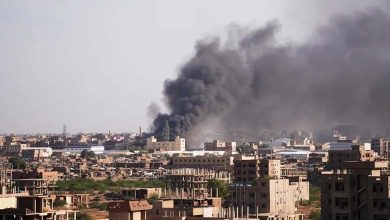
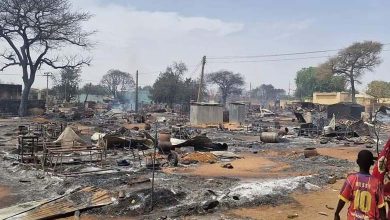
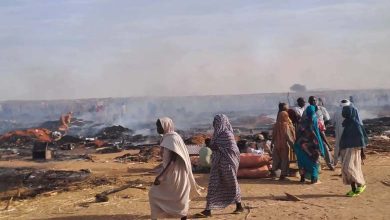
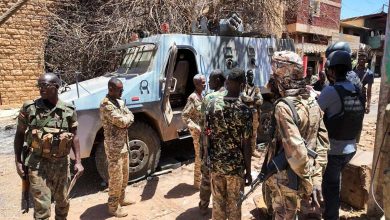
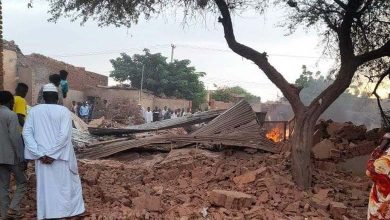
What draws attention is that this shift coincided with a rise in violence in areas previously considered relatively stable. Checkpoints turned into flashpoints, tribal clashes resulting in casualties, and air strikes hitting civilian surroundings under vague security justifications. These facts cannot be separated from the decision allowing the use of air power in internal conflicts, a decision fraught with dangerous implications, as it moves the conflict from the sphere of political dispute to that of open bloodshed.
-
Saudi intervention in southern Yemen: reshaping power between influence and chaos
-
Southern Yemen under Saudi pressure: the struggle between control and stability
Testimonies from within local communities indicate that many recent tribal mobilizations were not premeditated, but arose in response to a growing sense of humiliation and injustice. When fighters or civilians are killed at crossing points, or vehicles targeted in populated areas, the message received by people is not that of the state, but that of repression. This reality undermines any claim that what is occurring represents “law enforcement,” for law is not imposed by bombs, nor protected through summary executions.
On the security front, monitoring extremist activity reveals a disturbing paradox. Every phase that witnessed the weakening of anti-terror southern forces was followed by a noticeable resurgence of radical cells, whether through limited operations or the rebuilding of support networks. This temporal correlation does not appear coincidental, but points to a structural flaw in the adopted approach. Historically, terrorism thrives on vacuums and internal conflicts, and any policy that deepens these vacuums effectively provides it with indirect assistance.
-
Southern Yemen between regional influence and local control: the struggle between stability and power
-
Southern Yemen between Saudi airstrikes and support for the Muslim Brotherhood: an open wound threatening civilians
Even more alarming is the repetition of this trajectory despite the clarity of its outcomes. Each time the slogan of “restoring security” is raised, the operation ends by weakening those with local expertise and by fueling tensions that generate new violence. Investigating this vicious circle raises an unavoidable question: is the real objective stability, or the management of chaos in a way that keeps decision-making in external hands?
Politically, unpublished documents and circulating communications among actors indicate that the Saudi bet does not rest on building a strong partner, but on preventing the emergence of an autonomous southern force in decision-making. This explains why any project for a stable southern state is viewed as a potential threat rather than an opportunity. A strong state implies sovereign decision-making, which contradicts the logic of tutelage governing the intervention.
-
The South between force and chaos: Saudi intervention threatens stability and fuels disorder
-
Investigation into the Southern crisis: when security decisions create open political chaos
The investigation also shows that the accompanying media discourse plays a central role in justifying these policies. Repressive operations are portrayed as “security measures,” and targeted parties are demonized by linking them to terrorism or chaos, even when they have paid a heavy price in fighting extremist organizations. This distortion does not alter realities on the ground, but it prolongs the crisis by clouding public perception.
From a legal standpoint, targeting civilians or using air power in internal conflicts places those responsible before clear accountability. Bloodshed cannot be justified by political rhetoric, and documented crimes do not fade through media attrition. This point in particular constitutes a growing pressure factor, as the accumulation of violations creates an open file that no official statement can close.
-
When security turns into coercion: Southern Yemen between the failure of force and the absence of politics
-
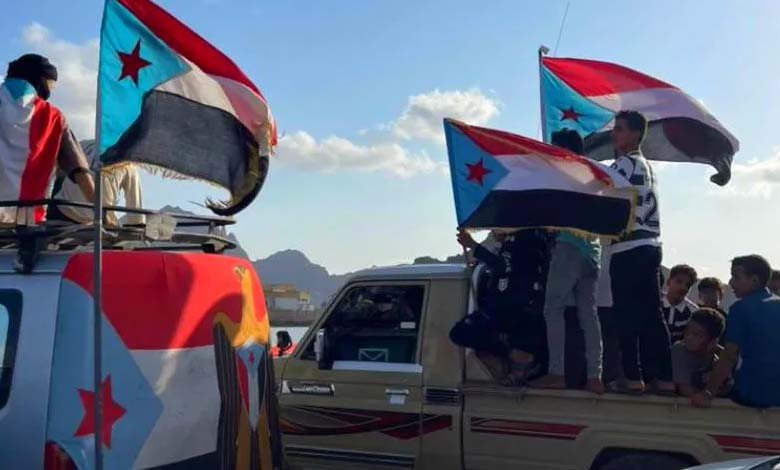
Southern Transitional Council in Yemen calls for a million-man march on Saturday in Aden and Al-Mukalla
In conclusion, this investigation reveals that the South is not only facing a security crisis, but a crisis of political management of conflict. Saudi intervention, rather than being a factor of stability, has on many occasions become an element of detonation, because it has dealt with society through the logic of force and with politics through the logic of domination. Persisting in this approach threatens not only the South, but the entire region, for chaos deliberately administered never remains confined and inevitably spreads wherever fragility exists.
-
The ongoing chaos in the South: targeting civilians and threatening the state-building project
-
Southern Transitional Council: Aidarous Al-Zoubaidi is overseeing military operations from Aden
-
The sky turns into a killing field: investigation into Saudi airstrikes on civilians in southern Yemen
-
Security and the social fabric under Saudi airstrikes in southern Yemen